Detail-first family historians
If you work with small names, dates and scanned records, compare text readability at your intended viewing distance. Dell, BenQ and HP each specify a 3840 × 2160 panel on the 27-inch models discussed below.


Check the screen position before choosing its format: the stand or a compatible mount needs to place the top of the display at or slightly below eye level when your desk is raised. A 27-inch 4K screen is a starting point for dense names and records; a 34-inch ultrawide offers room for a tree beside source material, while a tall-format screen favours vertically arranged content. Check desk space, mounting and computer connectivity for the format you choose.
If you work with small names, dates and scanned records, compare text readability at your intended viewing distance. Dell, BenQ and HP each specify a 3840 × 2160 panel on the 27-inch models discussed below.
If the tree usually stays open beside records or notes, a wide layout may matter more to you than a conventional 16:9 screen. Samsung specifies a 21:9 display and split-screen options for its 34-inch S65VC.
If you alternate between sitting and standing, check whether the stand or mount can position the screen at both desk heights. Ergotron advises placing the top of the monitor at or slightly below eye level; the adjustment mechanisms differ among the cited BenQ, LG and HP models.
Choose when: Small labels and document detail take priority; Dell P2725QE, BenQ PD2705U and HP E27k G5 are 3840 × 2160 examples.
Trade-off: A conventional 16:9 screen has less continuous horizontal space than a 34-inch 21:9 display.
Choose when: You regularly place the tree beside scans or notes; Samsung specifies a 21:9 screen and split-screen options for the S65VC.
Trade-off: Allow more desk width, and do not treat an ultrawide resolution as equivalent to 3840 × 2160 detail.
Choose when: You prefer generations or documents arranged above and below one another. LG's 16:18 DualUp 28MQ780-B illustrates this layout.
Trade-off: It offers less horizontal spread than an ultrawide; LG marks that exact model as discontinued, and its clamp needs a suitable desk edge.
| Concern | What to check | Who this matters to |
|---|---|---|
| Readable detail | Compare native resolution and screen size, then consider text scaling at your viewing distance. | When names and relationship lines are dense, I want to read them without losing my place in the tree. Around 36% of consumers put readable detail first. |
| Standing position | Check stand adjustment or compatible mounting against your desk height and intended screen position. | As my desk rises, I need the screen to remain at a workable height rather than looking up at it. That position is the first concern for around 36% of consumers. |
| Tree and sources together | Choose between side-by-side 21:9 space and a taller layout; check split-screen features only if you need them. | I want to keep a record visible while tracing its place in the family tree. Roughly 28% of consumers prioritise arranging those panes together. |
A detailed panel will not solve a positioning problem if its stand leaves the screen too low when the desk is raised. Ergotron advises positioning the top at or slightly below eye level.
Compare the monitor's adjustment range with your desk at standing height. For an arm, check the mounting pattern, supported weight and desk fit.
Reaching the required position may call for a separate arm, riser or stand.
USB-C features depend on both devices. Dell specifies video, data, Ethernet and up to 90 W power delivery for the P2725QE, but calls for device compatibility checks and Thunderbolt for its one-cable multi-display daisy chain.
Check your computer's supported video connection and charging requirements against the exact monitor before relying on one cable.
An incompatible setup may require a different cable, dock or power adapter.
A 34-inch ultrawide needs room across the desk, while a clamp-mounted screen needs suitable edge access. Screen size alone does not establish whether the full setup will fit.
Measure usable width, depth and rear clearance, and check the exact mount's desk requirements before ordering.
LG marks the DualUp 28MQ780-B as discontinued. Its shape remains useful for comparing layouts, but that listing is not a basis for assuming the model is currently available.
If you favour the tall format, check the exact product and seller terms before making it part of your desk plan.
The P2725QE is a 27-inch 4K USB-C hub option for a conventional single-screen workspace.
The PD2705U is a 27-inch 4K option with a matte IPS panel and adjustable stand.
The 16:18 DualUp 28MQ780-B shows how a taller screen can arrange content vertically.
The 34-inch ViewFinity S65VC provides a 21:9 layout for a tree alongside reference material.
The E27k G5 is a 27-inch 4K business-style option with an adjustable stand.
These monitors cover ultrawide and conventional 4K layouts for viewing a family tree at a standing desk. Compare each screen's format and stated stand features with your desk and computer; the products below are not examples of the discontinued tall-format model.
 No image available
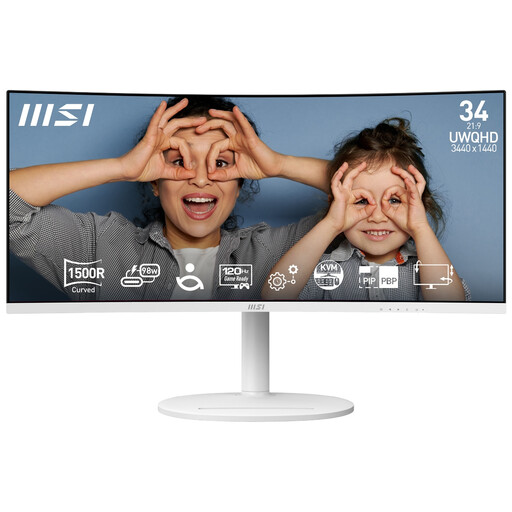
Consider this ultrawide layout if you want the tree beside reference material. The title specifies 3440 × 1440 resolution and a 120 Hz refresh rate; measure the space available for the 34-inch screen and stand before choosing it.
 No image available
Consider this larger conventional 4K screen if detail is a priority and you have room for it. Its title specifies an IPS panel, USB-C and a height-adjustable stand; check whether the glossy finish suits your lighting and the stand reaches your standing position.
 No image available
Consider this conventional format when dense tree detail matters more than a wide side-by-side canvas. Its title specifies an IPS panel, USB-C and a height-adjustable stand; check screen position, reflections and computer compatibility for your setup.
 No image available
Consider this 32-inch 4K format if you have space for a larger conventional screen. The title specifies 3840 × 2160 resolution and Type-C 65 W; check desk fit, standing screen position and your computer's video and charging requirements.
 No image available
Consider this conventional 4K size if your main task is reading names and records rather than spreading panes across an ultrawide. Check the stand's reach at standing height and confirm the connections you need for your computer.
Start by comparing 27-inch 4K screens if small names and record details are your priority. Dell, BenQ and HP specify 3840 × 2160 panels on the P2725QE, PD2705U and E27k G5 respectively; stand position and your preferred text scaling still matter.
Aim to place the top of the screen at or slightly below eye level when standing, in line with Ergotron's positioning guidance. Check that the supplied stand or a compatible arm can reach that position at your desk's raised height.
It can if both the monitor and computer support the required video and power functions. Dell specifies video, data, Ethernet and up to 90 W power delivery for the P2725QE, while advising device compatibility checks; its one-cable multi-display daisy chain requires Thunderbolt.
Check your local authority's electrical recycling options or ask the seller about a take-back route rather than putting the old monitor in general waste. GOV.UK's guidance identifies equipment that depends on electricity to work as electrical and electronic equipment, but collection arrangements need to be checked locally.