Choose a fridge or fridge-freezer around the chilled space your family needs for cooked vegetables and other leftovers, then check whether your usual containers fit the shelves. A freestanding model offers placement flexibility, an integrated model must match its cabinet, and a larger multi-door model needs enough kitchen and delivery access; in every case, compare fridge and freezer capacity separately before choosing extra freezer space.
Who this choice matters to
Families organising leftovers
If cooked vegetables and prepared meal components regularly go into the fridge, accessible shelves and room for covered containers matter as much as the stated capacity. The Food Standards Agency recommends refrigerating leftovers within two hours.
Families who batch cook
If some portions stay chilled while others are frozen, compare the separate fridge and freezer volumes. A large total capacity does not tell you how much space is available for near-term leftovers.
Households with a fitted kitchen
If the appliance must occupy a fixed opening, check its dimensions, cabinet and door fittings, ventilation requirements and access to a nearby wall socket before choosing a storage layout.
What to check before buying
Start with the food you normally keep chilled, then decide how much freezer space you need. Only compare models that can be installed in your kitchen with the required clearance.
Freestanding fridge-freezer
Consider it: If you want a conventional appliance that can be positioned or replaced without matching a fitted cabinet.
Trade-off: A narrower model may leave less room for wide dishes, even when its total capacity looks adequate.
Integrated fridge-freezer
Consider it: If the appliance needs to sit within a fitted kitchen and the exact model matches your cabinet.
Trade-off: Cabinet dimensions, door fittings and ventilation requirements limit which models can be installed.
Multi-door or American-style fridge-freezer
Consider it: If your family needs substantial chilled and frozen storage and has room for a larger appliance.
Trade-off: Extra width and freezer volume are of little help if the appliance cannot reach its position or leaves too little practical space for your chilled containers.
| Concern |
What to check |
Who this matters to |
| Usable chilled space |
Compare chilled-compartment litres and inspect shelf positions against your usual covered containers. |
When cooked vegetables and prepared dishes share the fridge, I need containers to fit where I can reach them. Around 42% of consumers would put usable chilled space first. |
| Fridge and freezer balance |
Read the chilled and frozen volumes separately, then consider how many portions you keep for the next few days or freeze. |
If I cook several meals at once, I need room for both near-term leftovers and frozen portions. For around 33% of consumers, that storage balance would be the primary concern. |
| Kitchen fit and installation |
Measure the appliance position and delivery route; for integrated models, check cabinet and door fittings. Follow the model’s ventilation instructions. |
With a fixed kitchen opening, I need an appliance that can be delivered and installed without compromising clearance. Installation fit would come first for around 25% of consumers. |
Buying pitfalls
-
Choosing by total capacity alone
A family that mostly refrigerates cooked vegetables may need a different fridge-to-freezer split from one that freezes many portions. Total litres conceal that difference.
Compare the chilled and frozen compartment volumes separately, then inspect whether the shelves accommodate your usual containers.
-
Measuring the kitchen but not the access route
A large appliance must pass through the delivery route before it can occupy its intended space. Integrated appliances also need the correct cabinet and door-fitting arrangement.
Measure doorways and the final position, and check the exact model’s installation instructions and required clearances.
-
Relying on freshness features for cooked leftovers
A feature intended for fresh produce does not replace prompt refrigeration of cooked food. The Food Standards Agency recommends putting leftovers in the fridge within two hours.
Prioritise accessible chilled space and food-storage practice before comparing model-specific drawer or airflow claims.
-
Overlooking ventilation and the power connection
Electrical Safety First advises allowing air to circulate behind a fridge-freezer and installing it close to a wall socket rather than using an extension lead.
Keep ventilation openings clear, follow the manufacturer’s clearance instructions and make sure the mains cable will not be trapped beneath the appliance.
Brands to consider
These brands offer examples of different fridge-freezer formats; compare the dimensions and storage layout of the exact model rather than treating a brand-wide feature as standard.
LG
Relevant when comparing larger multi-door and American-style formats with more compact fridge-freezers.
- LG UK’s size guide places its medium-family multi-door models in a 506–530 L band, offering a reference point for comparing formats.
- Those bands describe LG’s formats, not a capacity requirement for every family; check each model’s chilled volume and layout.
Beko
Relevant to fitted kitchens where the appliance must match an existing cabinet.
- Beko describes AeroFlow and a HarvestFresh crisper on its integrated BCNAD473V model.
- Beko’s freshness claims concern that model and selected fruit and vegetables, not the storage of cooked leftovers. Confirm cabinet compatibility and the exact model specification.
Bosch
Relevant when considering a large multi-door fridge-freezer with separately stated chilled and frozen volumes.
- Bosch GB lists 405 L of chilled volume and 200 L of frozen volume for the KFN96VPEAG.
- That model is 90.5 cm wide. Measure the kitchen and access route, and decide whether its freezer allocation matches how you store family meals.
Joybuy fridge-freezer options
These freestanding models cover a narrower fridge-freezer and several larger side-by-side or multi-door layouts. Compare their stated dimensions with your kitchen, then check the exact chilled-space layout and fridge-to-freezer split against your family’s containers and portions.
 No image available
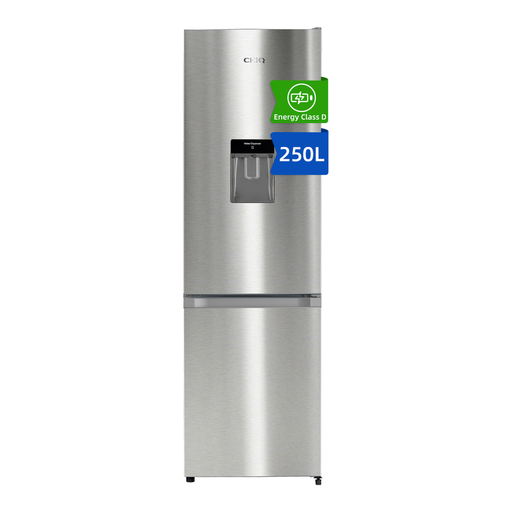
CHiQ JKR250WDSSD 250 L freestanding fridge-freezer
Consider this model if you need a narrower freestanding appliance for family leftovers. Its title states a 54 cm width, 181 cm height, Total No Frost, a water dispenser and a D energy rating. Check whether your covered containers fit its shelf arrangement, and compare annual energy use on the model’s energy label.
View on Joybuy
 No image available
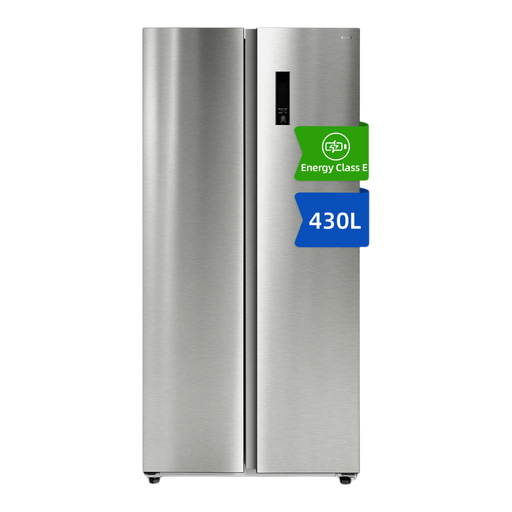
CHiQ JKR433WSSE 430 L side-by-side fridge-freezer
Consider this side-by-side layout if you need chilled space alongside a substantial freezer. The title states an 84 cm width, No Frost and an E energy rating. Measure the kitchen and delivery route, then check the separate compartment volumes and annual energy figure for the exact model.
View on Joybuy
 No image available
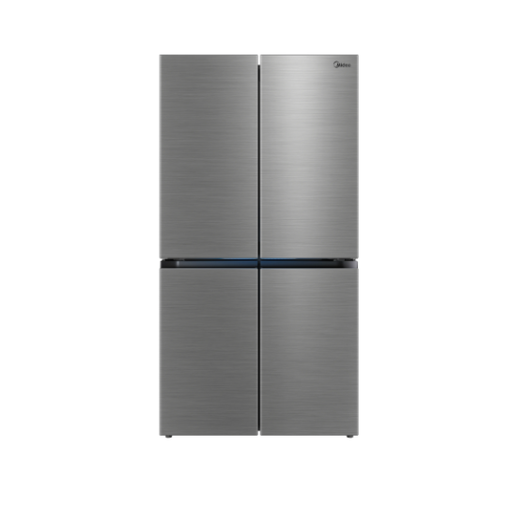
Midea MDRM923CIE46M multi-door fridge-freezer
Consider this freestanding format if you need room for both chilled meals and frozen portions. The title identifies an automatic ice maker and built-in water pitcher, but its 706 L total conflicts with the 635 L stated elsewhere in the product information. Confirm capacity, the fridge-to-freezer split, container fit and access dimensions before choosing it.
View on Joybuy
 No image available
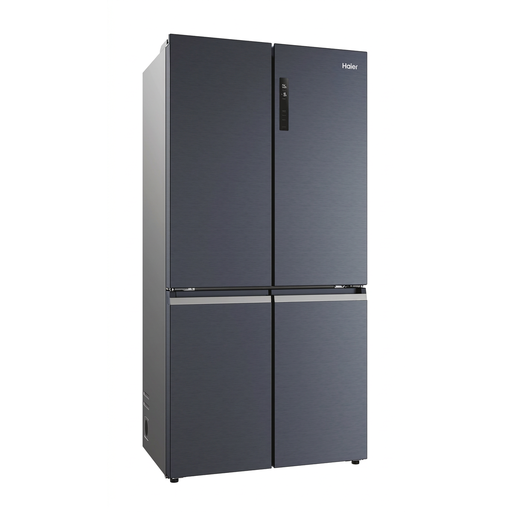
Haier Cube 90 Series 5 HCR5919ENMB 528 L fridge-freezer
Consider this freestanding model if you need a larger appliance for family meals and frozen portions. The title identifies a Black Steel finish. Check the shelf layout against your containers before buying, as the product information gives conflicting shelf counts; measure the kitchen and delivery route too.
View on Joybuy
 No image available
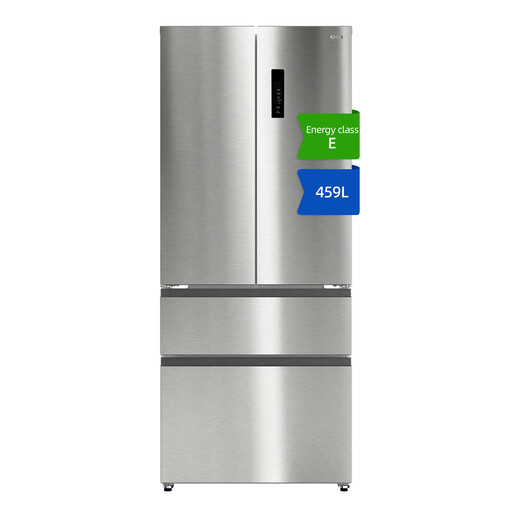
CHiQ JKR461WSSE KITFit Pro 459 L four-door fridge-freezer
Consider this four-door layout if you want to assess chilled and frozen storage in an 80 cm-wide format. The title states Total No Frost and an E energy rating. Check its shelf and drawer arrangement against your usual containers, and confirm installation clearances and access before ordering.
View on Joybuy
Common questions
How soon should cooked vegetables and other leftovers go in the fridge?
The Food Standards Agency recommends refrigerating leftovers within two hours. Choose a fridge with accessible chilled shelf space for the containers you normally use, and follow any food-specific storage instructions for the meal.
Does a vegetable drawer make a fridge better for cooked vegetables?
Not by itself: a fresh-produce drawer does not establish how well the fridge accommodates cooked leftovers. Beko describes HarvestFresh for selected fruit and vegetables in its BCNAD473V crisper; for cooked food, prioritise usable chilled space and prompt refrigeration.
What should I compare besides the energy rating?
Compare annual energy consumption in kWh alongside the chilled and frozen volumes of models that fit your kitchen. GOV.UK identifies annual kWh consumption as energy-label information for household refrigerating appliances; the efficiency letter alone does not show how the storage is divided.
Can a fridge-freezer run from an extension lead?
Electrical Safety First advises installing a fridge-freezer close to a wall socket rather than using an extension lead. Plan the socket position before deciding where the appliance will stand.
Does a fridge-freezer need space behind it?
Yes. Electrical Safety First advises leaving room behind the appliance for air to circulate; follow the exact model’s installation instructions for the clearance it requires.


