For an occasional small tray of picnic courgette slices, a countertop convection oven can be a proportionate addition if you have suitable worktop space. For regular group-sized batches or several trays, consider a built-in fan oven if it fits your kitchen and installation arrangements. In either format, check usable tray space and evidence of even heating rather than assuming a fan setting guarantees consistent results.
Who is each oven format for?
Small-batch picnic bakers
If you usually prepare one tray or a modest quantity, start with the space the slices need rather than the largest cavity available. A countertop oven may suit you if its tray fits your recipe and you have room to position it safely.
Batch cooks for groups
If you prepare several trays or bake other picnic food at the same time, usable shelf and tray space matter more. Energy Saving Trust notes that a larger oven can accommodate more food in one batch.
Kitchen-upgrade buyers
If you are replacing or fitting an oven, check the cabinet opening and the exact model’s connection requirements before choosing features. Electrical Safety First advises having an oven fitted by a qualified electrician.
What matters when choosing an oven?
Decide whether this is an additional appliance for occasional trays or a fitted oven for regular cooking, then check the tray arrangement you will actually use.
Countertop convection oven
Consider it when: You make smaller picnic batches and want another oven without changing fitted cabinetry.
Trade-off: It takes up worktop space, and its usable tray area must still fit your batch.
Built-in fan oven
Consider it when: You regularly cook several trays or need a fitted oven for everyday meals as well as picnic food.
Trade-off: Cabinet fit and the model’s installation requirements become part of the decision.
| Concern | What to check | Who this matters to |
|---|
| Even baking |
Check the fan setting and seek model-specific evidence of heat distribution, especially across shelves. Which? notes that good fan ovens spread heat evenly, but results vary by oven. |
When I spread slices across trays, I want consistent cooking without repeatedly moving them; around 42% of consumers put even baking first. |
| Batch capacity |
Compare usable tray dimensions, supplied shelves and whether the intended cooking mode permits your planned tray arrangement. |
If I am preparing food for a group, I need space for the whole batch or other dishes alongside it. Roughly 33% of consumers prioritise batch capacity. |
| Space and installation |
Measure the worktop or cabinet space and check the exact model’s electrical or gas connection requirements. Compare energy information only where appliance labels are comparable. |
For one modest tray, I would rather choose an appliance that fits my kitchen and usual cooking load; around 25% of consumers make small-batch practicality their primary concern. |
Mistakes to avoid
-
Choosing cavity size for an occasional large batch
An oven with room for a group can be useful when you fill it, but that capacity may be unnecessary for your usual single tray. Energy Saving Trust advises considering appliance size because larger models can use more energy even with the same rating.
Choose around the tray count you expect to cook regularly, while allowing for any group batches that genuinely matter to you.
-
Assuming every fan oven bakes equally evenly
A fan setting describes how heat circulates; it does not establish a particular model’s temperature accuracy or cross-tray results. Which? identifies heat distribution as something to assess when comparing ovens.
If consistent results across shelves matter, look for independent tests or detailed model reviews rather than relying on the mode name alone.
-
Overlooking the connection requirements
Built-in ovens do not all connect in the same way: Bosch, for example, lists its HBS534BB0B as having no plug and requiring connection by an electrician. Electrical Safety First warns against overloading extension leads with high-power appliances.
Read the instructions for the exact oven and confirm the appropriate installation arrangements before ordering.
A model requiring a qualified electrician also requires time to arrange installation.
-
Treating branded airflow claims as independent test results
Beko and NEFF describe airflow or multi-level functions on named models, but those manufacturer claims do not establish how every tray will bake in your kitchen.
Use the manufacturer’s information to confirm functions and dimensions; use independent model evidence if temperature consistency is decisive.
Relevant oven brands for reference
Ninja
A countertop route if you want an additional oven rather than a fitted appliance. Ninja describes the DT200UK as a large countertop oven with two-level cooking.
- The stated two-level format is worth considering when planning more than one tray.
- Check the DT200UK’s worktop footprint, clearances, supplied trays and electrical requirements; its two-level description is not an independent baking-performance comparison.
Beko
A fitted-oven example for larger batches: Beko lists the BBXIF243 as a 60 cm built-in fan oven with a 72 L cavity.
- Beko specifies true-fan cooking and a 72 L capacity for this model.
- Its AeroPerfect airflow description is a manufacturer claim, not independent evidence of even baking. Confirm cabinet fit and installation requirements.
Bosch
A built-in option to examine if you are replacing a fitted appliance. Bosch lists the HBS534BB0B with appliance dimensions of 595 × 594 × 548 mm.
- Bosch specifies a rear-wall cleaning coating on this model.
- Bosch lists this model as having no plug and requiring electrical connection by an electrician; neither that requirement nor its dimensions describe every Bosch oven.
NEFF
A built-in example for frequent bakers interested in multi-level cooking, access and cleaning features.
- NEFF states that the B54CR71N0B’s CircoTherm supports baking on up to three levels and lists Slide & Hide access plus pyrolytic and hydrolytic cleaning.
- These are specifications and claims for the B54CR71N0B, not proof of comparative baking performance. NEFF lists electrical connection by an electrician for this model.
Built-in fan ovens on Joybuy
These fitted gas and electric fan ovens are options to examine if you regularly prepare larger picnic batches or also need an oven for everyday cooking. Compare their connection requirements before choosing between them.
 No image available
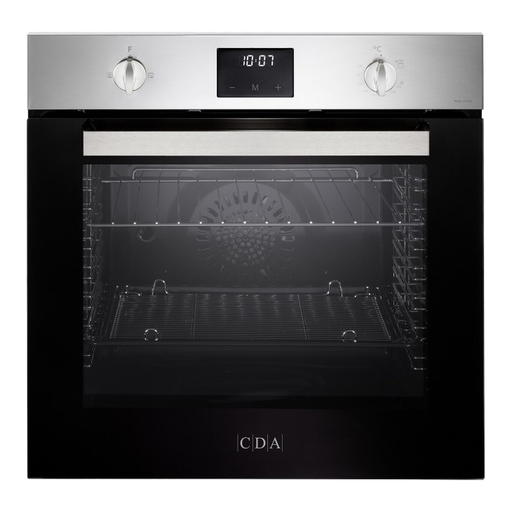
CDA SG121SS built-in gas fan oven, 70 L, stainless steel
Consider this fitted gas fan oven if you need space for a larger picnic batch. Its title states a 70 L capacity and an A energy rating. Check the usable tray dimensions and whether its fan mode accommodates your intended shelf arrangement; confirm gas-supply compatibility and installation requirements before ordering.
View on Joybuy
 No image available
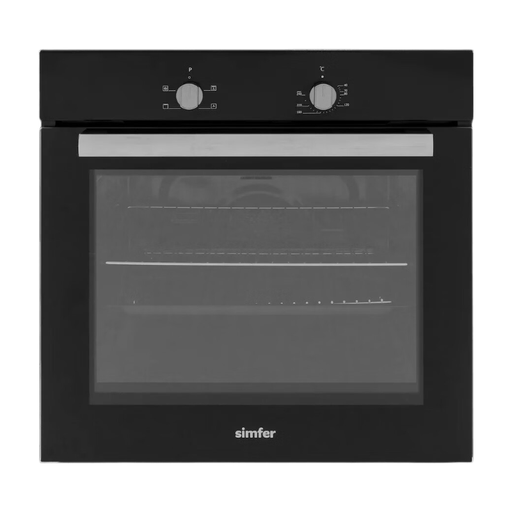
Simfer FO60B built-in electric fan oven, black
This fitted electric fan oven is an option if you are preparing a picnic batch and want an oven for other meals too. Before buying for several trays, check their usable dimensions and permitted shelf arrangement in fan mode. Confirm cabinet fit and the model’s electrical connection instructions.
View on Joybuy
Common questions
Is a fan oven useful for courgette slices on more than one tray?
Yes, fan cooking is particularly relevant when using more than one shelf: Which? explains that good fan ovens spread heat evenly. That does not guarantee identical results from every model, so check independent model evidence if cross-tray consistency matters to you.
Should I use a countertop oven for one picnic batch?
A countertop convection oven can suit a modest batch if its tray fits your quantity and you can position it safely. For cooking several trays or other dishes together, compare usable capacity instead of choosing by appliance format alone; Energy Saving Trust notes the value of a larger oven’s capacity for batch cooking.
Will a built-in oven need an electrician?
Check the exact model’s connection instructions before purchase. Electrical Safety First advises having an oven fitted by a qualified electrician, and Bosch and NEFF specify electrician connection for the built-in examples discussed here.
How should I compare oven energy information?
Compare energy ratings and stated consumption only where the appliance labels are comparable, then consider the cavity size you normally need. Energy Saving Trust notes that larger models can use more energy even when they have the same rating.


