Single-oven family cooks
You usually bake one substantial dish, such as fish pie, and want enough usable space for it without making room for a second cavity.


For one family-sized fish pie, a full-size built-in fan oven is a sensible starting point if your dish fits and the appliance suits your kitchen housing. Consider a double oven when you regularly cook sides or dessert at a different temperature alongside the pie; check each cavity separately, as well as the installation dimensions, connection instructions and cooking modes.
You usually bake one substantial dish, such as fish pie, and want enough usable space for it without making room for a second cavity.
You often cook the main dish alongside a side or dessert that needs different timing or cooking conditions, and have space for a double-oven housing.
You expect sauce or browned topping to leave residue, so the cleaning system and the surfaces you can access matter to your choice.
Choose between one cavity and two according to the meals you cook together, then check the exact appliance against your housing and usual pie dish.
Consider it when: The fish pie is normally your only oven dish and one usable cavity meets your needs.
Trade-off: Dishes needing different temperatures must take turns or share one set of cooking conditions.
Consider it when: You regularly need separate cooking spaces for the pie and another dish. Which? identifies simultaneous dishes as a reason to consider a double oven.
Trade-off: Each cavity needs checking for dish fit, and built-in and built-under models require different housing arrangements.
| Concern | What to check | Who this matters to |
|---|---|---|
| Kitchen fit and installation | Compare the installation drawing with your opening, depth and ventilation space; check the required electrical connection. | If the oven cannot fit the existing housing, its cooking features cannot help me. Around 36% of consumers put fit and installation first. |
| Fan cooking and topping | Check the exact fan mode, shelf guidance and any grill function you intend to use; follow the recipe and oven manual for temperature adjustments. | I want the filling heated through without losing control of the browned topping. Roughly 29% of consumers prioritise cooking and topping control. |
| Cooking dishes together | For a double oven, check each cavity against your pie dish and trays, including the modes available in each. | When sides or dessert need different conditions, I need a separate cooking space. Around 21% of consumers place that flexibility first. |
| Cleaning after meals | Identify the cleaning system, the surfaces it covers and any parts that must be removed before use. | Baked-on sauce and topping make cleaning effort important to me; roughly 14% of consumers make it their primary concern. |
Ovens with similar-looking fronts can need very different openings: Bosch lists its HBS573BS0B single oven at 595 mm high and its MBA533BB3B double oven at 888 mm high.
Measure the opening and depth, then use the selected model’s installation drawing to check the required housing and ventilation. Establish whether your space calls for a built-in or built-under appliance.
A double oven separates dishes, but the pie still has to fit an individual cavity. Beko specifies 48 L and 38 L cavities for its CTFY22309.
Measure your usual pie dish and largest tray, and compare them with usable cavity and shelf dimensions rather than a combined capacity figure.
AEG’s advice for its SurroundCook/True Fan Cooking system includes a 20°C reduction; it is guidance for that system, not a conversion rule for every fan oven or recipe.
Start with your recipe and the selected oven’s manual. Watch the topping on the first cook, particularly if you use a grill to finish it.
Pyrolytic programmes, steam-softening and catalytic surfaces work differently. Shelves, glass and uncovered surfaces may still need attention.
Check which parts the selected system covers and what the manual says to remove or clean separately.
These examples show features to compare on specific oven models; a brand name alone does not establish the fit or functions of another model.
Bosch offers relevant single- and double-oven examples for comparing cleaning features with separate cooking cavities.
The B1GCC0AN0B is a built-in single-oven example for cooks considering multi-level hot-air cooking.
The BSX23101XM is a 65 L built-in single oven with true fan cooking and Aqua Clean.
The CTFY22309 is a built-under double-oven example for meals needing separate cavities.
These built-in single and double ovens offer choices for a fish-pie meal. Use your usual dish size, the number of dishes you cook together and the installation instructions to narrow the list.
 No image available
Consider a double oven if the fish pie often shares the meal with another oven dish.
Check that your pie dish fits the cavity you plan to use and that the housing suits this 90cm model; its installation instructions must guide fitting.
 No image available
Its separate cavities are worth considering when another dish needs cooking alongside the pie; Bosch specifies 3D Hotair for this model.
Bosch lists appliance dimensions of 888 x 594 x 550 mm and electrical connection by an electrician. Check the required housing dimensions and the space available for your pie dish.
 No image available
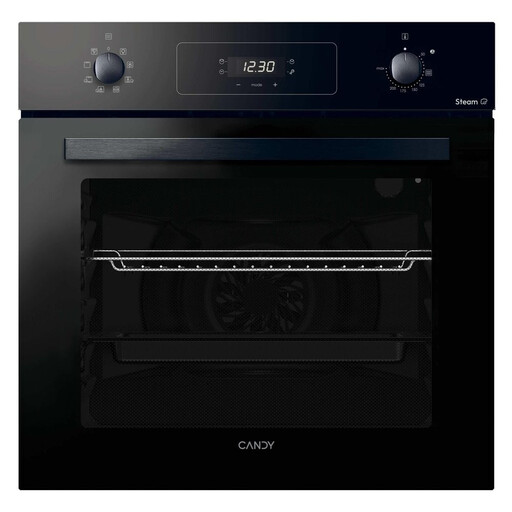
The single-oven format is a route to consider when the fish pie is normally your main oven dish.
The product name states a 65 L capacity. Check usable dish space, the cooking and browning modes, and the cabinet and electrical instructions before choosing it.
 No image available
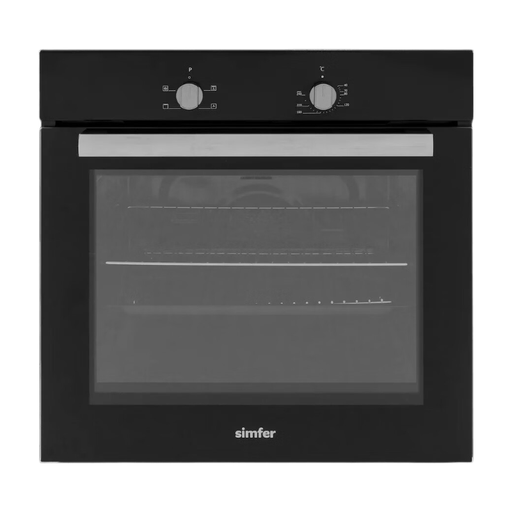
A single fan oven suits the plan of cooking one main family dish at a time, provided your pie dish fits.
Check the model’s installation drawing against your cabinet rather than relying on the front appearance; also confirm the electrical connection and any browning mode you intend to use.
 No image available
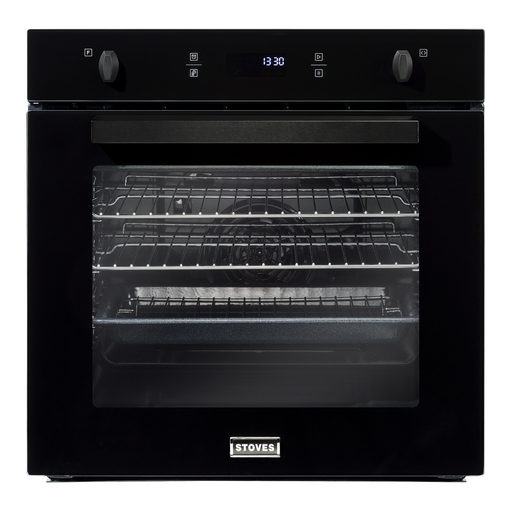
Consider this single-oven format if one cavity meets your meal needs and a pyrolytic cleaning programme is a priority.
Check usable cavity space for your pie dish, the cooking modes and the cleaning instructions. The 60cm description does not replace the cabinet cut-out and connection requirements.
Yes, a fan oven is a practical option if its usable space fits your dish and it has the cooking modes you want. Follow your recipe and the model’s manual rather than assuming one temperature adjustment works for every fan oven.
Not if the pie is normally your only oven dish. A double oven becomes more useful when sides or dessert regularly need a separate cavity, provided the individual cavities fit your cookware and the appliance fits your housing.
No: the front-width description alone does not establish a fit. Compare the selected model’s required opening, depth, ventilation and electrical connection with your existing installation.
Check the exact oven’s installation instructions before arranging fitting. Bosch and NEFF specify electrical connection by an electrician for the cited models; that model-specific instruction does not establish the connection method for every oven.
Choose according to the work each model’s system covers: pyrolytic programmes, steam-softening and catalytic panels are different approaches, not interchangeable promises of maintenance-free cleaning. Check the manual for covered surfaces, preparation and parts that still need cleaning.