For an occasional fruit cobbler, a built-in single fan oven is a sensible choice if you normally cook one dish at a time; look for independent heat-distribution and temperature-control results rather than assuming a fan setting guarantees even browning. A double oven is more relevant when you regularly need separate temperatures, while added steam is optional for cobbler. Check cabinet fit, electrical connection and the recipe’s fan-oven temperature before buying.
Who needs which oven features?
Home bakers focused on even baking
If you mainly bake one cobbler at a time, heat distribution and temperature control matter more to your choice than extra cooking modes. Which? assesses oven-control accuracy at different settings; a fan feature alone does not establish how an individual oven performs.
Batch and hosting bakers
If several dishes often need the oven together, compare usable shelf space and capacity. Separate cavities become particularly relevant when those dishes need different temperatures.
Kitchen-replacement buyers
If the oven must fit existing housing, check the exact model’s installation dimensions and electrical connection before weighing up its baking functions.
What matters when choosing a fan oven?
Start with your usual cooking pattern, then compare baking performance and features only among ovens that can fit and be installed in your kitchen.
| Concern | What to check | Who this matters to |
|---|
| Even baking |
Check for a fan cooking mode and, where available, independent results for heat distribution and temperature accuracy. |
If I bake cobblers regularly, I want the topping to colour without relying on one hot spot. Around 42% of consumers put even baking first. |
| Fit and installation |
Compare the installation drawing with your cabinet opening; check the model’s plug or hardwiring requirements. |
When I replace an integrated oven, it needs to fit the housing and suit the electrical arrangement. Roughly 25% of consumers make fit and installation their primary concern. |
| Capacity and cooking zones |
Check usable cavity space and whether you routinely need separate cavities at different temperatures. |
I often cook dessert alongside another dish and need room for both without sharing one temperature. About 17% of consumers prioritise capacity and separate cooking zones. |
| Cleaning and functions |
Compare the exact model’s cleaning provision and cooking modes, rather than assuming they apply across a brand’s range. |
If spills are frequent or I use the oven for more than baking, cleaning effort and additional modes affect my choice. Around 16% of consumers place those needs first. |
Mistakes to avoid when buying and baking
-
Assuming every built-in oven plugs into a socket
Connection requirements vary by model. Bosch specifies no plug and electrician connection for its HQA534BS3B, while Electrical Safety First advises having ovens fitted by a qualified electrician.
Check the installation sheet, connected load and required connection for the exact oven before arranging delivery.
A model that needs hardwiring may also require electrician time or circuit work, depending on the kitchen.
-
Using a conventional recipe temperature unchanged
A fan setting may call for a different temperature. A conversion chart pairs 180°C conventional with 160°C fan; that example is a prompt to check the recipe and oven instructions, not a substitute for them.
Confirm which oven setting the recipe specifies, then check the cobbler’s topping and fruit as it bakes.
-
Choosing a double oven for an occasional second dish
Separate cavities help when dishes regularly need different temperatures, but a double oven also needs suitable housing. Zanussi’s format guidance distinguishes single and double ovens by the space available.
If you usually bake one dish, compare single-oven capacity and shelf space before choosing a double layout.
-
Treating a listing as proof of current availability
Product availability can change between finding an oven and placing an order.
Check the live listing, exact model, delivery terms and warranty when you are ready to buy.
Brands to compare by model
Bosch
A reference point for built-in single ovens, including models with added steam.
- Bosch says its HQA534BS3B uses 3D Hotair to distribute heat across up to three levels and includes an added-steam function.
- Those are model-specific manufacturer claims, not a comparison of baking results. The HQA534BS3B also specifies electrician connection without a plug.
Beko
A reference point for conventional built-in single fan-oven formats.
- Beko describes a heating element around the fan and SimplySteam cleaning support on its BBIF12311.
- Beko’s claims about even heat concern that model; compare independent performance results and the functions of any other model separately.
Zanussi
A reference point when comparing compact, single and double built-in oven formats.
- Zanussi’s buying guide links the choice of oven format to available cabinet space and cooking needs.
- Its general guidance that fan ovens can help with even baking does not establish the performance or functions of a particular model.
Joybuy ovens for fruit-cobbler baking
These built-in ovens cover single-cavity choices for cobbler baking and a double-oven layout for cooking another dish alongside it. Compare each model’s cooking modes, housing requirements and electrical connection against your kitchen.
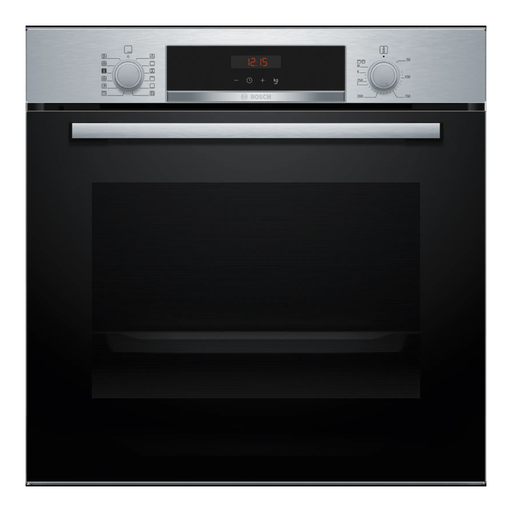 Image unavailable
Bosch HQA574BS3B Series 4 Pyrolytic Single Oven – Stainless Steel
For one cobbler at a time and a preference for pyrolytic cleaning, consider this built-in single oven. Check its fan and steam settings, cabinet fit and electrical connection before ordering.
View on Joybuy
 Image unavailable
Bosch HHF113BA0B Series 2 Built-in Single Electric Oven – Black
For baking one cobbler at a time, this single oven offers a fan-based cooking option. Joybuy describes its 3D Hotair fan as circulating heat through the cavity; check cabinet fit and electrical connection for your installation.
View on Joybuy
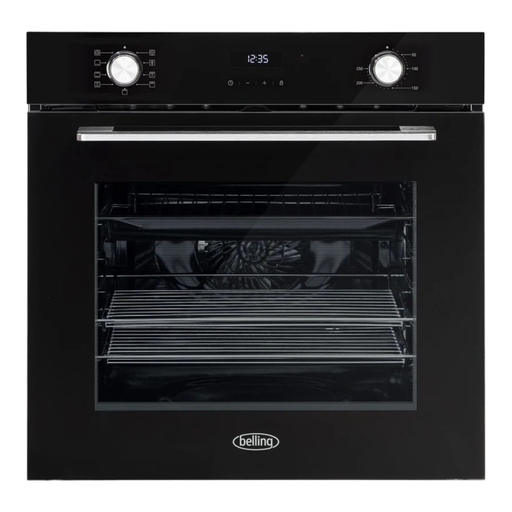 Image unavailable
Belling BEL BI603MFC Built-in Single Electric Oven – Black
For a cobbler baked in a single cavity, compare this model’s fan setting with your usual recipes. Confirm the required cabinet opening and electrical connection before choosing it.
View on Joybuy
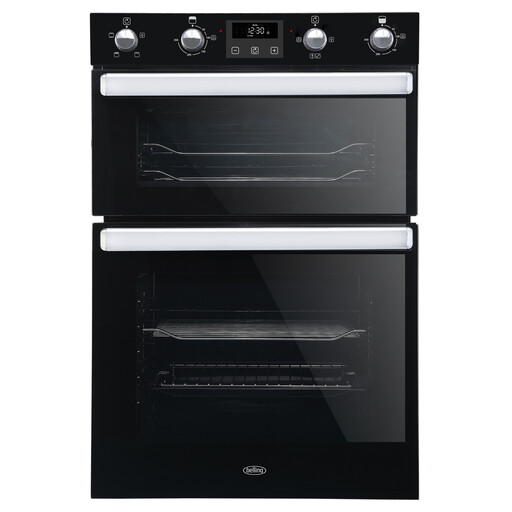 Image unavailable
Belling BEL BI902FP Built-in Double Electric Oven – Black
If you regularly cook a cobbler alongside a dish needing another temperature, this double-oven format is worth comparing. Confirm which cavity has a fan, the housing dimensions and the electrical requirements.
View on Joybuy
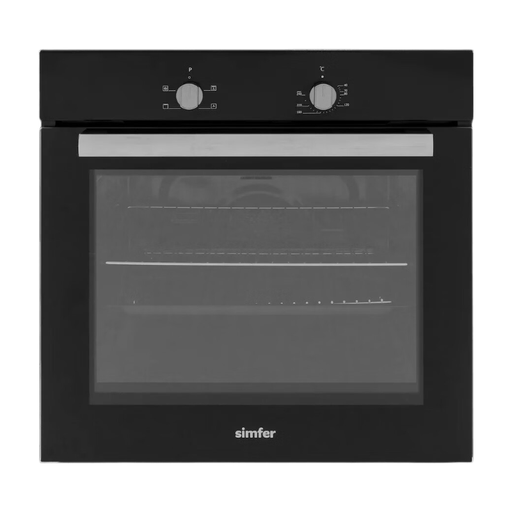 Image unavailable
Simfer FO60B Built-in Single Electric Fan Oven – Black
For baking a cobbler in one cavity, this built-in electric fan oven is an option. Compare the model’s installation measurements with your cabinet and check its electrical requirements.
View on Joybuy
Questions about fan ovens and cobblers
Should I use a conventional-recipe temperature in a fan oven?
Not without checking the recipe and oven manual. A conversion chart pairs 180°C conventional with 160°C fan, but follow the instructions relevant to your recipe and watch for a browned topping and bubbling fruit.
Does a fruit cobbler need a steam-assisted oven?
No steam function is established as necessary for fruit cobbler. A fan mode addresses the aim of circulating heat; consider added steam only if you also value it for other baking, and check the functions of the exact model.
Will a built-in electric oven need an electrician?
Check the exact model’s installation instructions before making arrangements. Electrical Safety First advises fitting by a qualified electrician; Bosch’s HQA534BS3B, for example, specifies electrician connection and has no plug.
How much oven capacity do I need for cobbler?
Choose for the dishes you normally cook, not just an occasional dessert. Zanussi’s buying guide suggests 35–40 litres for one or two people, 40–70 litres for three or four, and over 70 litres for larger households; also check the exact oven’s usable shelf and tray space.


