For an occasional lentil cottage pie, a compact convection oven is worth considering if your dish fits its usable cavity. A built-in fan oven makes more sense as a permanent main oven, particularly if you also cook other dishes; check cabinet fit and electrical connection before choosing one. Whichever format you choose, start with the recipe’s fan setting when it provides one, and cook the pie until golden and hot throughout.
Who each option suits
Regular cottage-pie cooks
If you make lentil or vegetable cottage pie often, look for a fan setting and temperature controls you can use with your recipe. Good Food’s veggie shepherd’s pie recipe specifies 170°C fan and calls for the pie to be golden and hot throughout.
Small-kitchen or occasional-use cooks
A countertop convection oven may suit you when a permanent built-in appliance is impractical. Check the usable shelf and door clearance against your own pie dish before relying on its stated capacity.
Multi-dish home cooks
If you cook sides or another dish alongside the pie, check the exact built-in model’s supported shelf positions and hot-air mode. You will also need to confirm that it suits your cabinet and electrical arrangement.
What matters when choosing
Compact countertop convection oven
Consider it when: You need an occasional-use oven without a built-in installation and your pie dish fits inside.
Trade-off: The usable cavity and shelf arrangement may restrict dish size and cooking alongside other food.
Built-in fan oven
Consider it when: You want a permanent main oven for regular meals, with an exact model that supports your intended shelf use.
Trade-off: Cabinet dimensions and electrical connection need checking before you commit to a model.
| Concern |
What to check |
Who this matters to |
| Fan setting and browning |
Confirm a fan programme and usable temperature controls. If the recipe already specifies a fan temperature, do not convert it a second time. |
I want the topping golden while the filling becomes hot throughout, so the recipe’s fan setting needs to be straightforward to use. Around 36% of consumers put this cooking concern first. |
| Fit and connection |
For a built-in model, compare its installation instructions with your cabinet and confirm the required electrical connection. |
Before replacing a main oven, I need to know it can be fitted in my kitchen. Roughly 29% of consumers make installation feasibility their primary concern. |
| Dish space and shelf use |
Check usable cavity dimensions against your dish; for concurrent cooking, check the model’s supported shelf positions. |
I may cook sides while the pie bakes, so space for my dishes matters more than a capacity figure alone. About 21% of consumers prioritise dish space and multi-dish cooking. |
| Cleaning and controls |
Compare the exact cleaning method and controls with the routine you are willing to use. |
After a pie leaves topping or sauce residue, I want controls and cleaning steps I can manage regularly. Around 14% of consumers place everyday upkeep first. |
Buying pitfalls
-
Converting an already stated fan temperature
Good Food’s veggie shepherd’s pie recipe specifies 170°C fan. Applying another generic fan-oven reduction would change that recipe’s stated setting.
Start with the recipe’s fan temperature unless its instructions or your oven’s manual direct you otherwise, and check that the pie is golden and hot throughout.
-
Choosing a built-in oven by its nominal width alone
Cabinet requirements and electrical connections need checking for the exact appliance. Bosch lists a GB plug for the HHF113BR0B, while Neff specifies electrician connection for the B1GCC0AN0B.
Measure the space, consult the installation instructions and confirm the electrical arrangement before ordering. Electrical Safety First advises having an oven fitted by a qualified electrician.
Fitting may also involve electrical or cabinet work, depending on your existing installation.
-
Treating a fan feature as a cooking test result
A manufacturer’s description of hot-air circulation does not establish how accurately a particular oven controls temperature or cooks your pie.
If consistent baking is important to you, compare independent results for the exact model where available, as well as its cooking modes and controls.
-
Assuming a compact oven’s litres prove dish fit
Tefal lists the Optimo OF445840 as a 19 L convection oven, but capacity alone does not establish the width, height or door clearance available to your dish.
Measure your pie dish and compare it with the oven’s usable shelf or tray dimensions before buying.
Brands to consider
Bosch
Bosch’s HHF113BR0B is a built-in single oven relevant to the permanent main-oven route.
- Bosch states that its 3D Hotair mode distributes heat evenly on up to three levels on this model; treat that as a model claim, not a cooking test result.
- Its listed appliance dimensions are 595 × 594 × 548 mm. Check the required cabinet cut-out and the connection instructions for the exact appliance supplied.
Neff
Neff’s cited built-in ovens offer CircoTherm hot-air cooking for people considering multi-level use.
- Neff states that the B1GCC0AN0B supports baking on up to three levels; it makes an up-to-four-level claim for the different B57CR22G0B model.
- The B1GCC0AN0B lists no plug and specifies electrical connection by an electrician. Check the installation requirements of whichever model you choose.
AEG
AEG offers built-in ovens with SurroundCook or True Fan Cooking; features vary by model.
- AEG describes cooking on multiple shelf positions with SurroundCook. Its OU5AB20CK also lists multilevel heating, a timer display and Aqua Cleaning.
- AEG’s suggested temperature adjustment for SurroundCook is not a universal conversion rule. Follow a recipe’s stated fan setting and check the exact oven’s instructions.
Tefal
Tefal’s Optimo OF445840 illustrates the compact countertop route rather than a built-in replacement.
- Tefal lists convection mode, 19 L capacity, a supplied tray and a stated maximum temperature of 240°C for this model.
- Check internal clearance and shelf position against your pie dish; the capacity figure alone cannot confirm fit.
Built-in fan ovens on Joybuy
These built-in single fan ovens relate to the permanent main-oven route. Compare each one with your pie dish, cabinet and electrical setup rather than treating the product list as a choice between built-in and countertop ovens.
 No image available
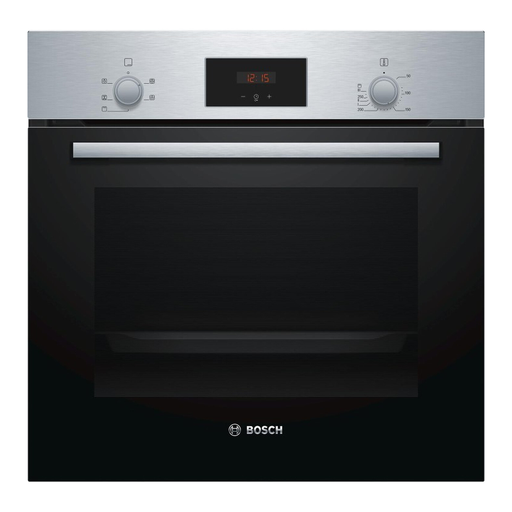
Bosch HHF113BR0B Series 2 built-in single oven, stainless steel
Consider this model if you want a permanent fan oven and may cook other dishes alongside a cottage pie.
Bosch lists 3D Hotair with an up-to-three-level cooking claim and appliance dimensions of 595 × 594 × 548 mm. Check the cabinet cut-out and confirm the electrical connection for the exact appliance before ordering.
Joybuy
 No image available
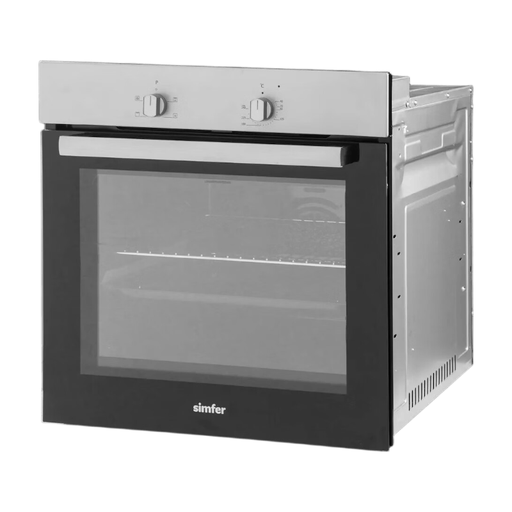
Simfer FO60S silver built-in single electric fan oven
Consider this built-in fan oven if your kitchen can accommodate it and you want a main oven for cottage pie.
Check the exact installation dimensions, electrical connection, temperature controls and timer against your kitchen and cooking needs before choosing it.
Joybuy
Questions about choosing and using an oven
What fan temperature should I use for a lentil cottage pie?
Use the fan temperature in your chosen recipe when it supplies one. As a recipe-specific example, Good Food’s veggie shepherd’s pie specifies 170°C fan and says to cook until golden and hot throughout; that setting is not a rule for every pie or oven.
Will a compact countertop oven hold my cottage-pie dish?
It may, but check the dish against the oven’s usable internal dimensions and door clearance. Tefal lists its Optimo OF445840 as a 19 L convection model with a supplied tray; litres alone cannot confirm that your dish fits.
What installation checks does a built-in oven need?
Check the exact model’s cabinet requirements and electrical connection before ordering. Electrical Safety First advises having an oven fitted by a qualified electrician; connection arrangements differ, with Bosch listing a GB plug for the HHF113BR0B and Neff specifying electrician connection for the B1GCC0AN0B.
What should I do after the oven is installed?
Register the appliance with its manufacturer and keep its model details. Electrical Safety First says registration makes it easier to contact you if there is a safety recall.


