What matters when choosing?
Plan the carrot trays first, then decide whether another dish needs its own temperature and which handling or cleaning features you would use regularly.
| Concern |
What to check |
Who this matters to |
| Multi-tray roasting |
Check the exact fan function, stated cooking levels and usable shelf layout. Which? assesses oven heat distribution and control accuracy separately from capacity. |
If I need several carrot trays ready in repeatable batches, I want to know how many can cook together without relying on cavity size alone. Around 40% of consumers put batch throughput first. |
| Separate cooking settings |
Check both cavities' dimensions and functions, including whether the second cavity offers the cooking method you need. |
When carrots and another bake-sale dish need different settings at the same time, keeping their cooking schedules apart matters most. For around 30% of consumers, that flexibility is the primary need. |
| Cleaning and tray access |
Check the model-specific cleaning method, whether sliding rails are included, and the instructions for handling loaded shelves. |
If I expect to move hot trays repeatedly and clean up roasting residue afterwards, access and upkeep shape my choice. Those needs come first for around 30% of consumers. |
Joybuy product choices
These built-in ovens offer single- and double-oven choices for planning carrot batches. Compare each model's fan functions and usable shelves before deciding how many trays to cook at once; a second cavity is most relevant when your menu needs a separate setting.
 No image available
Belling BEL BI903MFC 90 cm built-in double oven
Consider a double oven if carrots and another bake-sale dish need separate cooking space. Check the functions and shelf positions in each cavity, and make sure the stated 90 cm format suits your cabinet and electrical installation.
View on Joybuy
 No image available
Belling BEL BI902FP built-in double electric oven
This double-oven format is worth considering if another dish needs space while the carrots cook. Confirm the fan functions, usable levels, cabinet dimensions and electrical requirements for the exact model.
View on Joybuy
 No image available
Candy FIDCN605 65 L built-in single oven
A single oven suits a carrot-focused cooking session when you do not need another cavity at a different setting. Its stated 65 L capacity does not by itself establish how many trays can cook together; check the fan function, shelf layout and installation instructions.
View on Joybuy
 No image available
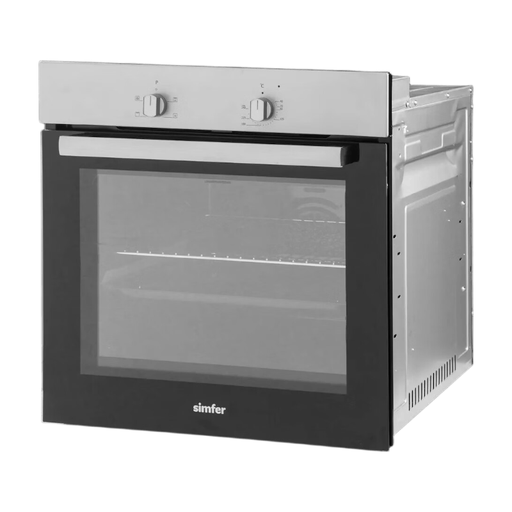
Simfer FO60S built-in single fan oven
This single fan oven is a choice to assess when carrots are the main oven task. Check how many trays its shelf arrangement can accommodate, and confirm the appliance dimensions against the required cabinet cut-out before buying.
View on Joybuy
Frequently asked questions
Do I need a double oven to roast carrots for a bake sale?
Not if carrots are the main oven task and a single oven supports the number of trays you plan to cook together. A double oven becomes more useful when another dish needs its own timing or temperature; check the functions of both cavities before choosing one.
Can I plug a built-in oven into a standard socket?
Do not assume you can. Bosch states that its HBG7341B1B and MBA533BB3B have no plug and require connection by an electrician, and Neff states the same for its B1GCC0AN0B. Check the installation instructions and your kitchen's electrical supply for the model you choose.
Does a one-off community bake sale require food-business registration?
It may, depending on the activity. For England, Northern Ireland and Wales, Food Standards Agency guidance says that selling or supplying food at a charity or community event can bring an activity within food-business requirements, while a local authority may decide very limited, infrequent activity does not require registration. Ask the relevant local authority about your event; food must still be safe to eat.
What allergen information should accompany bake-sale food?
Check the rules that apply to how the food is supplied. For food businesses in England, Northern Ireland and Wales, Food Standards Agency guidance distinguishes prepacked, prepacked for direct sale and non-prepacked food, with different requirements for ingredients and the 14 regulated allergens. Even where an activity does not require registration, providing clear ingredient and allergen information helps customers decide what they can eat.


