One-cake birthday bakers
If the plan is one treacle sponge followed by ordinary family meals, concentrate on a baking mode you can use with the recipe and enough space for your cake tin. Extra tray capacity need not drive the decision.


For one birthday treacle sponge and everyday cooking, start with a built-in oven that has a suitable fan-baking mode; larger capacity or manufacturer-stated multi-level cooking becomes more relevant if you also plan to bake layers, trays or party food. Follow the recipe’s fan setting where it gives one, and check the exact oven’s cabinet fit and electrical connection before ordering.
If the plan is one treacle sponge followed by ordinary family meals, concentrate on a baking mode you can use with the recipe and enough space for your cake tin. Extra tray capacity need not drive the decision.
If cake layers, biscuits or party food will compete for oven time, compare usable shelf space and the exact model’s multi-level cooking guidance. Exterior width alone will not tell you how your tins and trays fit.
If this oven will replace a built-in appliance, measure the cabinet opening and check the new model’s installation and electrical instructions before deciding whether its baking extras are worthwhile.
Settle on a mode that works with your sponge recipe, then consider how much party baking must fit around it. Confirm cabinet and electrical requirements before committing to a model.
| Concern | What to check | Who this matters to |
|---|---|---|
| Single-cake baking | Confirm a cooking fan or hot-air mode rather than a cooling fan, and check the manual’s baking and shelf guidance. | If I am making one treacle sponge, I want a setting that works with its recipe without choosing extra capacity just for the occasion. Around 42% of consumers could put dependable single-cake baking first. |
| Party-baking space | Compare your tin and tray sizes with usable shelf space; check whether multi-level baking applies to the exact model and mode. | When cake layers and party food need oven time, I care about fitting the dishes and using more than one shelf where the oven permits it. Multi-tray flexibility could be the main concern for around 33% of consumers. |
| Fit and installation | Check cabinet-aperture dimensions, electrical rating and connection instructions; compare cleaning features only after confirming fit. | Replacing a built-in oven, I need it to fit my cabinet and connect safely before its additional functions matter. For around 25% of consumers, installation and day-to-day upkeep could come first. |
Two ovens with similar exterior widths can have different appliance depths and installation requirements. The appliance measurements are not necessarily the cabinet opening required for fitting.
Measure the opening and surrounding clearances, then compare them with the installation document for the exact model.
Cabinet alterations may be needed if the replacement does not fit the existing space.
A recipe’s conventional-oven temperature is not automatically the right fan setting. Zanussi UK and CATA Appliances describe a reduction of around 20°C as a starting point for fan cooking.
Use the recipe’s fan temperature when supplied. Otherwise, start with its conversion guidance and follow its timing and doneness checks; do not reduce a stated fan temperature again.
Connection arrangements vary. The cited Bosch and Neff models specify no plug and connection by an electrician, while the cited Logik and Zanussi models specify professional installation to a 13 Amp fused spur. Electrical Safety First advises reviewing an oven’s power requirements before purchase.
Check the exact model’s rating and installation instructions against your existing circuit, and arrange an electrician where required.
A larger stated volume does not establish that your cake tin and party trays will fit together, or that the oven supports baking on several shelves in the mode you intend to use.
Compare tin and tray dimensions with the model’s shelf guidance. If you need simultaneous trays, check its specific multi-level hot-air instructions.
A reference point for built-in ovens with multi-level hot-air cooking and, on selected models, added steam.
Relevant if baking on several shelves is more important to you than an added-steam feature.
Worth comparing if the oven will handle both a cake and larger party dishes.
A simpler built-in fan-oven reference for one-cake baking and routine meals.
These built-in electric oven choices cover straightforward fan baking and models with additional cleaning or party-baking features. Choose by the mode you need for the sponge, then check tin space and installation requirements for the exact model.
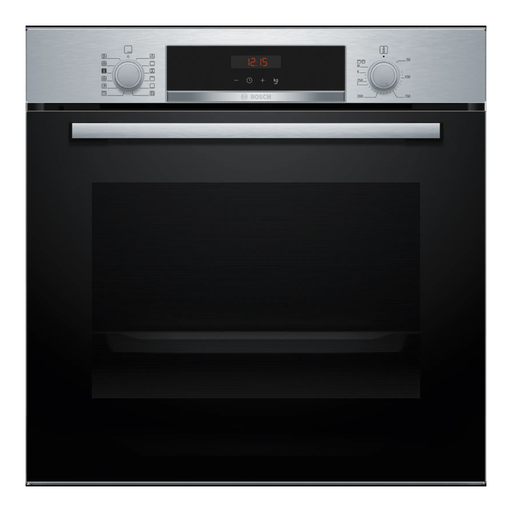 No image available
If cake layers or party trays are part of the plan, check how this oven’s hot-air mode accommodates your shelf arrangement. This variant is identified as pyrolytic; confirm cabinet fit and arrange an electrician for its specified hardwired connection.
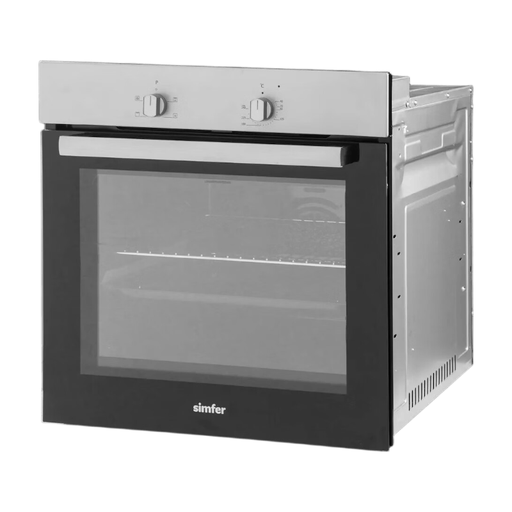 No image available
For a single sponge and everyday meals, this built-in electric fan oven follows the straightforward fan-cooking route. Compare appliance and cabinet-aperture measurements with its installation instructions, and confirm the electrical connection it needs.
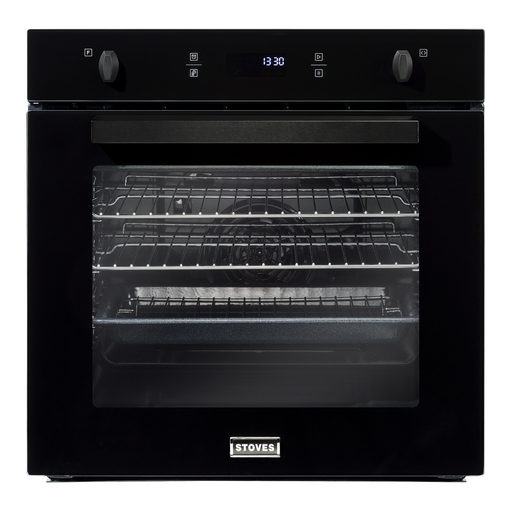 No image available
If you want a built-in oven for a fan-baked sponge and a pyrolytic cleaning feature, compare this model with your available space. Check its cavity against your cake tin and confirm the cabinet dimensions and electrical requirements before ordering.
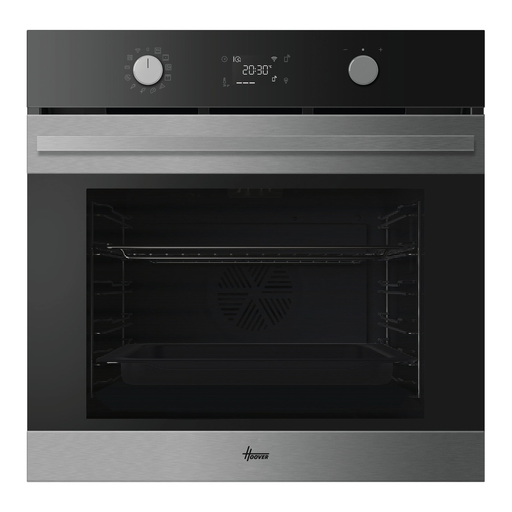 No image available
For a fan-baked sponge with other party dishes to plan around, consider the stated 70 L capacity alongside the space your trays actually need. Confirm multi-level baking instructions if you intend to use several shelves, as well as cabinet fit and electrical requirements.
If the recipe gives only a conventional-oven temperature, around 20°C lower is a starting point for fan cooking, as described by Zanussi UK and CATA Appliances. If it already gives a fan temperature, use that figure rather than reducing it again, and follow the recipe’s timing and doneness checks.
No single mode suits every recipe: use the stated setting when the recipe specifies one. Zanussi UK also presents conventional top-and-bottom heat as suitable for traditional recipes, so check the recipe and your oven’s mode guidance rather than assuming fan cooking is always preferable.
Not necessarily; connection requirements vary by model. The cited Bosch and Neff ovens specify no plug, while the cited Logik and Zanussi ovens call for professional installation to a 13 Amp fused spur. Check the exact installation instructions and existing circuit; Electrical Safety First advises reviewing power requirements and recommends a registered electrician for installation work.
No: cavity volume alone cannot tell you whether your cake tin, trays and intended shelf arrangement will work. Compare their dimensions with the exact oven’s shelves, supplied tray information and cooking-mode instructions.