For one occupied room while central heating is repaired, consider a fan heater when prompt warmth matters most, a convector when low-noise background heating matters more, or an oil-filled radiator when you can accommodate a heavier unit that releases heat briefly after switch-off. Whichever type you choose, check its room-use instructions and controls, keep it clear of furnishings, and unplug it when you leave or go to bed.
Who needs a temporary room heater?
People who need an occupied room warm promptly
A portable fan heater is worth considering if the repair has left a workspace or sitting room cold and you need warmth where you are. Which? describes fan heaters as portable and useful for fast heating; you still need a clear, safe position for the appliance.
People spending longer in the affected room
If fan noise would interrupt work or rest, compare a convector or oil-filled radiator with thermostat control. Dimplex describes its ML2T convector as near-silent; check the instructions for the exact heater before using it in your room.
People whose room makes placement difficult
Furniture, curtains and walking routes can limit where a temporary heater can stand. Home Office fire-safety guidance says to keep heaters away from curtains and furniture and not to use them for drying clothes; check that the plug and cable are sound too.
What matters when choosing?
Fan heater
Choose when: You need prompt warmth in the room you are using; Which? describes fan heaters as useful for fast heating.
Trade-off: Fan noise may matter if you will work or rest nearby, so check the exact model rather than assuming it runs quietly.
Convector heater
Choose when: Low-noise background warmth matters more; Dimplex describes its ML2T convector as near-silent.
Trade-off: Dimplex says the ML2T is suitable only for well-insulated spaces or occasional use, so check that your intended use fits its instructions.
Oil-filled radiator
Choose when: You can leave a larger unit in place and value warmth that continues briefly after switch-off, as De’Longhi describes for its TRRS0920.
Trade-off: The TRRS0920 is listed at 11.583 kg, making its weight an important check if you need to move the heater often.
For one room during a central-heating repair, decide which need comes first. Safe placement and use matter whichever heater type you prefer.
| Concern |
What to check |
Who this matters to |
| Prompt warmth |
Check heat settings and whether there is a clear position for a fan heater in the occupied room. |
If I need to use a cold room soon, I put quick warmth ahead of low noise. Roughly 38% of consumers put that need first. |
| Quieter background warmth |
Check the exact model’s noise information, thermostat and room-use instructions. |
When I will be working or resting nearby, I would rather avoid disruptive fan noise. Around 31% of consumers make quieter background warmth their primary concern. |
| Safe temporary use |
Check the intended position, plug and cable, model instructions and current recall information. |
If furniture or household routines make heater placement difficult, I need to know I can use and disconnect it safely. For roughly 31% of consumers, that is the deciding concern. |
Mistakes to avoid
-
Using a heater as unattended central heating
A temporary heater still needs safe placement. Home Office fire-safety guidance warns against positioning heaters near curtains or furniture and using them to dry clothes.
Follow the model’s instructions, keep the area around it clear, and unplug it when you leave or go to bed.
-
Ignoring electricity use and controls
Wattage and time spent drawing power affect electricity use; a thermostat can change how long a heater runs at its selected setting.
Compare the stated power settings and thermostat controls against the hours you expect to use the heater.
-
Assuming every heater type fits the same routine
A fan heater chosen for prompt warmth may be distracting nearby, while a heavier oil-filled radiator may be awkward to move. Dimplex also limits use of its ML2T convector to well-insulated spaces or occasional use.
Choose the heater type for how you will occupy the room, then check the exact model’s weight, noise information and use instructions.
-
Checking safety by brand name alone
Product alerts and recalls concern particular products, so the make and model matter.
Check the exact model against the Office for Product Safety and Standards product alerts and recalls before buying or reusing a heater.
Relevant heater brands
De’Longhi
Its HFX65V20 fan heater and TRRS0920 oil-filled radiator illustrate different approaches to temporary room warmth.
- De’Longhi lists a 2,000 W maximum output, safety thermostat and tip-over switch for the HFX65V20.
- The TRRS0920 has different controls and a listed weight of 11.583 kg; features stated for either model should not be assumed across the range.
Dimplex
Its ML2T is a convector option to examine when low operating noise matters in an occupied room.
- Dimplex describes the 2 kW ML2T as near-silent and lists a rotary thermostat and overheat protection.
- Dimplex says the ML2T is suitable only for well-insulated spaces or occasional use.
Dyson
A brand to consider if you are comparing fan heaters with added air-treatment features; Which? included Dyson in its electric fan-heater testing.
- Compare the controls and intended uses of the particular model rather than treating every fan heater as interchangeable.
- Check exact-model wattage, noise information, room-use instructions and safety guidance before choosing one for temporary heating.
Joybuy heaters for temporary room warmth
The fan heater and oil-filled radiators below are options to compare for an occupied room while central heating is repaired. Check each model’s controls and instructions against the space and the time you expect to use it.
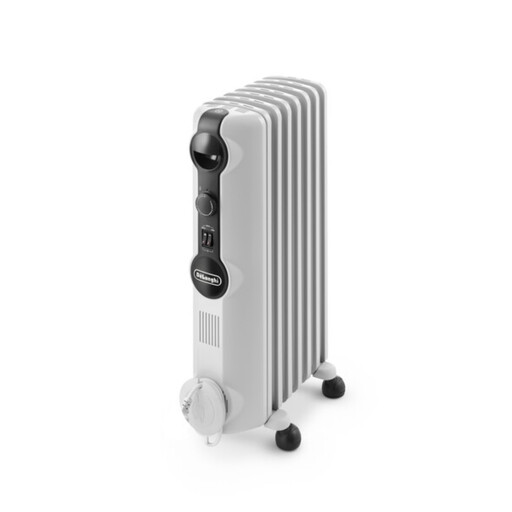 Image unavailable
De’Longhi Radia S TRRS0715 1500 W Oil-Filled Radiator, 7 Fins
Consider this oil-filled radiator if you can position it safely in the room you occupy. Its title identifies a 1500 W, seven-fin model with mechanical controls; check its instructions for the settings and placement you need.
View on Joybuy
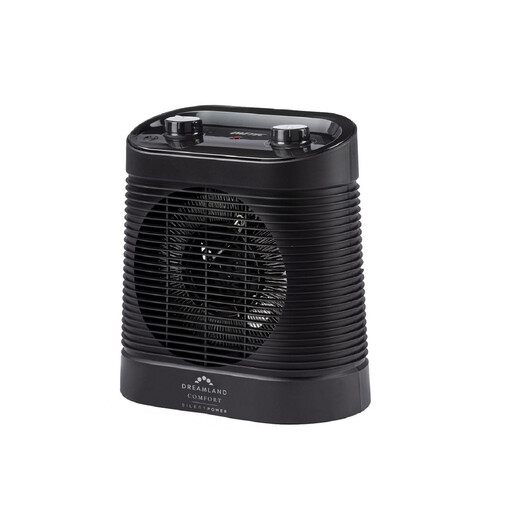 Image unavailable
Dreamland Silent Power Comfort 2000 W Ceramic Fan Heater, Grey
Consider this fan heater when prompt warmth in an occupied room is your priority. Its title lists ceramic technology, digital control and a 2000 W rating; if noise matters, check model-specific noise information rather than relying on the product name.
View on Joybuy
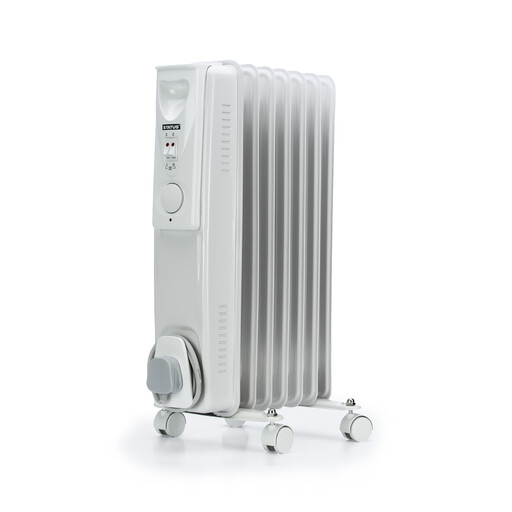 Image unavailable
Status 1500 W Oil-Filled Radiator, 7 Fins, White
Consider this radiator for temporary warmth where you can leave it safely positioned. The title specifies three heat settings and an adjustable thermostat; check the instructions for the settings’ individual wattages if that affects your choice.
View on Joybuy
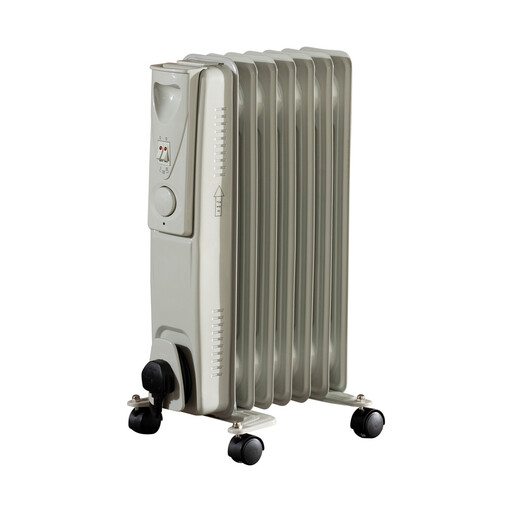 Image unavailable
DAEWOO 1500 W Oil-Filled Radiator, 7 Fins, White
Consider this radiator if you need to reposition temporary room heating: its title lists a wheeled base and carry handle. It also specifies an adjustable thermostat and tip-over shut-off; follow its instructions, including its direction not to use an extension lead.
View on Joybuy
 Image unavailable
Benross 46769 2500 W Oil-Filled Radiator, 11 Fins, Black
Consider this model if you are comparing oil-filled radiators with different stated maximum outputs. Its title identifies an eleven-fin, 2500 W variant; check its dimensions, room-use instructions and electrical requirements before choosing it for your space.
View on Joybuy
Questions about temporary room heating
Can I leave a portable heater on while I sleep or go out?
No: unplug it when you go to bed or leave. Home Office winter fire-safety guidance also says to keep heaters away from curtains and furniture and never use them to dry clothes.
How can I compare the electricity use of two heaters?
Compare their stated power settings and how long each is likely to draw power at the setting you use. A 2 kW heater drawing its full rated power for one hour uses 2 kWh; thermostat cycling can change actual use, so rated output alone does not tell you how much energy a repair will require.
Can I plug a 2 kW heater into an extension lead?
Check the heater’s instructions before using one, and do not overload a socket or extension lead. Electrical Safety First identifies heaters as high-powered appliances; if an extension lead is permitted and necessary, it must be sound and appropriately rated, and extension leads must not be daisy-chained.
What safety check should I make on a heater model?
Identify the exact make and model, then check it against the Office for Product Safety and Standards product alerts and recalls, including when reusing an older heater. Follow any applicable manufacturer instructions or corrective action rather than assuming that a safety feature makes unattended use acceptable.


