Shortbread consistency seekers
If lightly golden, repeatable batches matter most, look beyond the presence of a fan setting. Which? assesses heat distribution and temperature-control accuracy separately in its built-in oven tests.


For shortbread, start with a fan oven whose temperature control and heat distribution meet your baking needs, then decide how much usable space you need for trays. A single built-in oven makes sense when one cavity suits your cooking routine; consider a double oven if you regularly need separate cooking space. Check the cabinet fit and electrical connection for the exact model before choosing either format.
If lightly golden, repeatable batches matter most, look beyond the presence of a fan setting. Which? assesses heat distribution and temperature-control accuracy separately in its built-in oven tests.
If you often prepare several trays or cook another dish alongside shortbread, compare the exact model’s permitted shelf levels and whether a second cavity would be useful. Bosch and NEFF describe multi-level cooking on the cited models; a double oven offers a separate cavity.
If you are replacing a built-in oven, establish the available housing space and electrical supply before weighing up features. Electrical Safety First advises reviewing an oven’s power requirements before choosing it.
Decide how you will judge baking consistency, then whether one cavity covers your usual batch size. Treat installation fit as a requirement for whichever built-in format you choose.
| Concern | What to check | Who this matters to |
|---|---|---|
| Even baking and temperature control | Confirm a fan setting for the recipe, then look for model-specific evidence on heat distribution and control accuracy. | I want my shortbread to colour consistently without relying on extra cooking programmes; around 50% of consumers put even baking and temperature control first. |
| Batch space | Check usable shelf positions, tray fit and whether you need a separate cavity for other food. | When I make several trays or cook a meal at the same time, space becomes my deciding factor. Around 33% of consumers prioritise batch capacity or a second cavity. |
| Kitchen fit and upkeep | Match the cabinet opening and electrical supply to the exact model; compare its cleaning method and fan-forced energy-label figure. | I need an oven that fits my kitchen and whose upkeep I can manage; kitchen fit and upkeep come first for around 17% of consumers. |
A fan setting does not, by itself, establish even heat or accurate controls. Which? measures heat distribution and control accuracy separately.
Look for results for the model you are considering. For Good Food’s shortbread recipe, use its stated 150°C fan setting as a starting point and check a small first batch before planning several trays.
Built-in ovens differ in dimensions and connection requirements: Bosch lists a GB plug for its HHF113BR0B single oven, while AEG specifies a hardwired connection for its OU5NP20B.
Check the cabinet opening against the installation instructions and confirm the model’s electrical requirements. Consult a qualified electrician if the existing supply is in doubt, as Electrical Safety First advises.
A second cavity is useful when you need separate cooking space, but a double oven also needs suitable housing and an appropriate electrical connection.
If one tray is your usual bake, compare suitable single ovens first. Check the cooking modes of both cavities before relying on a double oven for a particular recipe.
The UK domestic-oven energy-label data described by GOV.UK also includes usable cavity volume and fan-forced energy consumption per cycle.
Once models meet your baking and installation needs, compare their stated cavity volumes and fan-forced kWh-per-cycle figures on a like-for-like basis.
Bosch has cited single- and double-oven models worth comparing if you are deciding how much cooking space your kitchen needs.
The cited B6ACH7AG7B single oven is relevant if multi-level cooking and cleaning options are both important to your choice.
The cited OU5NP20B illustrates a double-oven route for a kitchen where separate cooking space is useful.
These single and double built-in ovens offer different ways to plan shortbread baking around your kitchen and usual batch size. A product’s fan setting or feature name is not, on its own, evidence of baking consistency.
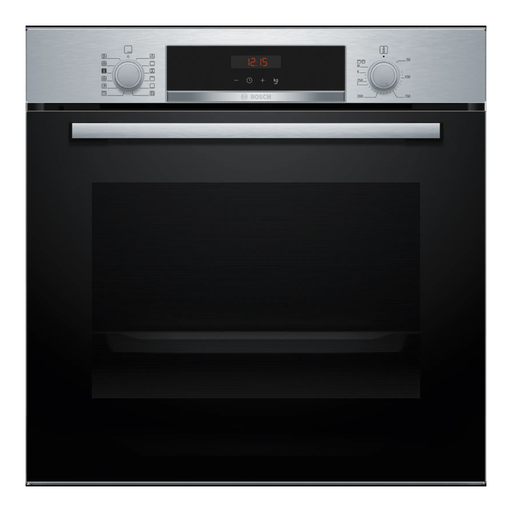 No image available
Consider this single built-in format if one cavity suits your shortbread batches.
The product title identifies pyrolytic cleaning. Check the required cabinet opening, electrical connection and model-specific temperature-control evidence before ordering.
 No image available
Consider a double built-in oven if your cooking routine calls for separate cavities as well as shortbread baking.
Confirm the fan-cooking mode in the cavity you intend to use, along with the cabinet opening and electrical requirements.
 No image available
This double-oven format is worth considering when separate cooking space would regularly be useful.
Check which cavity has the fan setting needed for your recipe, and confirm the appliance dimensions, cabinet opening and electrical connection for this model.
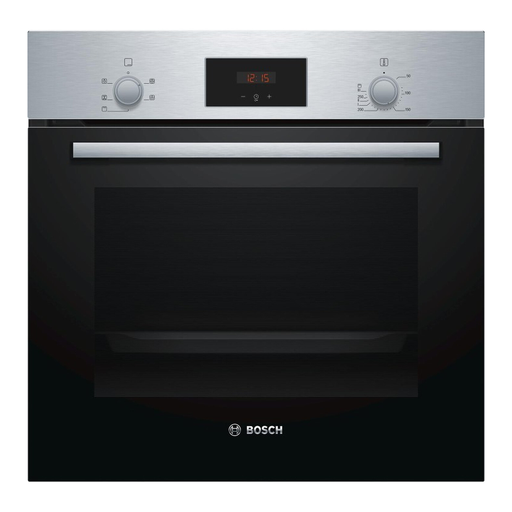 No image available
This single-cavity model is a route for shortbread bakers who do not regularly need a second oven.
Joybuy describes a 66 L cavity, while Bosch describes 3D Hotair use on up to three levels and lists appliance dimensions of 595 × 594 × 548 mm. Confirm the connection against the exact-model installation instructions before ordering: Bosch lists a GB plug, while the candidate product description calls it hardwired.
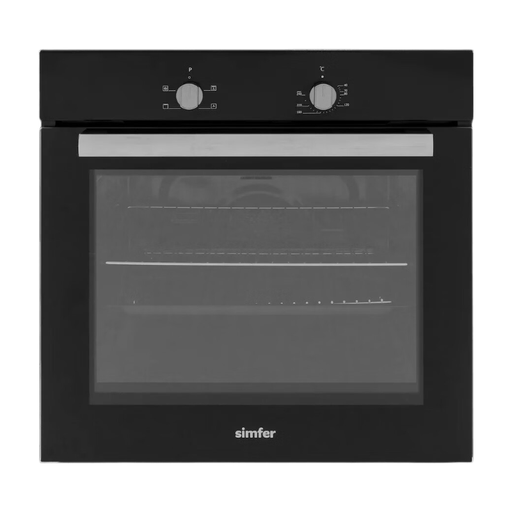 No image available
This single fan-oven format suits a kitchen plan built around one cooking cavity.
Check the exact cabinet opening and electrical requirements, and whether the oven’s usable shelf arrangement fits your shortbread trays.
Good Food’s cited shortbread recipe starts at 150°C fan and gives a baking time of 15–20 minutes. Follow the recipe you are making and your oven’s instructions rather than treating that setting as universal.
A single oven is sufficient when one cavity meets your usual baking and cooking needs. Consider a double oven if you regularly need separate cooking space, provided its cavity layout, housing dimensions and electrical connection suit your kitchen.
Do not assume an extension lead is suitable for a built-in oven. Check the exact appliance’s installation instructions and power requirements; Electrical Safety First advises consulting a qualified electrician when you are uncertain about the supply.
For suitable ovens, compare usable cavity volume and the stated fan-forced kWh per cycle alongside the energy class. GOV.UK identifies cavity volume and fan-forced consumption as fields in domestic-oven energy-label data; compare models with your required cooking space in mind.
No. Bosch lists a GB plug for the cited HHF113BR0B, while AEG specifies a hardwired-only connection for its cited OU5NP20B. Confirm the installation instructions for the exact oven you intend to buy and check that your kitchen supply is suitable.