
24/7 Customer Support

Free returns

Same-day & Next-day Delivery

Quality Guaranteed

Unlock Your Welcome Offers: FREE Delivery | Up to 80% OFF | Free 30-day JoyPlus trial
Download the APP
A low battery warning flashing on your phone mid-journey is a familiar frustration for many of us. Whether you're relying on satellite navigation for a crucial meeting, keeping the children entertained with a tablet on a long road trip or simply catching up on podcasts during your commute, a dead device is more than an inconvenience. Standard, low-power car chargers often can't keep up with the demands of modern electronics, leaving you with a battery percentage that barely moves.
This is where a high-quality fast car charger becomes an essential vehicle accessory. However, the market is filled with technical jargon and a bewildering array of options. This guide is designed to help you understand the key features to look for and to present a few carefully selected recommendations that deliver on performance and reliability.
Before choosing a charger, it's helpful to understand a few key specifications. This will ensure you select a model that meets the needs of your specific devices and vehicle.
The speed of a charger is determined by its power output, measured in watts (W), and the charging protocols it supports. The two most important to know are:
A higher wattage means faster charging, but only if your device supports it. A 30W charger is excellent for a single modern smartphone, while 60W or more is better for charging multiple power-hungry devices simultaneously.
Consider how many devices you and your passengers need to charge at once. A dual port car charger is a popular choice, often featuring one USB-C and one USB-A port for broad compatibility. For families or professionals with multiple gadgets, chargers with three or more ports or even built-in retractable cables can be a game-changer for keeping the car tidy and everyone powered up.
A cigarette lighter USB adapter is plugged directly into your car's electrical system, so safety is paramount. Look for chargers made from flame-retardant materials and equipped with built-in safeguards. A good 12V car charger should have protection against overheating, over-voltage and short-circuiting to protect both your vehicle and your valuable electronics.
As a Joybuy Product Recommendation Officer, I filter through market options to find products that offer practical value. Here are three distinct choices for different user needs.
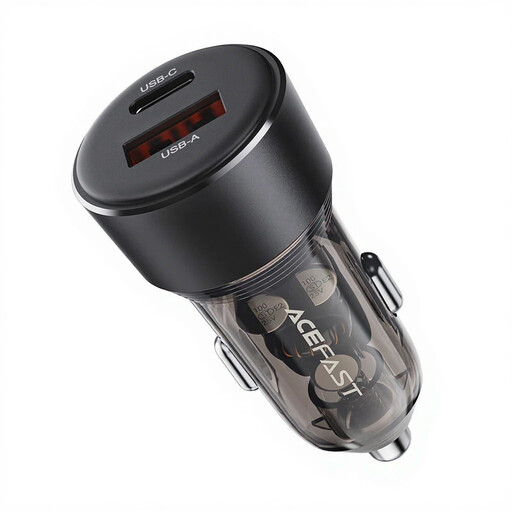
Why It Stands Out: The ACEFAST B12 strikes an excellent balance between power, design and compatibility. Its standout feature is the ability to deliver a full 30W of power from both its USB-C and USB-A ports simultaneously, meaning neither device gets a slower charge. The translucent, modern design also adds a touch of style to your car's interior.
Pros:
Who is it for? This is an ideal choice for commuters or couples who need to fast-charge two modern smartphones or a phone and a tablet at the same time without compromising on speed.
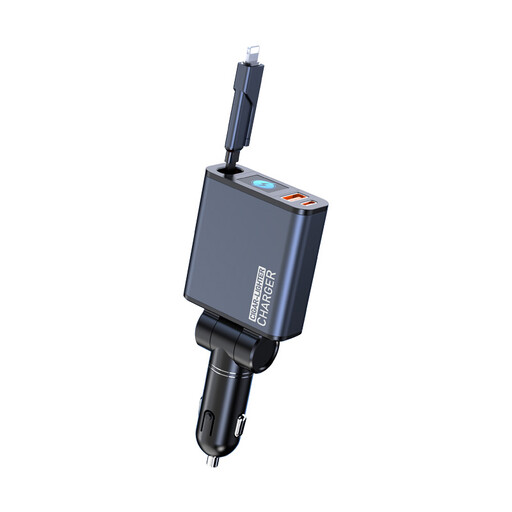
Why It Stands Out: For those who need maximum power and convenience, the ATSHARK K006S is a true powerhouse. Its massive 160W total output can charge a laptop, tablet and phone all at once. The integrated dual retractable cables (90cm) are its most practical feature, eliminating cable clutter and ensuring you always have the right connection on hand.
Pros:
Who is it for? This is the perfect charger for on-the-go professionals, sales representatives and families on road trips who need to power multiple devices, including laptops, simultaneously.
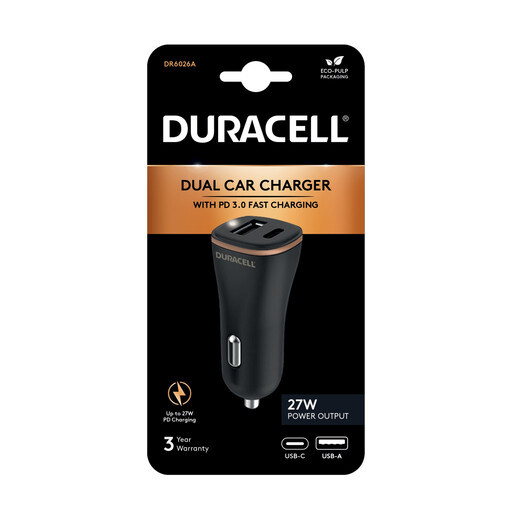
Why It Stands Out: Coming from a brand synonymous with reliability, the Duracell 27W charger is a dependable and straightforward choice. While not as powerful as the other options, its 27W PD output is more than sufficient for fast-charging a single smartphone. Its compact size and 3-year warranty offer peace of mind.
Pros:
Who is it for? This charger is well-suited for the everyday driver who primarily needs to keep their smartphone charged and occasionally a second, lower-power device. It's a great fit for those who value brand assurance and long-term reliability over maximum power output.
If these selections don't quite match what you're looking for, or if you'd like to explore a wider variety of configurations and power levels, you can browse our full collection.
? Explore our complete range of dual USB car charger adapter solutions.
A common concern is whether high-speed charging can harm your device. Modern smartphones and quality chargers, like the ones mentioned, have integrated circuits that communicate with each other. The charger only supplies the amount of power the device requests, and it automatically reduces the charging speed as the battery nears full capacity to prevent overcharging and protect battery health.
USB-A is the traditional, rectangular USB port you are likely familiar with. While it can support some fast-charging protocols, it is generally slower than its modern counterpart. USB-C is the smaller, oval-shaped, reversible connector. It is the standard for PD car charger technology and can deliver significantly more power, making it essential for rapidly charging the latest generation of phones, tablets and laptops.
Yes, the cable is just as important as the charger. To achieve maximum charging speeds, you must use a high-quality cable that is rated to handle the power output. Using an old or low-quality cable will create a bottleneck, and your device will charge at a much slower rate. For outputs over 60W, a certified E-Marker cable is often required.