
24/7 Customer Support

Free returns

Same-day & Next-day Delivery

Quality Guaranteed

Unlock Your Welcome Offers: FREE Delivery | Up to 80% OFF | Free 30-day JoyPlus trial
Download the APP
A fast car charger can make a noticeable difference during a daily commute, school run or long motorway journey. However, headline wattage does not tell the whole story. A charger may advertise a high total output while offering limited power to the port you actually use, or it may not support your device’s charging protocol.
The following guide explains the main buying pitfalls, the specifications worth checking and which types of driver may benefit from selected products.
A charger advertised as 60W, 100W or more may divide that power between several ports. For example, a dual-port charger could provide its maximum output through USB-C alone but offer considerably less when USB-A is used at the same time.
Always check:
This is particularly important for families, fleet users and anyone charging a phone alongside a tablet or laptop.
USB-C describes the connector shape, not the charging speed. A USB-C port may support basic charging, Power Delivery (PD) or higher-wattage PD profiles. For laptop use, check both the charger’s PD output and the cable rating.
A laptop car charger supplying 20W or 30W may be suitable for some lightweight devices, but larger laptops can require substantially more power. A compatible E-marker cable may also be needed for higher-output charging.
Most UK cars use a 12V accessory socket, while many vans and trucks use 24V systems. A charger marked 12V-24V offers wider vehicle compatibility, but you should still confirm the specification before buying.
High-power charging can make an adapter warm. This is not automatically a fault, but the charger should have ventilation and should not be covered by fabric, paper or other flammable materials. Stop using it if you notice smoke, unusual odours or excessive heat.
Choose the port arrangement around your existing cables and devices:
A USB-C and USB-A combination provides flexibility, while two USB-C ports may be more convenient if your household has moved to newer charging cables.
Power Delivery (PD) allows compatible devices to negotiate a suitable voltage and current. PPS, Quick Charge (QC), AFC, FCP and SCP are additional protocols that may improve compatibility with particular phones and tablets.
A PD car charger will not necessarily deliver its maximum speed to every device. The phone, cable and charger must all support a compatible charging profile. If one component has a lower rating, charging will normally operate at that lower level.
For phone charging, a compact 20W-40W adapter may be sufficient. Users charging tablets or multiple devices may prefer 50W-70W. A high-power car charger rated at 100W or more is more appropriate for demanding combinations, such as a laptop, smartphone and tablet.
Check the product specification for details rather than relying only on the name. For example, the Xiaomi 67W model specifies a maximum of 67W through USB-C but a lower combined output when both ports are in use.
Look also for practical safety features such as over-current, over-voltage, overheating and short-circuit protection. Products should include clear instructions, manufacturer information and vehicle voltage details. For UK use, review the product’s supplied compliance information and make sure the charger is intended for the vehicle socket you plan to use.
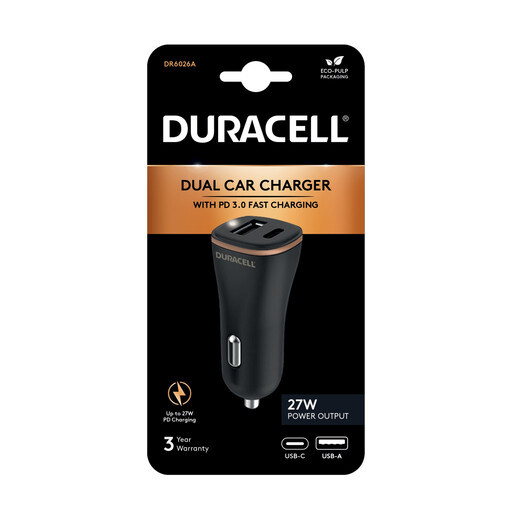
Why This Fits Their Persona: A practical choice for everyday UK commutes when you need to charge a phone and a second USB-powered device from one socket.
The specification identifies separate USB-A and USB-C ports, 27W PD charging and 12V/24V vehicle compatibility rather than presenting only a broad speed claim.
USB-A and USB-C flexibility; 3-year manufacturer warranty; compact in-car format.
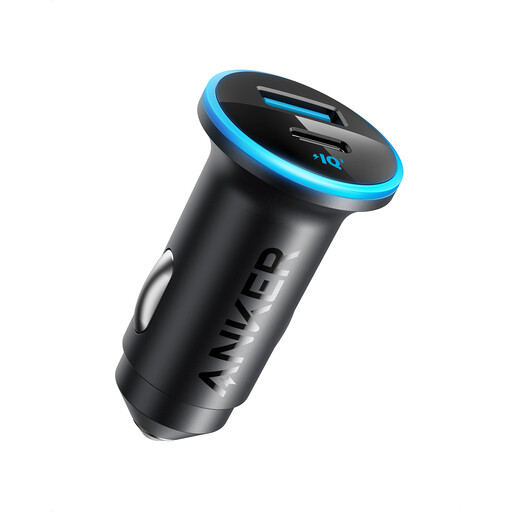
Why This Fits Their Persona: Suitable for drivers who want a dual-port charger with a USB-C phone connection and a separate USB-A port for legacy devices.
Its listed output separates USB-C up to 30W and USB-A up to 22.5W, helping buyers assess simultaneous use more realistically.
52.5W total rating; USB-C and USB-A ports; temperature monitoring technology listed in the product details.

Why This Fits Their Persona: Designed for drivers, truck users and road travellers who need to power several demanding devices from one 12V or 24V socket.
The specification clearly states 100W USB-C1, 35W USB-C2 and 30W USB-A maximum outputs, plus a 165W total rating.
Three ports; PD 3.0 support; digital display for voltage and charging information; 12V-24V input range.
For a compact dual USB-C car charger, the ACEFAST B13 53W 2-in-1 offers two USB-C ports and a 53W total rating. Drivers using both newer phones and tablets may also consider the ACEFAST B12 60W Dual Port Car Charger, which combines USB-C and USB-A with PD, PPS and QC support.
For a smaller mixed-port option, the ACEFAST B1 38W Mini Dual Car Charger includes a 20W USB-C port, an 18W USB-A port and a built-in coiled USB-C cable. The Xiaomi 37W Dual-Port Car Charger provides two USB-A ports and QC 3.0 support for compatible devices.
We have compiled a complete, real-time list of products that fully satisfy these strict selection criteria and UK safety regulations.
Only if the product specification supports the vehicle’s supply. A charger labelled 12V-24V is designed for both common car and truck socket ranges. A 12V-only car cigarette lighter charger should not be assumed to be suitable for a 24V system.
The charger draws electrical power from the vehicle’s electrical system, so its effect on fuel consumption is generally limited. Actual energy use depends on the connected devices, charging duration and whether the engine is running. Avoid leaving devices charging for extended periods when the engine is off, as this may contribute to battery drain.
Lifespan depends on heat, socket condition, cable quality and handling. Keep the adapter dry, avoid damaged cables, do not exceed its rated output and remove it if the socket becomes loose or corroded. A stable fit and adequate ventilation can help reduce avoidable wear.