
24/7 Customer Support

Free returns

Same-day & Next-day Delivery

Quality Guaranteed

Unlock Your Welcome Offers: FREE Delivery | Up to 80% OFF | Free 30-day JoyPlus trial
Download the APP
Waiting for your phone or laptop to charge can feel like a relic of the past. A modern fast charger UK plug can power up your devices in a fraction of the time, but the market is flooded with options that often over-promise and under-deliver. Many of us have been caught out by a charger that was slower than advertised, stopped working after a few months or worse, felt dangerously hot to the touch.
As a Joybuy Product Recommendation Officer, my role is to help you navigate this confusing landscape. Before you spend your money, be aware of these three common pitfalls that trip up UK buyers.
To avoid these traps, focus on the specifications that truly matter. Understanding these three core parameters will ensure you get a charger that is both fast and safe.
Wattage is the measure of power output. The higher the wattage, the faster the charge, provided your device can handle it. Here’s a general guide:
Look for chargers that explicitly mention Power Delivery (PD). This is a charging standard used by most modern devices, including Apple and Google that communicates with your device via a USB-C charger port to deliver the fastest, safest power level possible.
If you see GaN charger on the label, it's a good sign. Gallium Nitride is a material that is more efficient at conducting electricity than the traditional silicon used in older chargers. In practical terms, a GaN charger can be significantly smaller, lighter and run cooler than a silicon-based charger with the same power output. This technology is what makes it possible to have a powerful, pocket-sized wall charger that can power a laptop.
The days of relying solely on the old rectangular USB-A port are numbered. The oval-shaped USB-C port is the new standard for fast charging and data transfer. When choosing a multi-port charger, consider:
Based on these practical criteria, we've matched a few standout options to different user needs. These selections prioritise clear specifications, safety and real-world performance.
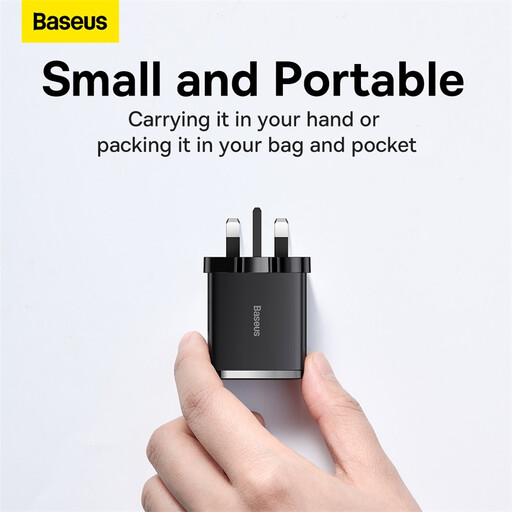
Why This Fits Their Persona: This user needs a versatile, compact charger for their phone, headphones and maybe a tablet while on the move. This 30W charger is powerful enough to fast-charge an iPhone or Samsung phone without the bulk or cost of a high-wattage laptop charger.
It avoids the "inflated wattage" trap by being clear about its 30W maximum output. The specifications detail that when all three ports are used, the output is 15W total, managing expectations for simultaneous charging.
Its key advantage is versatility. With two USB-A ports and one USB-C port, it can charge a mix of modern and older gadgets from a single plug socket, decluttering your bag or desk.
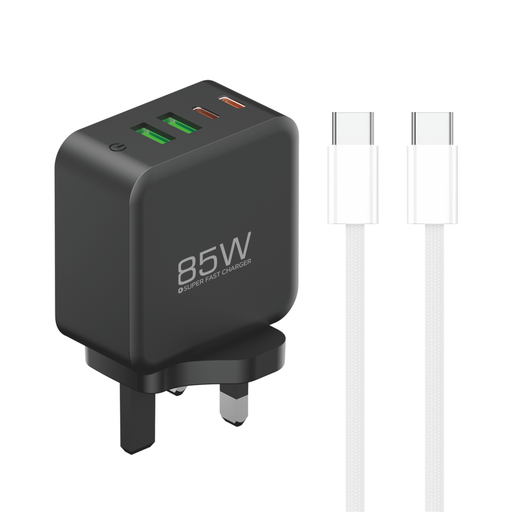
Why This Fits Their Persona: This user juggles a work laptop, a personal phone and other gadgets. They need a single, powerful hub to charge everything efficiently. This 85W GaN charger is a true desktop powerhouse, capable of replacing multiple bulky power bricks.
It directly counters the "universal compatibility" myth by supporting a wide range of fast-charging protocols for major brands and providing a high-power 65W USB-C port specifically for laptops, ensuring true fast charging where it's needed most.
Its main advantage is power consolidation. With four ports (2x USB-C, 2x USB-A) and intelligent power allocation, it can charge a laptop, phone and two other accessories simultaneously from one socket.
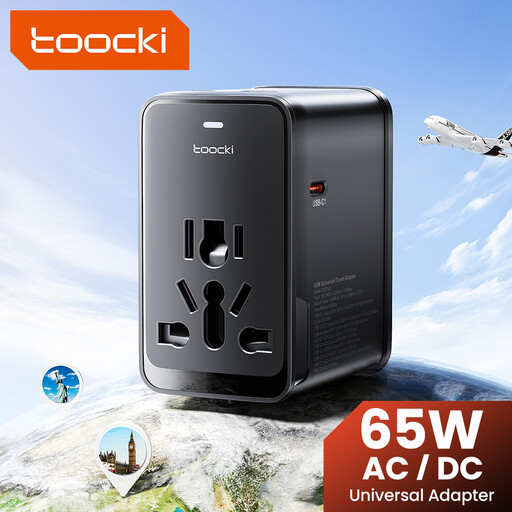
Why This Fits Their Persona: For someone frequently travelling abroad, packing multiple adapters and chargers is a hassle. This device combines a universal **travel adapter** (for EU, UK, US and AUS sockets) with a powerful 65W GaN charger, creating a single, elegant solution for global travel.
It solves the problem of carrying multiple, potentially uncertified, travel plugs. This single, certified unit provides both the correct plug format and high-speed charging, ensuring safety and convenience wherever you are.
Its all-in-one design is the main benefit. The integrated 65W PD output is strong enough to charge a laptop, while the additional USB ports handle your phone and other devices, all from one compact unit.
We have compiled a complete, real-time list of products that fully satisfy these strict selection criteria and UK safety regulations.
Yes, it is safe. Modern fast chargers, especially those with Power Delivery (PD), are "smart." They communicate with the connected device to determine the maximum power it can safely handle and will only deliver that amount. An old phone that can only take 5W will only draw 5W from a 65W charger.
For an iPhone 15 or newer, a 20W or 30W iPhone charger will provide the fastest speeds. For a Samsung flagship phone, look for a charger that supports PPS (Programmable Power Supply) and is at least 25W or 45W for their "Super Fast Charging 2.0". For a MacBook Air, 30W is sufficient, while a MacBook Pro will benefit from a 65W charger or higher. Always check your device's specifications for the recommended wattage.
Yes, they do. The main difference you will notice is size and heat. A 65W GaN charger can be as small as an old 20W phone charger, making it far more portable. They also tend to run cooler during high-power charging, which can contribute to a longer lifespan for the charger itself. For anyone looking to consolidate their charging gear, a GaN charger is a practical upgrade.