
24/7 Customer Support

Free returns

Same-day & Next-day Delivery

Quality Guaranteed

Unlock Your Welcome Offers: FREE Delivery | Up to 80% OFF | Free 30-day JoyPlus trial
Download the APP
Waiting for your phone or laptop to charge can feel like a relic of the past. A good fast charger can power up your devices in a fraction of the time, but navigating the market is tricky. With so many technical terms and bold claims, it's easy to end up with a charger that's slow, incompatible or even unsafe.
As the Joybuy Product Recommendation Officer, my role is to help you sidestep the common purchasing pitfalls. Before you spend your money, be aware of these frequent traps:
To make an informed choice, focus on these core parameters instead of marketing hype.
Wattage measures the speed of power delivery. Here’s a simple guide:
Beyond wattage, look for the protocol. Power Delivery (PD) is the key standard used by Apple, Google and many other brands. For a fast charge on a recent iPhone, you need a PD charger.
You'll see "GaN" mentioned on many modern chargers. GaN (Gallium Nitride) is a material that replaces traditional silicon. In practical terms, a GaN charger is significantly smaller, more energy-efficient and runs cooler than older chargers of the same wattage. This makes them perfect for travel and reducing clutter at your desk.
The charging world has moved to USB-C. This small, reversible port supports high-power standards like PD. While some devices still use the older, larger USB-A, a modern charger should have at least one USB-C port. If you juggle multiple devices, a multi-port charger with a combination of USB-C and USB-A ports offers the most flexibility for powering everything from a single wall socket.
Instead of a one-size-fits-all approach, we've matched chargers to specific user profiles.
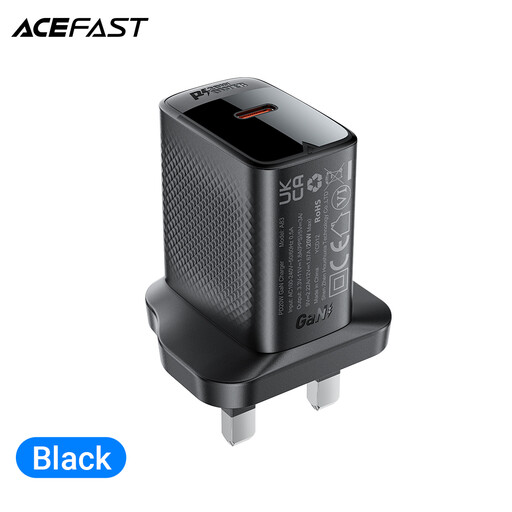
Why This Fits Their Persona: For someone who just needs a reliable, no-fuss fast charge for their phone, this is an ideal choice. Its compact size makes it easy to slip into a bag for work or a café, providing a quick power boost without the bulk.
It delivers a dedicated 20W of PD power from its single port. There are no confusing power splits or misleading claims—it does one job and does it well for compatible devices.
Features GaN technology for a smaller, cooler profile. It is fully certified with UKCA, CE and RoHS for safety assurance.
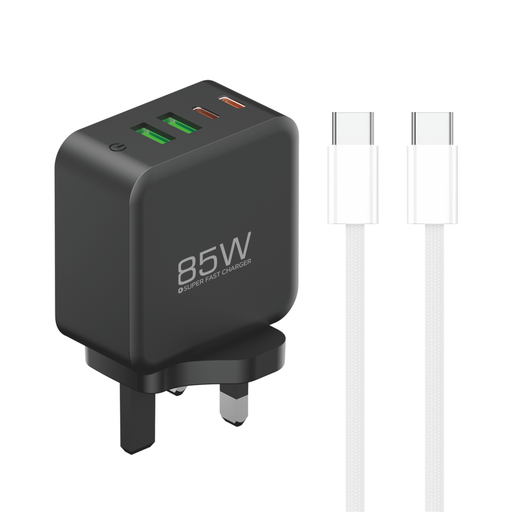
Why This Fits Their Persona: This is for the user juggling a work laptop, personal phone and tablet. It consolidates multiple bulky power bricks into one sleek unit, decluttering the desk and freeing up wall sockets.
It avoids the misleading wattage trap with intelligent power distribution. The specifications clearly state it can deliver up to 65W from a single USB-C port, enough for most laptops, while other ports remain active.
Offers four ports (2x USB-C, 2x USB-A) and a high total output of 85W. It supports multiple fast-charging protocols for wide compatibility, making it a true all-in-one laptop charger and phone charger.
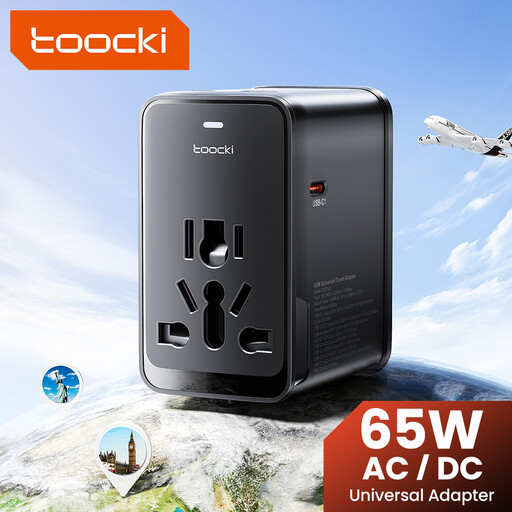
Why This Fits Their Persona: This is the ultimate solution for frequent flyers. It combines a universal travel adapter (for UK, EU, US and AUS sockets) with a powerful 65W GaN charger, eliminating the need to carry multiple plugs and power bricks.
It solves the compatibility problem at a global level. Instead of buying a separate UK plug adapter and charger, this single, certified device provides fast charging power anywhere your travels take you.
An all-in-one design with four ports (3x USB-C, 1x USB-A) and 65W PD output. Its integrated GaN technology keeps it compact and lightweight for packing.
We have compiled a complete, real-time list of products that fully satisfy these strict selection criteria and UK safety regulations.
For an iPhone fast charger (iPhone 8 or newer), look for a plug that explicitly supports Power Delivery (PD) with an output of at least 20W. For a modern Samsung fast charger, you should look for support for Programmable Power Supply (PPS), which is part of the PD standard and allows for more optimised charging speeds. Always check the charger's specifications for these terms.
Yes, a certified GaN charger from a reputable brand is designed with multiple safety protections, including over-voltage, over-current and over-heating circuits. They manage heat more efficiently than older silicon chargers. While they are safe for continuous use, it is always a good general practice to unplug electronics when they are not needed for long periods.
No, it will not. Modern smart devices and chargers communicate with each other to negotiate the appropriate amount of power. When you plug your phone into a 65W charger, it will only draw the maximum power it can safely handle (e.g., 20W or 25W). This "smart charging" functionality prevents any risk of damage to your device's battery.