
24/7 Customer Support

Free returns

Same-day & Next-day Delivery

Quality Guaranteed

Unlock Your Welcome Offers: FREE Delivery | Up to 80% OFF | Free 30-day JoyPlus trial
Download the APP
As our collection of devices grows, so does the clutter of chargers and cables. If you're tired of slow charging speeds and a tangle of adapters for your phone, laptop and tablet, a modern fast charger seems like the obvious solution. However, the market is filled with confusing specifications and marketing claims that can lead to a disappointing purchase.
My role as a Joybuy Product Recommendation Officer is to help you navigate this landscape. This guide will highlight the common pitfalls to avoid and clarify the essential features you need, ensuring you find a charger that is both powerful and safe for your devices.
Before you buy, be aware of these common issues that can lead to wasted money and frustration:
To make an informed choice, focus on these three non-negotiable parameters.
Wattage (W) is the measure of power output. A higher wattage generally means faster charging. Here’s a rough guide:
The key technology to look for is Power Delivery (PD), a fast-charging standard that uses a USB-C charger port. A PD charger intelligently communicates with your device to deliver the maximum safe power it can handle. For this to work, your device and your cable must also support PD.
This is the most significant recent advancement in charging technology. A GaN charger uses Gallium Nitride instead of traditional silicon. In simple terms, GaN is far more efficient, generating less heat. This allows manufacturers to build chargers that are significantly smaller and lighter than their silicon counterparts without sacrificing power. If you're looking for a powerful travel charger or a compact multi-port charger to declutter your desk, GaN is an essential feature.
Consider how many devices you need to charge at once. A multi-port charger with a mix of USB-C (for modern devices) and USB-A (for older accessories) offers the most versatility.
Crucially, check how the charger distributes power when multiple ports are in use. Product specifications should detail the output for each port individually and in combination. A good charger will intelligently balance the load, ensuring your priority device (like a laptop charger) still receives adequate power even when your phone is also plugged in.
Instead of a generic list, we've matched specific chargers to different user needs.
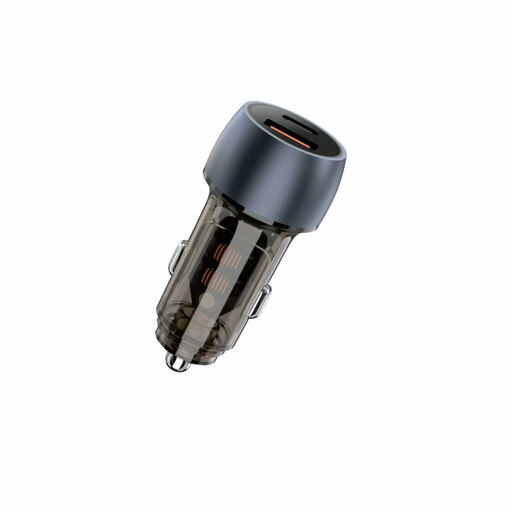
Why This Fits Their Persona: For those who rely on their vehicle for power, this car charger provides serious output for both new and old devices. It's ideal for charging a laptop on the way to a meeting or fast-charging an iPhone charger-compatible phone during the commute.
It clearly separates its power outputs with a dedicated 100W USB-A port and a 20W USB-C PD port, avoiding the "total wattage" illusion. You know exactly what power each port delivers.
High-wattage output from a car socket is rare. The combination of a 100W charger port and a modern PD port offers exceptional versatility for power users on the move.
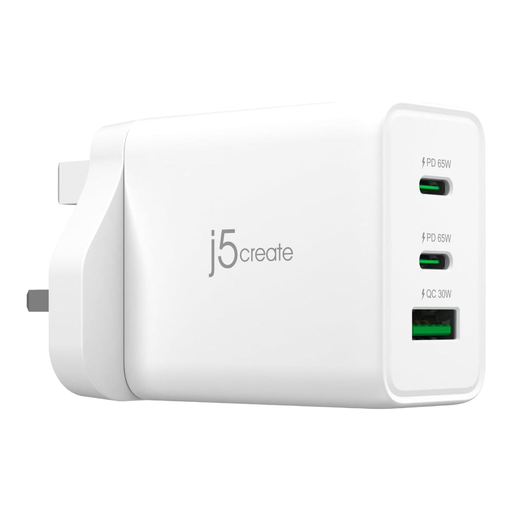
Why This Fits Their Persona: For those living out of a suitcase or who value a minimalist setup, this compact GaN charger is a perfect fit. It's small enough for any bag yet powerful enough to be the only travel charger you need for a laptop, phone and another accessory.
It directly solves the size vs. power problem by using GaN technology. It also features intelligent power balancing, which addresses the wattage-split issue by distributing power efficiently across its three ports.
Its main benefit is its combination of high power (65W), three useful ports (2x USB-C, 1x USB-A) and a very compact form factor. It also includes a full suite of safety protections.
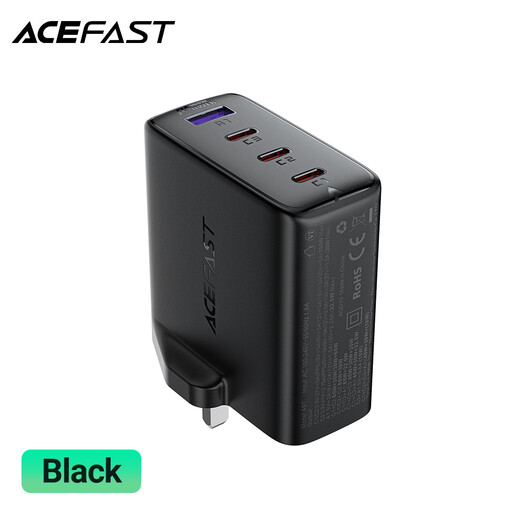
Why This Fits Their Persona: This is for the user who wants to replace a pile of chargers with one powerful hub. It can simultaneously power a high-performance laptop, a tablet, a phone and an accessory, making it the ultimate desk-clearing multi-port charger.
It delivers a genuine 100W charger output from a single USB-C port, providing true laptop charger performance. The product information also clearly lists safety warnings, showing a commitment to user protection.
Four ports (three USB-C) and a high total output make this a true all-in-one solution. Its GaN technology keeps it relatively compact despite its impressive power capabilities.
We have compiled a complete, real-time list of products that fully satisfy these strict selection criteria and UK safety regulations.
No, provided you use a certified charger and a compatible device. Modern smartphones, tablets and laptops have sophisticated battery management systems. The charger and device "talk" to each other to determine the fastest safe charging speed. The battery's health is protected by this communication, which prevents overcharging.
Yes, the cable is a critical part of the system. To get the full benefit of a high-wattage PD charger, you need a USB-C cable that is rated to handle that power. For example, to get 100W, you need a cable rated for 100W. Using a lower-rated or poor-quality cable will limit the charging speed and can even be a safety risk.
A GaN charger uses Gallium Nitride, a semiconductor material that is more efficient at conducting electricity than the traditional silicon used in most chargers. This efficiency means less energy is lost as heat, allowing GaN chargers to be much smaller and more compact for the same power output. They are especially worthwhile if you prioritise portability for a travel charger or want a powerful multi-port charger that doesn't take up much space.