
24/7 Customer Support

Free returns

Same-day & Next-day Delivery

Quality Guaranteed

Unlock Your Welcome Offers: FREE Delivery | Up to 80% OFF | Free 30-day JoyPlus trial
Download the APP
Waiting for your phone to charge feels like a relic of the past, yet many of us are still tethered to slow, outdated chargers. Upgrading to a fast charger seems simple, but the market is filled with confusing jargon and misleading claims. It's easy to end up with a charger that underperforms or, worse, is unsafe.
As a Joybuy Product Recommendation Officer, my role is to help you navigate these choices. We'll cut through the clutter and focus on what truly matters. Before you spend your money, be aware of these common pitfalls that catch out UK shoppers:
To ensure you get a charger that is both fast and safe, focus on these three core parameters.
Wattage (W) measures the rate of power transfer. The higher the wattage, the faster your device can charge, provided it supports it. Here’s a general guide:
Look for chargers that support Power Delivery (PD). This is a smart charging protocol, primarily used over USB-C, that allows the charger and your device to communicate. The charger identifies what device is connected and delivers the optimal amount of power it can safely handle. This prevents overcharging and ensures maximum efficiency.
The ports on a charger determine its versatility.
A good charger for 2026 should have at least one USB-C port. If you're buying a multi-port charger, check the specifications to see how the power is distributed when multiple ports are in use. This will help you avoid the "Total Wattage" trap.
Gallium Nitride (GaN) is a semiconductor material that is replacing traditional silicon in modern chargers. A GaN charger is more efficient, meaning it loses less energy as heat. This allows manufacturers to build chargers that are significantly smaller and lighter than their silicon-based counterparts, without compromising on power. For a powerful, multi-port or travel adapter, GaN is a clear advantage.
Most importantly, always check for safety certifications. In the UK, a charger must have the UKCA mark (and often the CE mark) to show it complies with British safety standards. This is a non-negotiable feature that protects your devices and your home.
Based on these practical criteria, here are a few options tailored to different needs.
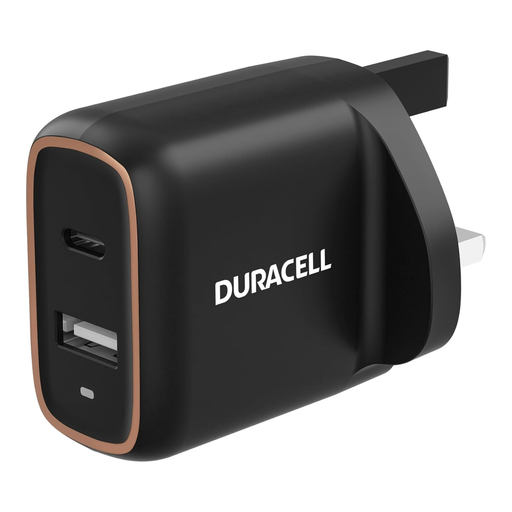
Why This Fits Their Persona: For the UK commuter who needs a reliable and compact charger for their phone and an accessory like headphones. It's a straightforward upgrade from the slow charger that came in the box, from a brand associated with dependability.
Its 20W Power Delivery via the USB-C port is clearly stated, providing the ideal speed for a modern iPhone or Samsung phone without any misleading "total wattage" claims.
Features both a modern USB-C port for fast charging and a legacy USB-A port for wider compatibility with older devices and cables.
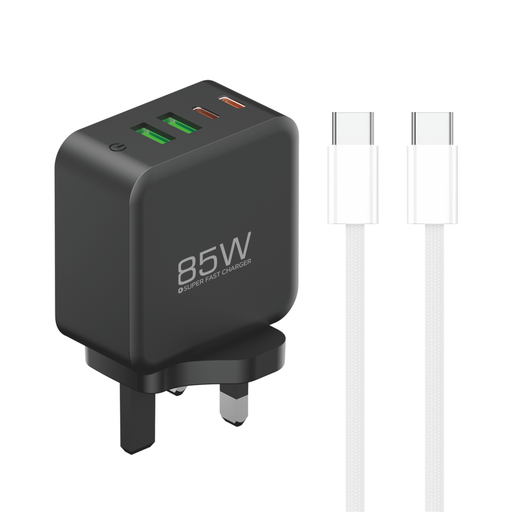
Why This Fits Their Persona: Perfect for the tech-savvy user juggling a laptop, phone and tablet. This is a powerhouse for a home office or work desk, capable of replacing three or four separate chargers with one compact, efficient unit.
As a GaN charger, it sidesteps the issue of bulky, inefficient design. Its specifications clearly detail power allocation, such as a 65W output from a single USB-C port, which is enough for most laptops.
High total output of 85W with four ports (2x USB-C, 2x USB-A) and intelligent power distribution to fast-charge a laptop and phone simultaneously.
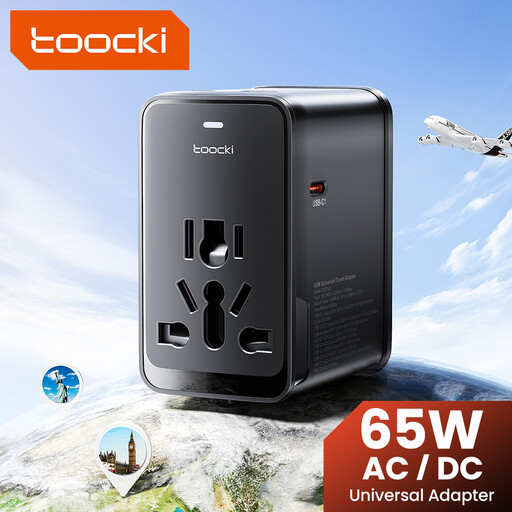
Why This Fits Their Persona: This is the ultimate consolidation tool for anyone living out of a suitcase. It replaces a bag full of country-specific plugs and chargers with a single, powerful unit that works in the EU, US, AUS and UK.
It integrates a powerful 65W GaN charger directly into the adapter, ensuring you have fast charging capabilities wherever you go, without needing to pack an extra power brick.
An all-in-one international travel adapter combined with a multi-port PD charger (3x USB-C, 1x USB-A). It's a complete charging solution for global travel.
We have compiled a complete, real-time list of products that fully satisfy these strict selection criteria and UK safety regulations.
Yes, absolutely. To get the full benefit of a fast charger, you need a fast charging cable that is rated to handle the power. A standard cable will create a bottleneck and slow down charging. For a USB C charger, look for a USB-C to USB-C or USB-C to Lightning cable that explicitly states support for Power Delivery (PD) and a wattage that matches or exceeds your charger's output (e.g., a 100W-rated cable for a 65W or 100W charger).
No, as long as you are using a certified charger that supports the Power Delivery (PD) standard. PD technology enables your charger and device (like an iPhone charger or Samsung charger setup) to communicate and agree on the safest, fastest possible charging speed. The charger will only supply the power that your device requests. The key is to always use chargers that carry the UKCA certification, which ensures they have been tested and include crucial safety protections.
A GaN charger uses Gallium Nitride, a modern semiconductor material, instead of older silicon. This allows it to operate more efficiently, generating less waste heat. The practical result is a charger that can be much smaller, lighter and more powerful than a traditional one. If you want to charge a laptop and a phone with a single plug that fits easily in your pocket, or if you're a frequent traveller looking to reduce bulk, a GaN charger is a very worthwhile investment.