
24/7 Customer Support

Free returns

Same-day & Next-day Delivery

Quality Guaranteed

Unlock Your Welcome Offers: FREE Delivery | Up to 80% OFF | Free 30-day JoyPlus trial
Download the APP
As our collection of gadgets grows, so does the tangle of cables and plugs behind the sofa. We’ve all been there: your phone is at 5%, your laptop is about to die, and you’re hunting for the right charger, only to find it charges at a glacial pace. Finding a reliable fast charger shouldn't be a lottery, yet many of us end up with drawers full of duds.
As the Joybuy Product Recommendation Officer, my role is to help you navigate the market and identify what truly matters. Before you spend another pound, let's look at the common pitfalls that lead to buyer's remorse.
To make a smart purchase, you only need to understand a few key specifications. Forget the marketing hype and focus on these non-negotiable features.
This is the most important factor. Power Delivery (PD) is a universal fast-charging standard used by most modern devices, including iPhones, Android phones and laptops, via a USB C charger port. The wattage (W) tells you how much power it can deliver. Here’s a simple guide:
You'll see "GaN charger" mentioned frequently, and for good reason. Gallium Nitride is a semiconductor material that is more efficient than the traditional silicon used in older chargers. In practical terms, a GaN charger can be significantly smaller, lighter and run cooler than a non-GaN charger with the same power output. This makes them perfect for travel and reducing clutter.
Consider how many devices you need to charge at once. A multi-port charger with a mix of USB-C and USB-A ports offers flexibility. However, prioritise USB-C, as it's the modern standard for fast charging. For use in the UK, ensure you are buying a proper UK plug charger with the correct three-pin design, not a European model with a flimsy and potentially unsafe adapter.
Instead of a one-size-fits-all approach, we've matched some solid options to specific user needs.
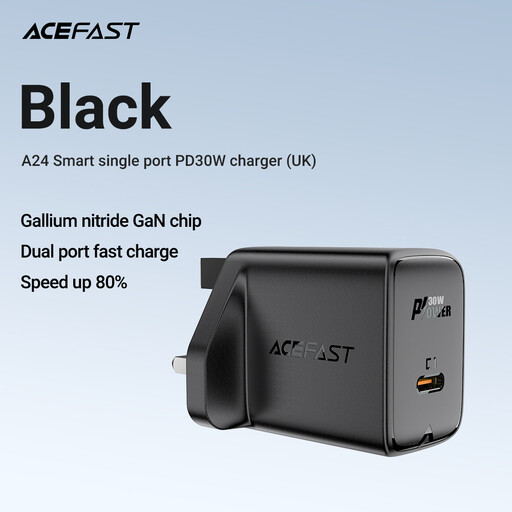
Why This Fits Their Persona: This is for the person who needs a simple, no-fuss fast charge for their smartphone. Its compact size makes it easy to slip into a bag for the office or a café, providing a quick power boost without the bulk.
With a single 20W PD port, there's no confusing power-splitting. You get exactly what's advertised, which is the perfect amount of power to fast-charge a modern smartphone.
1. Compact and lightweight design. 2. Supports 20W Power Delivery for efficient phone charging.
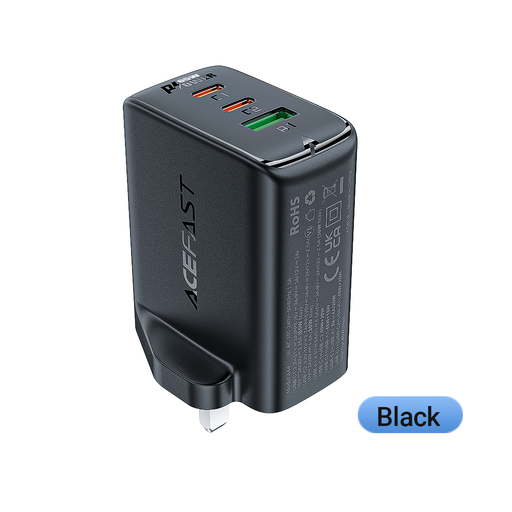
Why This Fits Their Persona: For the professional juggling a laptop, phone and tablet at their desk. This charger consolidates three plugs into one, decluttering the workspace and providing enough power to keep everything running.
It solves the "one-size-fits-all" problem by offering multiple ports. The 65W output from a single USB-C port is clearly defined and sufficient for most ultrabooks, while smart power distribution handles other devices.
1. Charges a laptop and two other devices from a single UK plug. 2. GaN technology ensures a compact size despite its high power.
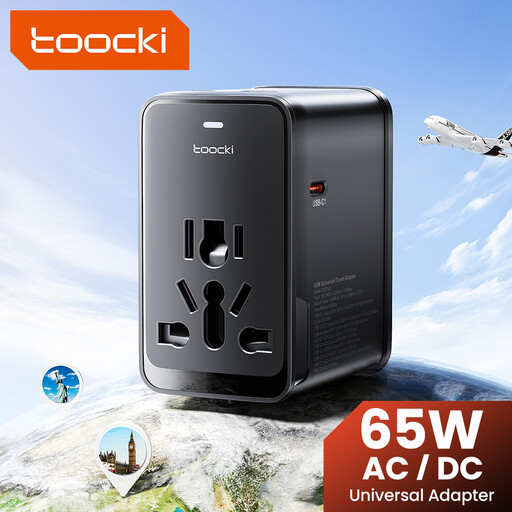
Why This Fits Their Persona: This is the ultimate companion for anyone travelling from the UK to Europe, the US or beyond. It replaces a bag of separate adapters and chargers with one compact, powerful unit that can even charge a laptop.
This purpose-built travel adapter charger avoids the safety risks of stacking cheap, loose-fitting adapters. It's an integrated unit with built-in safety features and powerful GaN charging technology.
1. All-in-one design with UK/EU/US/AUS plugs. 2. High-power 65W USB-C PD port for charging laptops abroad.
We have compiled a complete, real-time list of products that fully satisfy these strict selection criteria and UK safety regulations.
No. A modern PD charger is designed to communicate with the connected device. It will only supply the maximum amount of power the device can safely accept. If you plug in an older phone that doesn't support fast charging, the charger will simply revert to a standard, slower charging speed.
The main difference you'll notice is size and heat. A GaN charger is typically much more compact and lighter than a traditional charger with the same wattage. It also tends to run cooler, as it wastes less energy as heat. This makes it a more efficient and portable choice.
Yes, the cable is a critical part of the system. To achieve the maximum charging speed from a high-wattage charger, you need a cable rated to handle that power. For a 65W charger or 100W charger, ensure you use a USB-C cable that is explicitly rated for 65W or 100W. Using an underrated cable will bottleneck the charging speed and can be a safety concern.