
24/7 Customer Support

Free returns

Same-day & Next-day Delivery

Quality Guaranteed

Unlock Your Welcome Offers: FREE Delivery | Up to 80% OFF | Free 30-day JoyPlus trial
Download the APP
Waiting for your phone, tablet or laptop to charge can feel like a significant waste of time. While fast chargers promise a solution, the market is filled with confusing specifications and marketing claims that often lead to disappointing results. Many of us have bought a charger expecting rapid speeds, only to find it performs no better than the old one in the drawer.
As the Joybuy Product Recommendation Officer, my role is to help you navigate these choices. This guide cuts through the clutter, highlighting the common pitfalls UK consumers face and explaining the essential features you need for genuinely fast and safe charging.
Before you spend your money, be aware of these frequent issues that lead to buyer's remorse:
To ensure you get the performance you pay for, focus on these three non-negotiable specifications.
Here are some charging solutions that align with these principles, matched to different user needs across the UK.
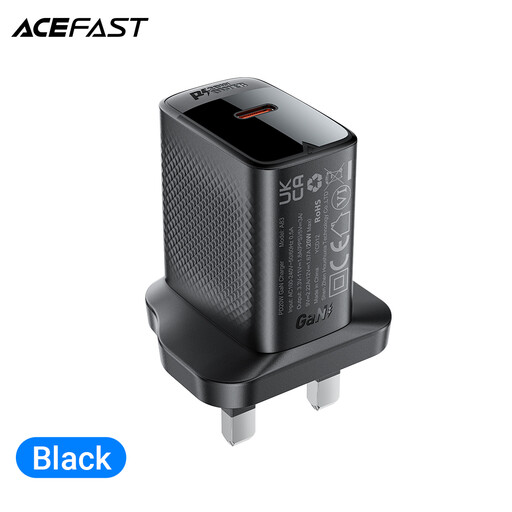
Why This Fits Their Persona: Ideal for someone who needs a reliable, no-fuss fast charge for their smartphone. Its compact size is perfect for throwing in a bag for the office or a café, providing just the right amount of power for a modern iPhone or Google Pixel.
It avoids the "mismatched power" problem by being a dedicated 20W PD charger. There is no confusion about power splitting or compatibility—it does one job and does it well for PD-enabled phones.
Features GaN technology for a smaller, cooler and more efficient build than non-GaN chargers of the same power. It is fully UKCA certified for safety.
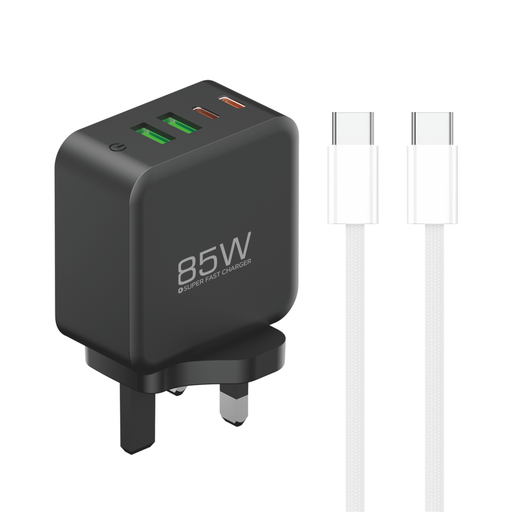
Why This Fits Their Persona: For the professional or tech enthusiast juggling a laptop, phone and other gadgets. This single plug can power a MacBook Air or Dell XPS from its 65W port while simultaneously fast-charging a phone from another, decluttering any desk or workspace.
It counters the "total wattage" illusion by providing clear information on its intelligent power allocation. The specifications state that a single USB-C port can deliver 65W, making it clear how to get maximum power for a laptop.
Offers high versatility with four ports (2x USB-C, 2x USB-A) and a high total output of 85W. The GaN build keeps it compact despite its power.
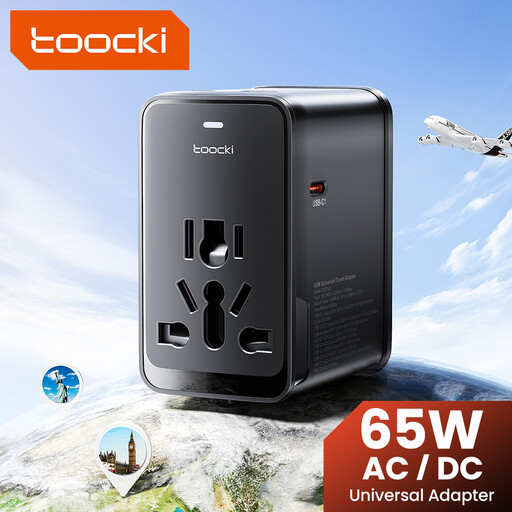
Why This Fits Their Persona: This is the ultimate consolidation tool for international travel. It replaces a bag full of adapters and chargers with a single, powerful unit that works in the UK, EU, US and Australia, capable of charging a laptop and phone simultaneously.
Unlike cheap travel adapters that barely charge a phone, this is a true 65W PD GaN charger built into a universal adapter. It avoids the trap of underpowered travel accessories, providing enough wattage for demanding devices.
An all-in-one design with sliders for different plug types and four charging ports (3x USB-C, 1x USB-A). It's a complete charging solution for any trip.
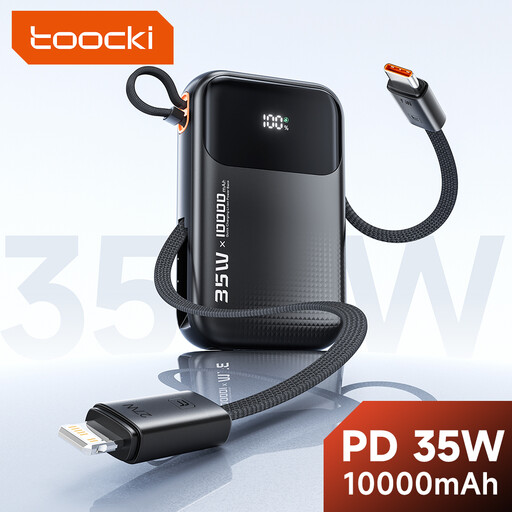
Why This Fits Their Persona: For those who are constantly on the move and away from wall sockets. This slim PD power bank provides high-speed charging in a portable package, perfect for long train journeys or back-to-back meetings.
Many power banks advertise high capacity (mAh) but have slow 5W or 10W outputs. This model avoids that trap by offering a genuine 35W PD output, ensuring it can fast-charge a phone, not just slowly top it up.
The combination of a slim profile, 10,000mAh capacity (enough for 1-2 full phone charges) and high-speed 35W Power Delivery makes it exceptionally practical.
We have compiled a complete, real-time list of products that fully satisfy these strict selection criteria and UK safety regulations.
No. A key feature of the USB-C Power Delivery standard is communication. The charger and your device "negotiate" the maximum safe power the device can accept. If you plug an old 5W phone into a 100W laptop charger, the charger will only deliver 5W. You cannot "force" too much power into a device.
Yes, absolutely. The cable is just as important as the charger. For charging above 60W, a cable must be rated for that power level (e.g., 100W or 240W). Using an underrated cable will throttle your charging speed and can be a safety risk. Always check that the cable's specification matches or exceeds your charger's maximum output.
For most users, yes. The benefits of a GaN charger are tangible: they are noticeably smaller and lighter, making them far more portable. They also run cooler, which improves energy efficiency and the lifespan of the charger. For a multi-port or travel charger, the space and weight savings make GaN a clear winner.