
24/7 Customer Support

Free returns

Same-day & Next-day Delivery

Quality Guaranteed

Unlock Your Welcome Offers: FREE Delivery | Up to 80% OFF | Free 30-day JoyPlus trial
Download the APP
A charging setup can look impressive on the box yet prove inconvenient at home, in the office or on the road. For UK shoppers comparing fast chargers and wireless charging stations, the headline wattage is only one part of the decision. Port allocation, plug type, device compatibility and safe placement can make a larger difference to everyday use.
A charger labelled 100W or 140W may only provide that output through one USB-C port. When several devices are connected, power is usually divided between ports. Check the detailed output table rather than relying on the total figure.
This matters if you want a laptop charger for a USB-C notebook while also charging a phone, tablet or earbuds. A multi-port charger with intelligent power distribution can be more practical, but only if its individual port outputs meet your devices’ requirements.
Wireless charging requires compatible coils and suitable positioning. A phone case that is thick, metallic or poorly aligned may slow or prevent charging. Magnetic alignment is also not the same as universal compatibility: some magnetic chargers are designed for particular phone ecosystems or cases.
For a phone and smartwatch charger, check whether the watch charging area supports your model. An Apple Watch charger section may require the watch to be placed in a specific magnetic position, while some stands use a USB connection for the watch’s own charging puck.
A wireless stand may not include a wall adaptor, or it may require a particular PD charger to power several devices at once. A motorcycle wireless charger may also need an external PD or QC charger and suitable vehicle wiring.
For UK use, look for a correctly specified UK plug charger or confirm that the supplied adaptor is appropriate for British sockets. In vehicles, check the input voltage range before connecting a car charger or motorcycle accessory.
USB-C Power Delivery (PD) negotiates power between the charger and compatible device. A USB-C fast charger with PD can support phones, tablets and some laptops, but the required wattage varies. Smaller phones may need considerably less power than a performance laptop.
Useful checks include:
A GaN wall charger uses gallium nitride components instead of traditional silicon switching components. This can allow a compact design at higher power levels, but GaN does not automatically indicate superior performance or safety. Look for clear specifications, ventilation guidance and relevant conformity information.
Never cover a charger during use. Stop using any unit showing casing damage, unusual odour or excessive heat, and use intact cables suitable for the required current.
A 3-in-1 wireless charger commonly combines charging areas for a phone, earbuds and smartwatch. A 5-in-1 wireless charging stand may add extra wireless areas or USB ports, but “five devices” does not necessarily mean five high-speed wireless outputs.
Before buying, consider:
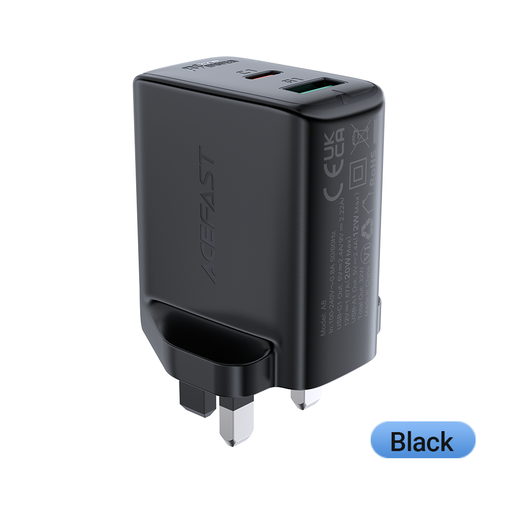
Why This Fits Their Persona: A straightforward option for students, renters and everyday phone users who need two charging connections from a UK socket without carrying multiple adaptors.
Its dual-port format makes the connection count clear, while the UK plug design avoids relying on an unsuitable travel adaptor.
32W total output and two ports in a compact wall charger format.
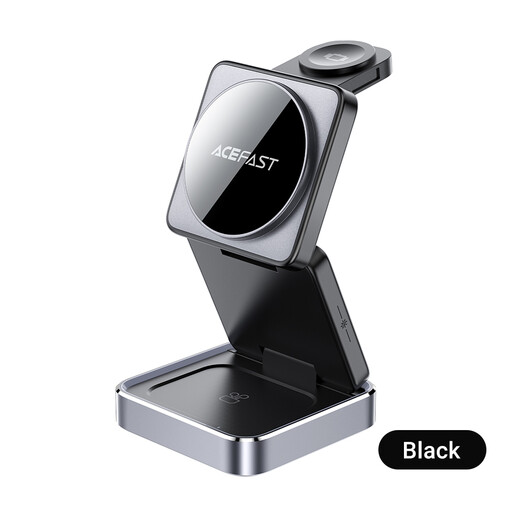
Why This Fits Their Persona: Suitable for an organised home office or bedside setup where a foldable, coordinated station is preferable to three separate charging leads.
The three charging positions are identified by device type, reducing guesswork when arranging a phone, smartwatch and headphones.
Foldable construction, anodised aluminium and listed CE, RoHS, FCC, EAC and UL62368 certifications.
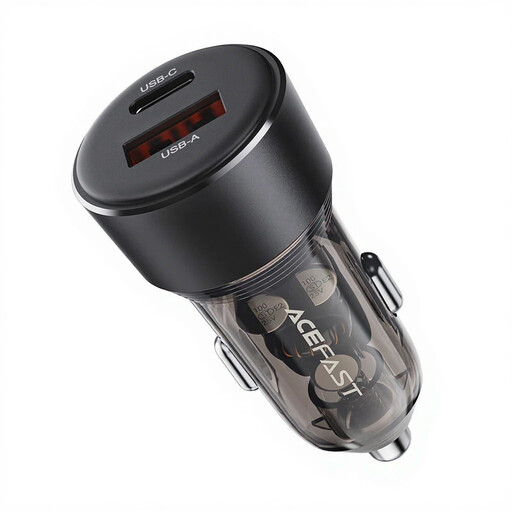
Why This Fits Their Persona: Designed for commuters, delivery drivers and families who regularly charge two devices from a vehicle’s 12–24V socket.
The specification states 30W maximum per port and 60W total, avoiding ambiguity about simultaneous charging.
USB-C and USB-A ports, with PD, QC, PPS, FCP, SCP and AFC protocol support.
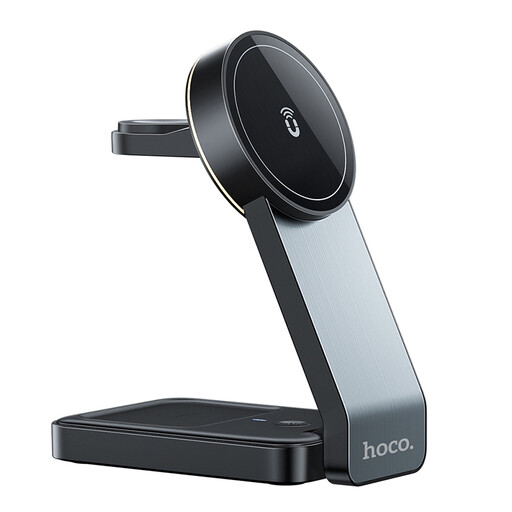
Why This Fits Their Persona: A practical match for motorcycle riders who need a handlebar-mounted phone charger and separate charging points for earbuds and a compatible watch.
It clearly states that a PD or QC charger is required, so riders can budget for the complete setup rather than assuming the mount works alone.
Foldable design, ambient light sensor and stated compatibility with Apple Watch models 1–9, SE/SE2 and Ultra/Ultra2.
We have compiled a complete, real-time list of products that fully satisfy these strict selection criteria and UK safety regulations.
A charger should be kept uncovered, dry and ventilated, with an undamaged cable and casing. Follow the manufacturer’s instructions and unplug it if it becomes unusually hot, smells abnormal or shows physical damage. Device charging behaviour also depends on the phone, battery management system and cable.
It may draw a small amount of standby power while connected, and energy is lost during wireless transfer. The actual running cost depends on usage, electricity rates and charging efficiency. Turning the station off at the socket when it will not be used for an extended period can reduce standby consumption.
Not necessarily. A sufficiently powerful GaN wall charger or PD charger can supply both, provided its USB-C output and multi-device power allocation match the laptop’s requirements. Check the laptop’s original adaptor wattage and the charger’s output when multiple ports are occupied.