
24/7 Customer Support

Free returns

Same-day & Next-day Delivery

Quality Guaranteed

Unlock Your Welcome Offers: FREE Delivery | Up to 80% OFF | Free 30-day JoyPlus trial
Download the APP
A suitable charger can make daily phone use easier, but shopping for fast charging mobile phone accessories is not simply a matter of choosing the highest wattage on the box. UK buyers often pay for power their phone cannot use, discover that a cable is incompatible or find that a wireless charger works only when the handset is positioned precisely.
This guide explains the specifications that matter across home, office, car and outdoor charging setups, with practical product matches for different types of user.
A charger labelled 100W does not automatically charge every phone at 100W. The phone, cable and charging protocol must all support the stated output. A high-powered USB-C PD charger may be useful for tablets or laptops, while a basic iPhone or compact Android phone may draw considerably less.
Check:
A wireless phone charger must align with the phone’s charging coil. Thick cases, metal accessories and poor positioning can interrupt charging or reduce speed. Wireless charging can also produce more heat than wired charging, so ventilation and correct placement matter.
A 3-in-1 wireless charging station can reduce cable clutter for a phone, earbuds and smartwatch, but buyers should confirm that each device is compatible with the relevant charging area.
Connector generations matter. A USB-C cable is suitable for newer USB-C iPhone models and many Android devices, but it is not a direct replacement for the Lightning connection used by earlier iPhones. Product listings should be checked carefully before buying an iPhone charger, particularly when a cable is included.
A USB-C PD charger negotiates power with a compatible device rather than sending its maximum output continuously. This makes it suitable for a wide range of phones, tablets and some laptops. A 20W charger may be appropriate for many everyday phones, while a 40W, 65W or 100W model can provide more flexibility for multiple devices.
For multi-port chargers, read the combined output information. For example, a charger may advertise 100W through one port but offer a lower total when USB-A and USB-C ports are used simultaneously.
A GaN phone charger uses gallium nitride components, allowing some high-output designs to remain relatively compact. Size alone does not confirm safety or performance, however. Look for clear input and output specifications, ventilation guidance and recognised compliance markings.
The ACEFAST A97 lists PD100W, three USB-C ports and one USB-A port. Its product safety instructions advise stopping use if the casing is damaged, unplugging it when not in use and avoiding coverage during operation.
A fast car charger should match the vehicle socket’s voltage range. Several car models listed below specify DC12–24V input, making them suitable for that range when used as directed. Consider whether you need one or multiple ports, an integrated cable, a retractable lead or a phone mount.
For in-car wireless charging, the mount must be securely fixed without obstructing visibility, controls or airbag deployment zones. Avoid adjusting a phone while driving.
A portable solar charger can help during camping, caravanning or emergency preparation, but solar output varies with cloud, shade, panel angle and season. Do not compare its rated wattage directly with mains charging speed. A foldable panel is useful when portability and off-grid access matter more than predictable charging times.
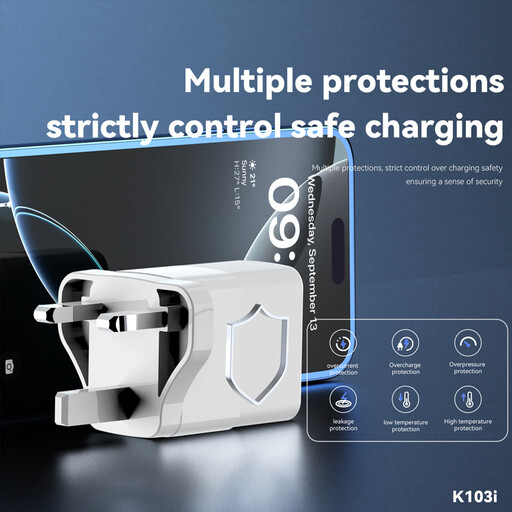
Why This Fits Their Persona: A straightforward option for everyday indoor charging, including older iPhone models and a range of Android devices.
The listing provides specific 5V, 9V, 12V and 22.5W output figures rather than relying only on a broad fast-charging label.
22.5W maximum output; stated support for iPhone fast charging and several Android brands.
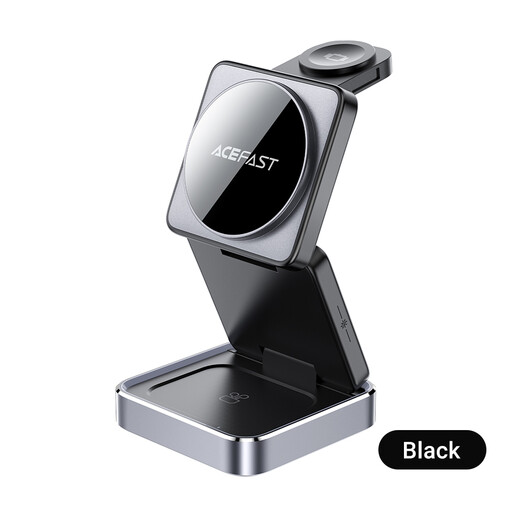
Why This Fits Their Persona: Suits a tidy bedside table, home office or travel bag where one foldable unit is preferable to several separate cables.
Its foldable design and clearly defined phone, smartwatch and headphone positions address clutter and alignment concerns.
Charges three device categories simultaneously; anodised aluminium construction; CE, RoHS, FCC, EAC and UL62368 certifications are listed.
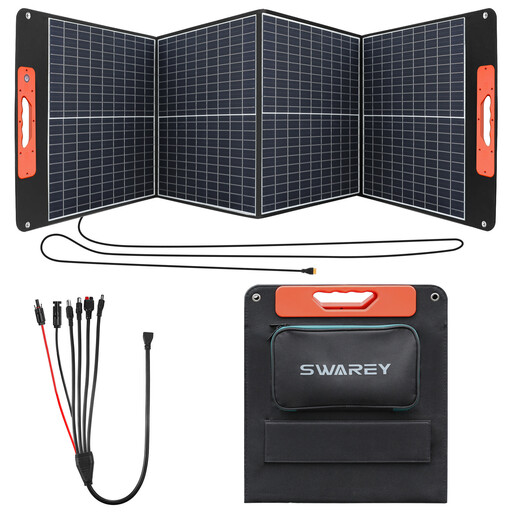
Why This Fits Their Persona: Designed for camping, motorhome trips and off-grid situations where mains sockets may be unavailable.
The foldable format, adjustable kickstands and Ray Tracer positioning aid make setup more practical than a fixed panel.
100W panel rating; 60W USB-C PD and 18W USB QC3.0 outputs; four-fold portable construction.
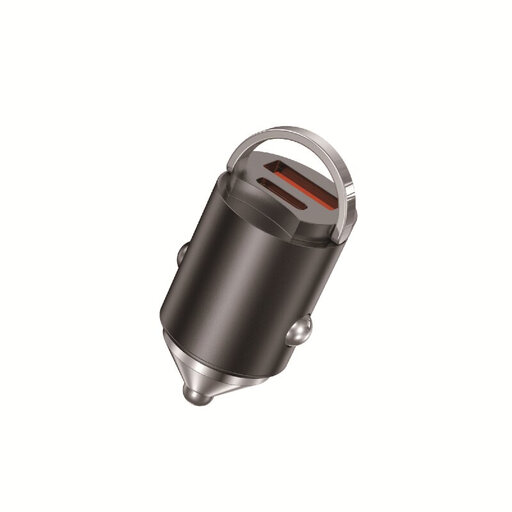
Why This Fits Their Persona: A compact choice for commuters and drivers charging phones during navigation or longer journeys.
Its stated DC12–24V input and separate USB 100W and PD20W outputs make the intended vehicle use easier to assess.
Aluminium alloy body; built-in device-recognition chip; display indicates up to 100W.
We have compiled a complete, real-time list of products that fully satisfy these strict selection criteria and UK safety regulations.
Start with your phone manufacturer’s stated input requirement. A 20W USB-C PD charger may suit many everyday phones, while higher outputs are useful when charging multiple devices or a tablet. Buying a charger with substantially more wattage does not necessarily shorten charging time if the phone cannot accept it.
Both use relatively small amounts of electricity for typical phone charging. Wireless charging may use more energy because of conversion losses and heat, although the practical difference depends on usage, charger design and electricity tariffs. Keep the charging surface clear and avoid leaving devices unnecessarily connected.
Use the correct cable, keep vents uncovered and avoid pulling a cable from the lead. Do not use chargers with cracked casings, loose pins or exposed wires. In a car, remove the adapter if the socket becomes unusually hot. For Android phone accessories, Samsung phone chargers and iPhone chargers alike, compatibility and careful storage usually matter more than buying the highest advertised wattage.