
24/7 Customer Support

Free returns

Same-day & Next-day Delivery

Quality Guaranteed

Unlock Your Welcome Offers: FREE Delivery | Up to 80% OFF | Free 30-day JoyPlus trial
Download the APP
A slow-charging phone or a frayed cable is a modern-day frustration we can all do without. With devices demanding more power than ever, finding the right fast charging cables has become essential. However, the market is filled with confusing claims and products that fail to deliver. Many UK consumers find themselves replacing cables every few months or discovering their new "fast" cable charges at a snail's pace.
This guide cuts through the clutter. We will highlight the common pitfalls to avoid and break down the key features you need to check before you buy, ensuring your next cable is a reliable investment for your phone, tablet or laptop.
Before you add a cable to your basket, be aware of these frequent issues that lead to disappointment and wasted money.
To make an informed choice, focus on these three non-negotiable specifications.
This determines if the cable will physically fit your devices. The main types you will encounter are:
Wattage (W) measures how much power a cable can safely handle. Always match the cable's wattage to your device's needs and your power adapter's output.
A cable's lifespan is determined by its construction. Look for features that indicate a durable phone charger.
Based on these practical criteria, here are some recommendations matched to different user needs.
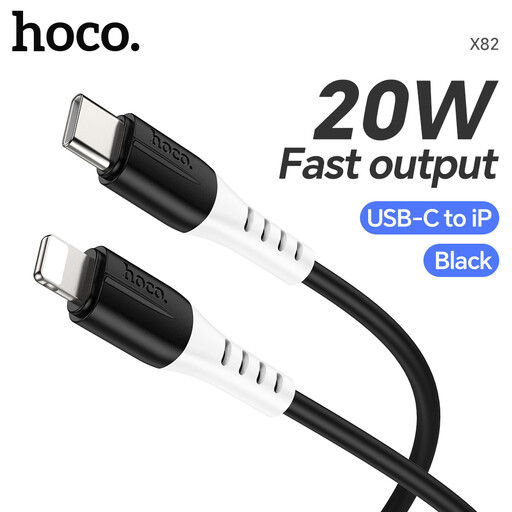
Why This Fits Their Persona: This cable is purpose-built for fast-charging modern iPhones. It provides the correct USB-C to Lightning connection and 20W power delivery needed to quickly power up an iPhone when paired with a compatible USB-C plug. It's a straightforward, no-fuss solution for daily use at home or in the office.
It directly solves the power mismatch trap by providing the exact specification (20W PD) required for Apple's fast charging, ensuring you get the speed you expect.
The soft silicone material resists tangling, making it easy to store and use without frustrating knots. It's a simple and effective iPhone charging cable.
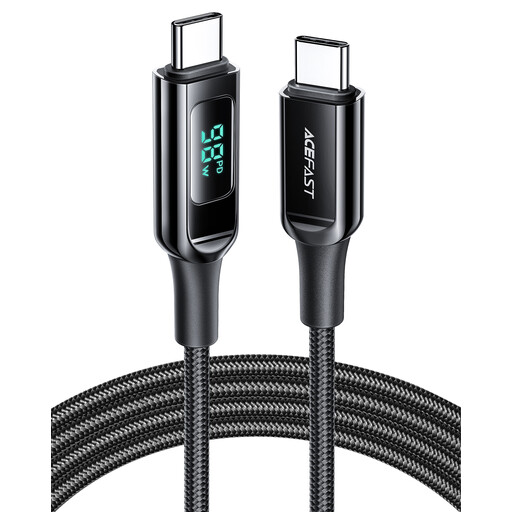
Why This Fits Their Persona: For someone juggling a USB-C laptop, tablet and phone, this single cable can power them all efficiently. As a 100W laptop charging cable, it handles the most demanding devices, while the generous 2m charging cable length offers flexibility whether at a desk or on the sofa.
This cable eliminates the "underpowered cable" problem. Its 100W capacity ensures it can charge everything from a phone to a high-performance laptop at optimal speed.
The built-in digital display shows the real-time power output, confirming that your device is fast-charging correctly. It's a versatile Type C data cable and power solution in one.
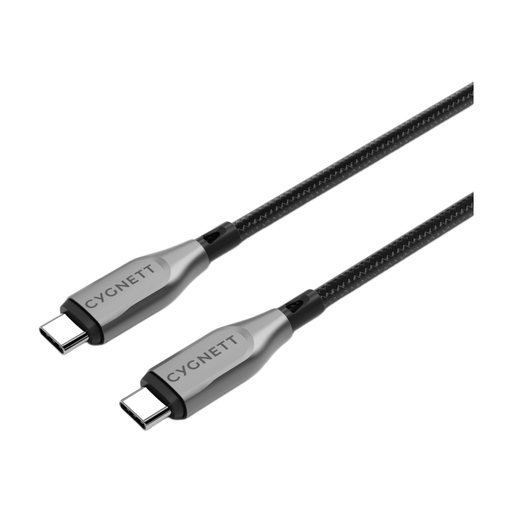
Why This Fits Their Persona: For anyone tired of cables breaking, this is a compelling option. It's designed for resilience, with a double-braided nylon exterior and reinforcement using DuPont Kevlar aramid fibre. It's a truly durable phone charger cable built to withstand the rigours of daily commutes and travel.
This cable directly counters the "fraying connector" trap. Its armoured construction and premium materials are specifically engineered to prevent breakage at common stress points.
Beyond its strength, this braided charging cable supports 100W charging and high-speed 10Gbps data transfers, making it both tough and high-performing.
We have compiled a complete, real-time list of products that fully satisfy these strict selection criteria and UK safety regulations.
This is usually because of a mismatch in the charging system. For true fast charging, your device, your power adapter (the plug) and your cable must all support the same fast-charging protocol (e.g., USB Power Delivery or PD). If any one of these components is not compatible, the system will default to a slower charging speed. Always check the specifications of all three parts.
Yes, this is perfectly safe. Modern devices and chargers communicate to determine the correct amount of power needed. Your phone will only draw the 20W it requires from the 100W-capable cable and adapter. Using a higher-rated cable is a good way to future-proof your purchase for when you get more powerful devices.
Both are excellent choices for durability, but they excel in different ways. A braided charging cable offers superior protection against physical abrasion and cuts, making it great for rough use. A silicone cable provides exceptional flexibility and is highly resistant to tangling, which is ideal for easy storage and travel. The choice comes down to your personal preference and how you plan to use the cable.