
24/7 Customer Support

Free returns

Same-day & Next-day Delivery

Quality Guaranteed

Unlock Your Welcome Offers: FREE Delivery | Up to 80% OFF | Free 30-day JoyPlus trial
Download the APP
In a world where our smartphones, tablets and laptops are central to our daily lives, a dead battery can bring productivity to a halt. A fast charging power bank seems like a simple solution, but the market is flooded with options that often over-promise and under-deliver. Many UK consumers find themselves with a portable charger that is slow, bulky or incompatible with their devices.
Before you make a purchase, it's crucial to understand the common pitfalls that lead to buyer's remorse. By being aware of these, you can sidestep the marketing hype and choose a device that genuinely meets your needs.
To make an informed choice, focus on these core parameters. They are the true indicators of a power bank's performance and suitability for your lifestyle.
Capacity, measured in milliamp-hours (mAh), determines how many charges you can get. Instead of just looking at the number, match it to your daily use.
This is the most critical factor for a fast charging power bank.
The right connections and features add a layer of convenience that can transform your charging experience.
Based on these practical criteria, we've identified several models that align with specific user needs, helping you avoid the common traps.

Why This Fits Their Persona: This is for the person who needs a reliable, pocket-sized power boost for their phone during the daily commute or a day out. Its compact size means it fits in any bag or pocket without adding bulk.
The built-in, foldable USB-C connector completely solves the "cable bottleneck," ensuring you always have the right connection for modern Android phones and iPhone 15 or newer. The 22.5W output is clearly stated and provides genuine fast charging for smartphones.
Its primary advantage is its ultra-compact, all-in-one design. The foldable connector protects it during transport and it's small enough to hold comfortably with your phone while charging.
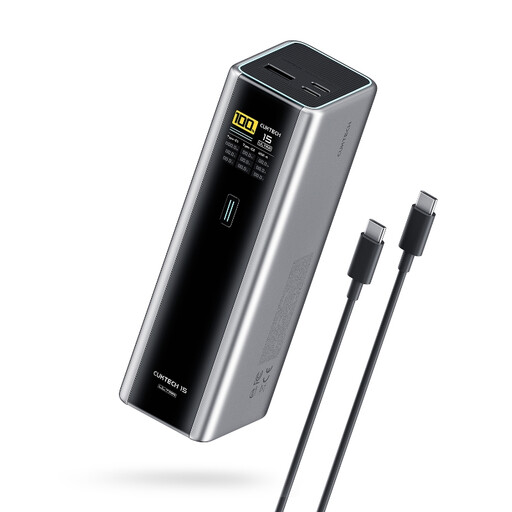
Why This Fits Their Persona: This is for the professional or student who relies on a laptop, tablet and phone throughout the day. It's built for those who cannot afford to be tethered to a wall socket, whether on a cross-country train journey or in back-to-back meetings.
It directly counters the "fast charging mismatch" with its massive 140W PD3.1 output, capable of charging even demanding laptops like a MacBook Pro at high speed. The large 20,000mAh capacity provides a substantial and realistic power reserve for multiple devices.
Its main advantage is raw power. The ability to deliver 140W from a single USB-C port makes it a true laptop power bank, not just a phone charger. Three ports allow for simultaneous charging of multiple gadgets.
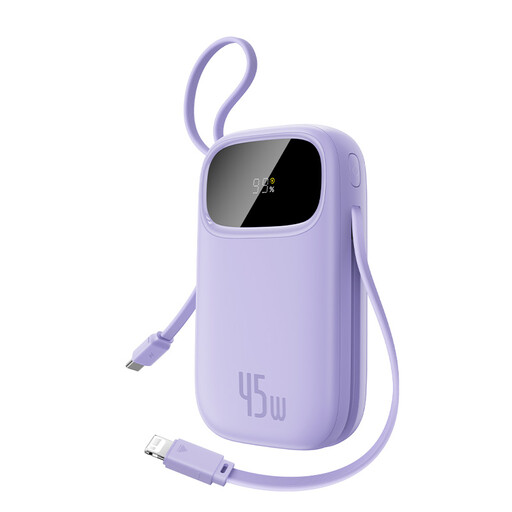
Why This Fits Their Persona: This is for the user who values ultimate convenience and hates tangled wires. It's perfect for households or individuals with a mix of Apple and Android devices, ensuring you always have the right cable on hand without carrying a separate pouch of accessories.
This model is the definitive solution to the "cable bottleneck." With both USB-C and Lightning cables built-in, plus additional USB-A and USB-C ports, it removes all guesswork. The digital display also provides a clear, real-time percentage of remaining power, avoiding the "inflated capacity" confusion.
Unmatched versatility. It can charge up to four devices simultaneously using its built-in cables and ports. The 45W output via the USB-C port is also sufficient for charging smaller laptops or tablets quickly.
We have compiled a complete, real-time list of products that fully satisfy these strict selection criteria and UK safety regulations.
1. How many times can a 10,000mAh power bank charge my phone? This depends on your phone's battery size and the power bank's efficiency. As a rule of thumb, you can expect to get about 60-70% of the advertised capacity. For a 10,000mAh power bank, this means a usable capacity of around 6,000-7,000mAh. This is enough to charge a typical smartphone (with a 4,000-5,000mAh battery) approximately 1.5 times from empty.
2. Is it safe to leave a power bank charging overnight? Modern, certified power banks are equipped with safety features that prevent overcharging. However, for optimal battery health and safety, it is good practice to disconnect the charger once the power bank is full. Always ensure it is charging on a hard, non-flammable surface like a desk or floor, not on a bed or sofa.
3. Can I take a 20,000mAh power bank on a flight in the UK? Yes. UK and international aviation regulations typically restrict batteries to 100 Watt-hours (Wh) for carry-on luggage. A 20000mAh power bank is usually around 74Wh, which is well within the limit. You must always pack power banks in your hand luggage, as they are prohibited in checked baggage.