
24/7 Customer Support

Free returns

Same-day & Next-day Delivery

Quality Guaranteed

Unlock Your Welcome Offers: FREE Delivery | Up to 80% OFF | Free 30-day JoyPlus trial
Download the APP
As our devices become more powerful, the humble charging cable has had to keep up. A high-quality, fast charging USB C to USB C cable is no longer a luxury; it's a necessity for powering everything from your iPhone 15 and Samsung smartphone to your MacBook. However, the market is flooded with options, and it's easy to make a poor choice that leads to slow charging, a frayed cable within months or even potential damage to your expensive gadgets.
As a Joybuy Product Recommendation Officer, my role is to help you navigate this landscape. We will look past the marketing buzzwords and focus on the practical details that matter. Here are the common pitfalls to avoid and the key specifications to check before you buy.
To ensure you get a cable that performs well and lasts, focus on these three non-negotiable features.
This is the single most important factor for charging speed. USB C Power Delivery (PD) is the technology that allows for higher power transfer. Look for the wattage rating on the cable's specifications:
Using a cable with a lower wattage than your device requires will result in extremely slow charging or in some cases, the battery may even continue to drain while plugged in.
The material of a cable directly impacts its lifespan. Instead of settling for basic PVC, consider these more robust options:
Always check for reinforced connector joints. A durable USB C cable will have a longer, more robust housing around the connector neck to prevent it from fraying.
Cable length is a practical consideration that affects convenience.
Based on these practical criteria, here are a few options from our catalogue matched to different user needs.
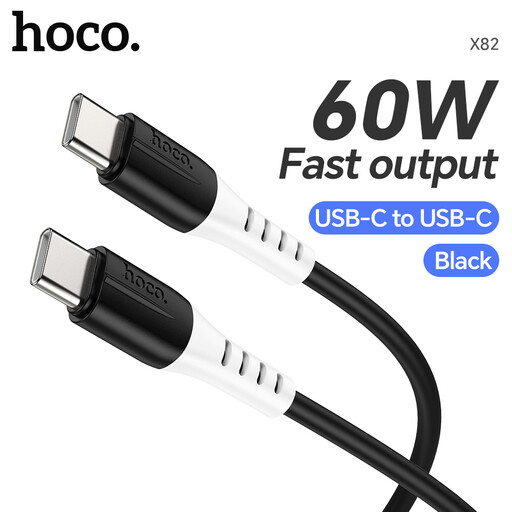
Why This Fits Their Persona: This is a practical, reliable choice for daily charging of a smartphone, tablet or portable power bank. Its 1-metre length is perfect for carrying in a bag without creating clutter, and the silicone material prevents annoying tangles when you pull it out on the train or at a café.
It clearly specifies a 60W PD output, avoiding the "fast charging" myth. The food-grade silicone jacket is designed for flexibility and durability, directly countering the fraying fiasco of cheap plastic cables.
Tangle-resistant silicone material. Supports up to 60W, making it a versatile Samsung fast charger cable or iPhone 15 charging cable.
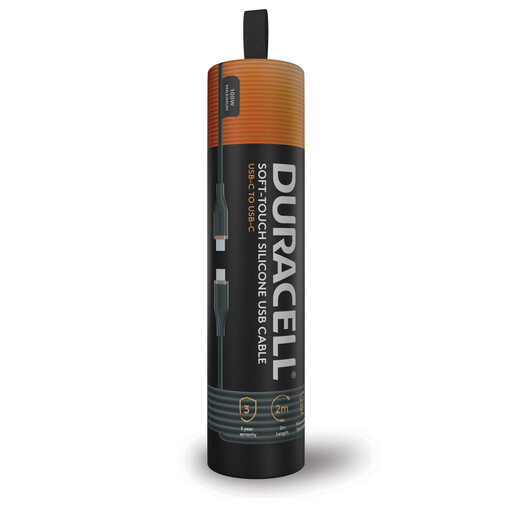
Why This Fits Their Persona: For those who rely on a powerful laptop for work, this cable delivers. The 100W output is ideal for a USB C cable for MacBook Pro or other demanding notebooks. The generous 2m USB C cable length is perfect for a professional working from a home office, a hotel or a client's site where outlets are never where you need them.
It provides a genuine 100W power rating and supports data sync, avoiding both the power and data deception traps. Its construction, which the brand states includes double-braided nylon and Dupont Kevlar fibre, is engineered for longevity.
High 100W power output for laptops. Extra-long 2m length for flexibility. Features a durable, kink-resistant design.

Why This Fits Their Persona: This cable combines high performance with a premium finish. The zinc alloy connectors and clean white braided cable complement the aesthetic of modern tech. With 100W power and a 2m length, it's a high-spec cable that doesn't compromise on looks, making it a great fit for any design-conscious setup.
It delivers on its promises with a 100W power rating and 480Mbps data speed. The combination of a nylon braided charging cable and metal connectors is a robust solution to the fraying and durability problem.
High 100W power output. Premium metal and braided construction. Long 2m cable for convenience.
We have compiled a complete, real-time list of products that fully satisfy these strict selection criteria and UK safety regulations.
No, they do not. For a cable to fast charge, it must be specifically rated for a higher wattage (like 60W or 100W) and support the USB Power Delivery (PD) standard. Always check the product specifications for this information. Your power adapter and device must also be compatible with the same standard to achieve maximum charging speeds.
Yes, it is completely safe. The USB-C Power Delivery protocol includes a communication step where the charger, cable and device "negotiate" the correct amount of power. A 100W USB C cable will only deliver the maximum power your device can safely accept. Using a higher-rated cable is a good way to future-proof your purchase for more powerful devices later on.
There is no guaranteed lifespan, but a cable built with superior materials should last for several years of regular use. A braided charging cable or a high-grade silicone charging cable with reinforced connector joints is far more likely to withstand daily plugging, unplugging and coiling than a basic, flimsy plastic cable. The most common point of failure is the connector neck, so a robust design here is a key indicator of a long-lasting product.