
24/7 Customer Support

Free returns

Same-day & Next-day Delivery

Quality Guaranteed

Unlock Your Welcome Offers: FREE Delivery | Up to 80% OFF | Free 30-day JoyPlus trial
Download the APP
It’s a familiar story: your new laptop, tablet and smartphone promises rapid charging, but the cable you're using just isn't keeping up. Or worse, the cable that came in the box has already started to fray at the neck, leaving you with an unreliable connection. Buying a replacement fast charging USB C cable should be simple, but the market is flooded with options that often lead to disappointment and wasted money.
As the Joybuy Product Recommendation Officer, my role is to help you navigate these choices. Many UK shoppers fall into a few common traps when buying a new cable. By understanding these pitfalls, you can find a reliable cable that meets your needs without paying for overhyped features.
To avoid these issues, focus on a few key parameters. Getting these right ensures you get a cable that is both fast and durable.
This is the single most important factor for charging speed. Power Delivery (PD) is a standard that allows for higher power transfer through a USB-C connection. The wattage you need depends entirely on your device.
Always check the wattage your device requires and choose a cable that meets or exceeds it. A higher-wattage cable will not harm a lower-wattage device; the device will only draw the power it needs.
A cable is only as good as its construction. To find a durable data cable that lasts, look beyond the standard plastic coating.
Finally, ensure you have the right connections for your ecosystem.
Based on these practical criteria, here are a few recommendations matched to different user needs.
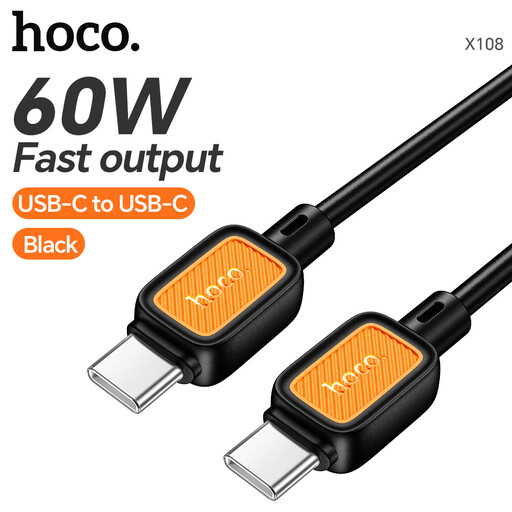
Why This Fits Their Persona: This is a practical, no-nonsense replacement for a standard phone or tablet cable. It provides ample power for fast-charging most mobile devices without the cost of higher-wattage, laptop-grade cables.
It clearly states its 60W power rating, so you know exactly what performance to expect, avoiding the "fast charging" ambiguity for phones and tablets.
A cost-effective solution that delivers the correct power for the vast majority of USB-C smartphones and tablets, making it a reliable daily driver.
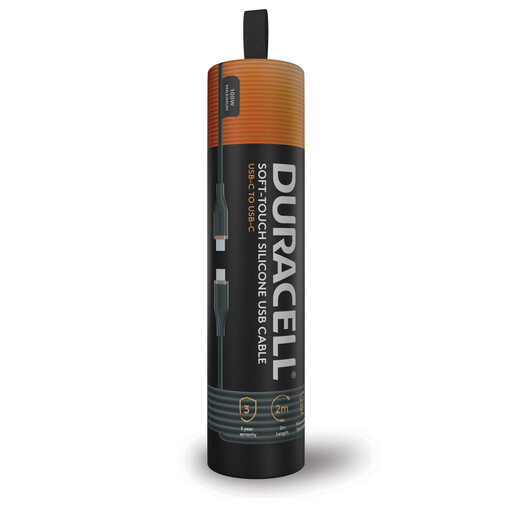
Why This Fits Their Persona: For those juggling a powerful laptop, phone and tablet, this cable offers the power and durability needed for a demanding mobile workflow. The 2-metre length is perfect for office, home and travel use.
It directly counters the fragile connector flaw. Its construction includes a double-braided nylon exterior and an internal core with Dupont Kevlar fibre for enhanced durability.
Delivers a genuine 100W of power, capable of charging demanding laptops. The premium silicone finish and 2m USB C cable length provide superior handling and convenience.
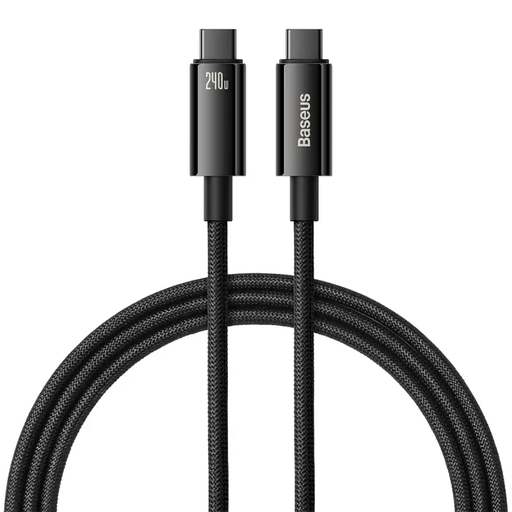
Why This Fits Their Persona: For the user who owns the latest high-performance gaming laptop or wants to be prepared for the next generation of devices, this cable provides the maximum power currently available through the USB-C standard.
This cable is PD3.1 certified and features an E-Marker chip, which intelligently communicates with your device to deliver the correct voltage, avoiding both under-powering and data speed mismatches.
Future-proof 240W PD cable performance. The zinc alloy connectors and nylon braiding provide a premium feel and robust build quality to handle the high power output.
We have compiled a complete, real-time list of products that fully satisfy these strict selection criteria and UK safety regulations.
No, you do not. The iPhone 15 series and similar smartphones charge at a much lower wattage (typically under 30W). A 60W rated cable is more than sufficient to charge these devices at their maximum speed. While a 240W cable will work safely, it will not provide any additional charging speed for a smartphone.
The most common reason for premature failure is physical stress, particularly at the point where the cable meets the connector. Repeated sharp bending, pulling the cable instead of the plug and wrapping it too tightly can damage the internal wiring. To improve lifespan, choose a braided charging cable or one with a reinforced, flexible neck.
While all USB-C cables can transfer data, their speeds vary dramatically. Many cables designed primarily for charging only support the slow USB 2.0 standard (480Mbps). If you frequently transfer large files like 4K videos or photo libraries, you should look for a cable that explicitly states support for USB 3.1 (10Gbps) or USB4 (40Gbps) for a much faster experience.