
24/7 Customer Support

Free returns

Same-day & Next-day Delivery

Quality Guaranteed

Unlock Your Welcome Offers: FREE Delivery | Up to 80% OFF | Free 30-day JoyPlus trial
Download the APP
A charging cable seems like a simple purchase, but choosing the wrong one can lead to frustratingly slow speeds, a frayed mess within months or even a cable that doesn't work with your device at all. With so many options on the market, it's easy to fall for marketing claims that don't hold up in daily use.
As the Joybuy Product Recommendation Officer, my role is to help you navigate these choices. Let's look at the common pitfalls to avoid and the key features that truly matter when selecting a fast charging USB-C cable.
To ensure you get a cable that performs well and lasts, focus on these three core parameters.
This is the single most important factor for charging speed. Your cable must be able to handle the wattage your device and power adapter require.
Check the ports on both your device and your power adapter before buying.
A cable's physical design is crucial for its lifespan and convenience.
Based on these practical criteria, here are a few options from our catalogue matched to different user needs.
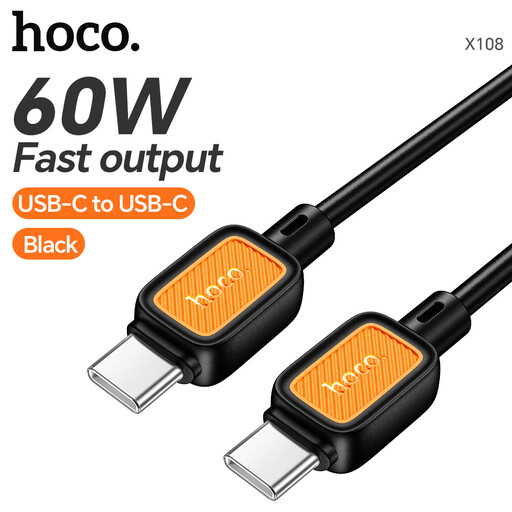
Why This Fits Their Persona: This is a practical choice for anyone needing a reliable cable for their smartphone, tablet or other accessories. It provides ample power for fast-charging most personal devices without paying for the extreme wattage needed for high-end laptops.
It avoids the "fast charging" myth by clearly stating its 60W PD capability, which is a verifiable specification that matches the needs of most modern phones and tablets.
Provides sufficient power for fast-charging phones and tablets. The USB-C to USB-C connector is the modern standard, ensuring wide compatibility.
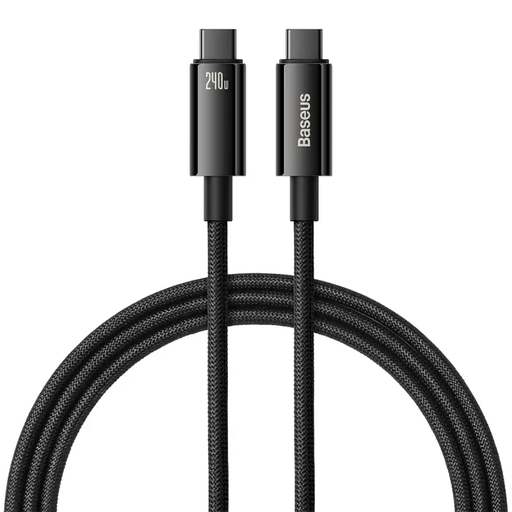
Why This Fits Their Persona: For professionals and creatives who rely on power-hungry devices like a MacBook charger cable replacement, this cable delivers the high wattage needed to keep them productive. It's built for performance and demanding charging tasks.
This cable counters the durability deception with a zinc alloy construction and nylon braiding, focusing on robust materials. Its PD3.1 certification and 240W rating are clear, verifiable specs, not vague marketing.
Supports up to 240W charging, making it suitable for the most demanding laptops. The built-in E-marker chip ensures safe and stable power delivery at high wattages.
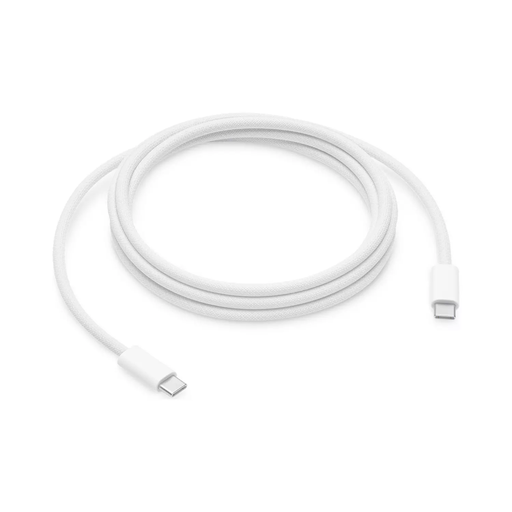
Why This Fits Their Persona: Ideal for long-term Apple users who own a Lightning-port iPhone alongside a newer USB-C iPad or MacBook. The 2m charging cable length provides excellent convenience for use around the home or office.
It completely avoids the compatibility trap for Apple users. As an official, MFi-certified cable, it guarantees seamless performance and safety with Apple devices, preventing common "accessory not supported" errors.
Supports fast charging for compatible iPhone and iPad models. The generous 2-metre length adds significant practical flexibility for daily use.
We have compiled a complete, real-time list of products that fully satisfy these strict selection criteria and UK safety regulations.
Check the product specifications for two key details: the maximum wattage (e.g., 60W, 100W, 240W) and support for "PD Power Delivery". To achieve the advertised speeds, you must pair the cable with a power adapter and a device that also support the same or higher wattage.
No, it will not. Modern devices that use the PD Power Delivery standard communicate with the charger and cable to draw only the amount of power they need. A high-wattage cable is backwards-compatible and will safely charge a lower-wattage device at its maximum supported speed.
Lifespan varies with use, but a well-designed cable should last for several years. Instead of just looking for a braided exterior, prioritise cables that mention reinforced connector joints or have high bend-cycle ratings (e.g., 20,000 bends), as this indicates better resistance to wear and tear at the most common point of failure.