
24/7 Customer Support

Free returns

Same-day & Next-day Delivery

Quality Guaranteed

Unlock Your Welcome Offers: FREE Delivery | Up to 80% OFF | Free 30-day JoyPlus trial
Download the APP
An adjustable dumbbell set can make home strength training more convenient, but the wrong design may become frustrating quickly. UK shoppers often compare price and maximum weight first, while overlooking the locking system, adjustment method and storage requirements.
The FEIERDUN adjustable dumbbell set range includes lighter options for women’s fitness and beginners, as well as a multi-configuration set for full-body workouts. Before choosing, it is worth understanding the common buying traps and matching the equipment to your available space, training style and strength goals.
Some listings focus on the maximum load but provide little detail about how weights are changed. If changing plates requires several minutes, you may avoid adjusting resistance between exercises. This can make circuits, supersets and full-body routines less fluid.
A quick-adjust dumbbell should have a clear adjustment process and secure locking components. “One-second adjustment” describes the stated adjustment technology, but users should still follow the supplied instructions and check that the mechanism is engaged before every set.
Weight plates that shift during movement can affect balance and create unnecessary noise. A locking system should be more than a decorative feature in the product description. Look for specific information about how plates are retained, whether locking nuts or components are included and how to inspect them.
The FEIERDUN options below use a stated double-locking protection system. This is designed to keep plates fixed during use, but the locks still need to be tightened correctly. No adjustable weight should be used if a component is damaged, cross-threaded or not fully secured.
A full home gym may sound appealing, but separate dumbbells, a barbell, kettlebell and push-up handles can take up considerable floor and cupboard space. Measure your storage area and workout surface before ordering. Also consider where the weights will be placed between exercises to reduce trip hazards.
A space-saving dumbbell set can be useful in a flat, spare bedroom or small garage gym, provided the conversion parts can be stored neatly and the complete assembly is stable.
Check whether the advertised weight refers to each dumbbell or the complete set. For example, a product described as 2 x 4.5 kg provides 4.5 kg per dumbbell, whereas a 10 kg set of two refers to the listed total set weight.
Light resistance can suit Pilates, toning, mobility work and introductory strength sessions. Heavier or more versatile equipment may be more suitable for progressive exercises such as rows, squats, presses and deadlifts. Choose a load that allows controlled movement rather than selecting a weight solely because it appears larger on the product page.
Cast iron dumbbells provide a dense core in a relatively compact format. An anti-slip coating may make the handles and plates more comfortable to hold, although grip comfort depends on hand size, exercise position and perspiration.
Check whether the product description identifies the main material and coating. Avoid relying on vague phrases such as “premium metal” without a material specification. A dry cloth after use can help remove moisture and perspiration, while routine inspection can identify worn locking parts before they become a problem.
Before purchasing, look for clear instructions covering:
The UK General Product Safety Regulations require consumer products placed on the UK market to be safe in normal or reasonably foreseeable use. However, shoppers should still read the supplied warnings and instructions rather than assuming that a product suits every exercise or load. Never adjust a dumbbell while it is moving and use it on a stable, level surface.
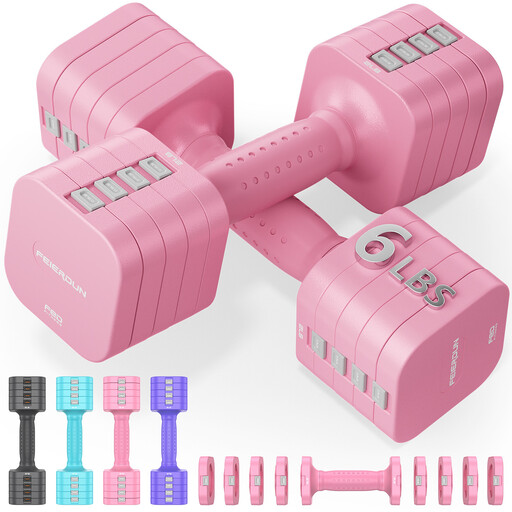
Why This Fits Their Persona: The 2 x 2.7 kg configuration suits beginners, lighter resistance routines and home users who want a manageable starting point without occupying much storage space. It can support upper-body toning, Pilates and general conditioning in a spare room or flat.
The listing states the per-dumbbell weight, cast iron construction, anti-slip coating and double-locking protection, helping buyers avoid unclear specifications and vague safety descriptions.
Compact storage; stated 1-second quick adjustment; suitable for lighter resistance and introductory home workouts.
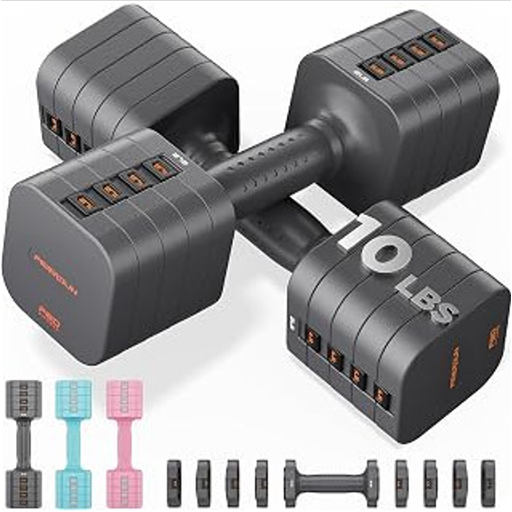
Why This Fits Their Persona: This paired set provides 4.5 kg per dumbbell for users who want more resistance than a light starter set while retaining a compact format for regular home workouts.
Its stated double-locking system addresses the common concern of plates moving during exercise, while the listed cast iron and anti-slip coating provide clearer material information.
4.5 kg per dumbbell; stated 1-second adjustment; compact design for home storage.
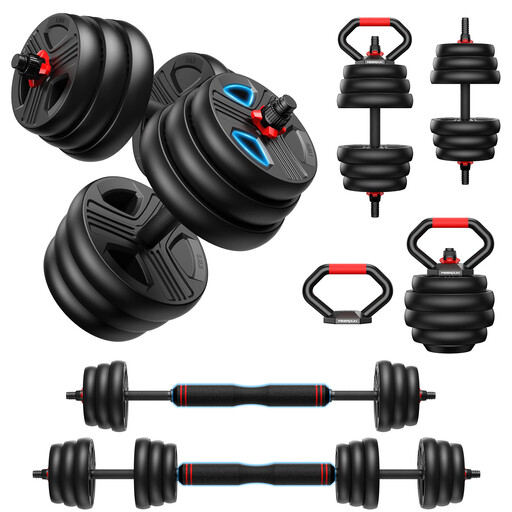
Why This Fits Their Persona: This option is aimed at users who want one compact kit for a broader full-body routine. Its listed modes include dumbbells, barbell, kettlebell and push-up stands, which may suit shared household training and varied strength sessions.
The listing identifies the conversion components and assembly requirement, so buyers can assess whether they genuinely need a dumbbell and barbell set or a kettlebell and push-up stand set.
Listed 5-in-1 configuration; adjustable resistance; cast iron with anti-slip coating; designed for full-body strength training.
We have compiled a complete, real-time list of products that fully satisfy these strict selection criteria and UK safety regulations.
Set up the dumbbell on a stable, level surface and adjust the resistance before beginning the exercise. Check that every locking nut, plate and conversion part is firmly engaged. Keep fingers clear of moving or threaded components while making adjustments.
After training, wipe the equipment with a dry cloth and store it away from damp areas. Periodically inspect the cast iron coating, handles, threads and locking mechanisms. Replace or stop using any part that shows cracking, excessive wear or unreliable fastening.
For progressive training, record the resistance used for each exercise and increase it gradually only when your technique remains controlled. Lighter weights can be appropriate for shoulder raises, Pilates and mobility work, while larger muscle groups may require a different load depending on the user’s ability and programme.
The 2 x 2.7 kg option is positioned for lighter resistance, toning, Pilates and introductory home workouts. Beginners should select a load that allows steady, controlled repetitions and should read the safety instructions before use.
Lifespan depends on frequency of use, storage conditions, load, handling and maintenance. Regularly tightening components, wiping away moisture and checking threads can help identify wear early. Avoid dropping the weights or exceeding the stated configuration.
They do not require electricity, so there is no operating energy cost during exercise. The practical costs are the initial purchase, storage and any replacement parts required if locking components or coatings become damaged. A multi-use set may also reduce the need to buy separate home gym weights, depending on how many exercise modes you will actually use.