
24/7 Customer Support

Free returns

Same-day & Next-day Delivery

Quality Guaranteed

Unlock Your Welcome Offers: FREE Delivery | Up to 80% OFF | Free 30-day JoyPlus trial
Download the APP
Felt tip pens are useful for far more than children’s colouring. In the UK, shoppers use them for revision notes, journalling, planners, lettering, labelling, card-making and professional artwork. However, choosing a set based only on colour count or attractive packaging can lead to disappointing results.
The most suitable option depends on tip width, ink type, permanence, paper compatibility and intended user. A compact fineliner may suit detailed notes, while a broad fibre-tip pen is more practical for filling large areas. Use the guide below to compare the important specifications before buying.
A marker pen set with dozens of shades may look economical, but unused colours can add cost and storage demands. Check whether the set contains useful everyday colours, pastel or neon shades, or several near-identical tones. For schoolwork and office notes, a smaller assorted colour pens set may be more practical than an extensive art collection.
Water-based ink pens are generally suited to paper, colouring and journalling, but may not adhere reliably to smooth non-porous materials. Permanent markers are designed for longer-lasting marks on surfaces such as plastic, metal, wood and paper. They may also stain clothing, furniture and skin, so they are not a direct replacement for children’s colouring pens.
A bold medium or broad tip can be pleasant for headings but may be unsuitable for small handwriting. Conversely, a fine tip may take longer to cover large areas. Ink that appears “smudge-resistant” on one notebook may still show through thin paper, particularly when applied repeatedly. If you use both sides of a planner or notebook page, test the pen on a spare sheet first.
The tip material also affects handling. A fibre tip provides a softer, more expressive line than a rigid ballpoint, while a metal-encased fineliner tip can offer more control for detailed drawing pens and technical notes.
Choose water-based ink for many paper-based creative projects, especially if you want to explore blending or watercolour-style effects. Some water-based pens are washable from most fabrics, but this does not mean every mark will disappear from every textile.
For labelling storage boxes, craft materials or workshop items, check whether you specifically need permanent markers. Permanent ink can resist water and fading, but use it in a well-ventilated area and protect the working surface.
Large packs can suit classrooms, shared offices and busy craft tables, while mini sets are easier to carry in a pencil case or handbag. Replace caps firmly after use and follow the storage guidance on the packaging. Many pens should be stored horizontally to help maintain ink flow.
For young children, check the stated age guidance and small-parts warnings. Pens are not food items, and ink should not be ingested. Adult supervision is appropriate where products include small clips, detachable caps or decorative accessories.
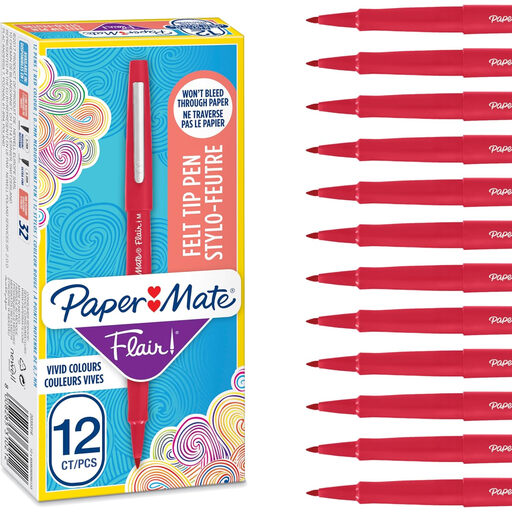
Why This Fits Their Persona: A practical starting point for students, journal writers and office workers who want bold coloured pens for notes, planners and everyday writing.
The medium point is more versatile than a very broad marker, while the product description specifies smudge-resistant ink designed to reduce bleed-through on paper.
Smooth felt tip, bold lines and a broad 32-colour range. Store horizontally and replace the cap after use.
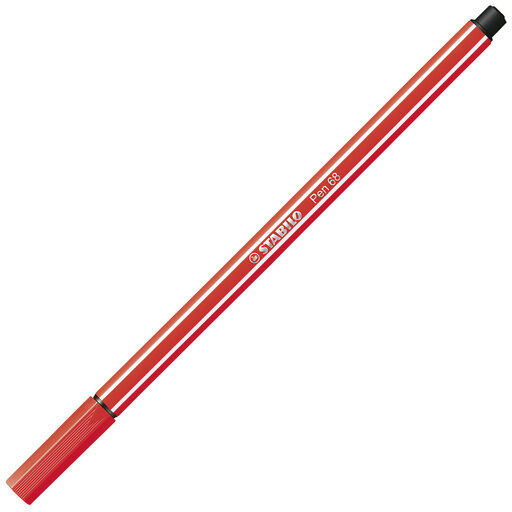
Why This Fits Their Persona: Suitable for artists, crafters and stationery enthusiasts seeking extensive colour variety for illustrations, hatching and larger areas.
The approximately 1 mm M-tip and water-based ink are clearly specified, so buyers can match the pen to paper artwork rather than relying only on colour-count marketing.
65 assorted colours, including neon and pastel shades; water can be used on suitable watercolour paper to create aquarelle-style effects.
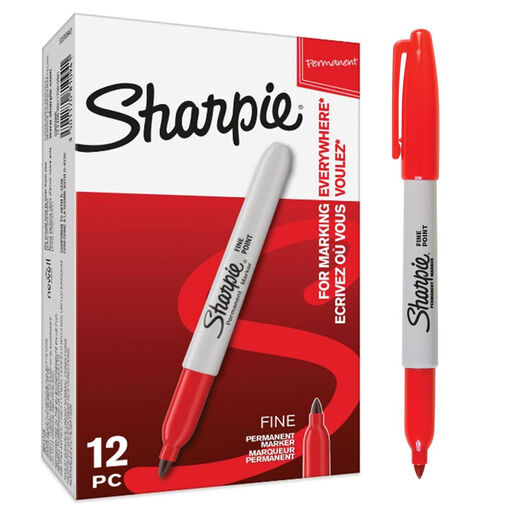
Why This Fits Their Persona: A focused option for labelling, workshop tasks, crafting and marking materials where a lasting line is required.
It is identified as a permanent fine-tip marker, making its intended use clearer than treating a standard colouring pen as suitable for every surface.
Fine point for controlled marks; product information lists paper, plastic, metal and wood among suitable surfaces. Use ventilation and protect nearby surfaces.
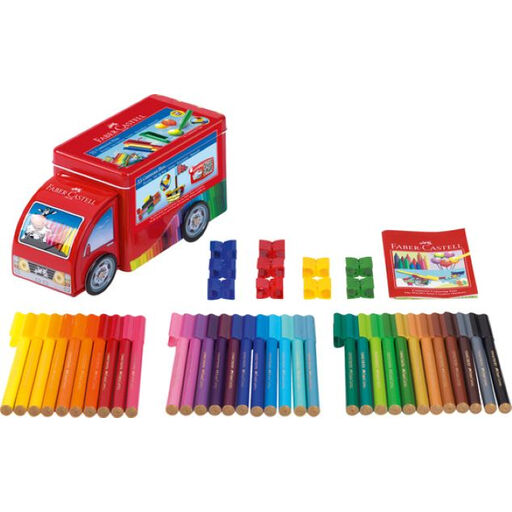
Why This Fits Their Persona: Designed for children’s colouring, shared craft time and imaginative activities, with storage that can be carried between rooms or taken on trips.
The set includes 33 pens, 10 connector clips and a storage box, so the extra pieces have a defined creative purpose rather than only increasing the headline count.
Washable ink is specified for most fabrics, and the connecting caps support storage and play. Not suitable for children under three due to small parts.
We have compiled a complete, real-time list of products that fully satisfy these strict selection criteria and UK safety regulations.
Yes, medium and fine felt tip pens can work well for headings, colour coding and decorative writing. Look for water-based ink and check bleed-through on the paper you use. Fineliner pens with a 0.4 mm tip are more suitable for small diary entries and detailed layouts.
Lifespan depends on frequency of use, pressure, cap placement and storage. Leaving pens uncapped can dry the tip, although some products specify dry-out protection. Recapping pens immediately and storing them as directed helps preserve ink flow. If a pen begins skipping, applying extra pressure usually will not restore it and may damage the tip.
The purchase cost is only one consideration. Permanent markers are appropriate when a mark must remain on suitable surfaces, but they are less flexible for ordinary paper notes and may require ventilation and surface protection. For schoolwork, colouring and planners, water-based colouring pens are generally the more appropriate format.