
24/7 Customer Support

Free returns

Same-day & Next-day Delivery

Quality Guaranteed

Unlock Your Welcome Offers: FREE Delivery | Up to 80% OFF | Free 30-day JoyPlus trial
Download the APP
Navigating the world of East and Southeast Asian cooking sauces can be a challenge. You stand in the aisle, faced with a wall of jars labelled fermented bean paste, but they all look so different. Choosing the wrong one can mean the difference between a rich, authentic Mapo Tofu and a dish that just doesn't taste right. As the Joybuy Product Recommendation Officer, my role is to help you understand these differences so you can select the right product with confidence.
Many home cooks in the UK fall into a few common traps. First is the "one-sauce-fits-all" mistake, where a generic stir fry sauce is expected to work for everything from a Korean stew to a Chinese dipping sauce. Second is misinterpreting the label; a Korean soybean paste for stews has a completely different flavour profile from a Chinese sweet bean paste for dipping. Finally, many overlook the base ingredient, not realising that pastes made from broad beans, soybeans or black beans are not interchangeable. These missteps can lead to disappointing meals and wasted ingredients.
This guide will break down the essential factors to consider, helping you choose the perfect fermented bean paste for your culinary adventures.
To avoid buying pitfalls, focus on three core characteristics: the base ingredient, the intended flavour profile and the texture. Understanding these will ensure you get the authentic taste you're looking for.
The foundation of any fermented bean paste is its core ingredient, which dictates its fundamental flavour.
Fermented bean pastes are not a monolith. Their flavour profiles are tailored for specific culinary roles.
The physical form of the paste affects how it integrates into a dish.
Based on these criteria, we've matched some popular products to the home cooks who will appreciate them most.
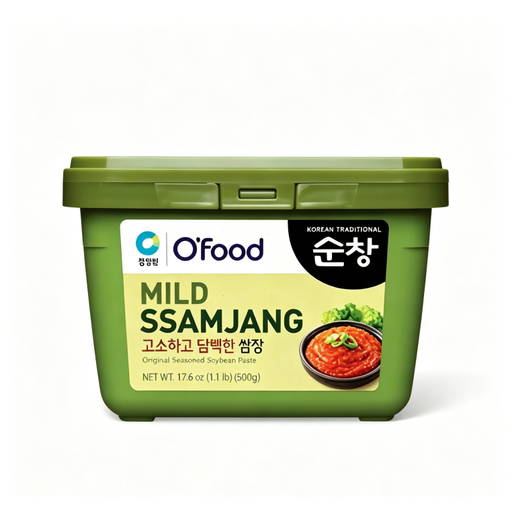
Why This Fits Their Persona: If you love hosting Korean barbecue nights, this is your go-to condiment. It's specifically formulated as a ssamjang, the essential dipping sauce for grilled meat wrapped in lettuce. It's ready to serve straight from the tub.
This is not a generic soybean paste. It's a purpose-built dipping sauce, preventing the common mistake of using a salty stewing paste (*doenjang*) for dipping, which would be overpowering.
A balanced blend of savoury, sweet and nutty flavours. It's a convenient, all-in-one sauce that delivers an authentic Korean restaurant experience at home.

Why This Fits Their Persona: For those chasing the genuine, complex flavours of Sichuan cuisine, this condiment is a pantry staple. It combines the savoury punch of fermented black beans (*douchi*) with the aromatic heat of chilli oil, perfect for stir-fries and noodle dishes.
This is not a simple black bean sauce. It provides whole fermented beans in oil, delivering a textural and flavour complexity that a smooth, generic sauce cannot replicate. It's a specific ingredient, not a one-size-fits-all sauce.
Delivers multiple layers of flavour: savoury umami, salty notes from the beans and aromatic spice from the chilli oil. It's a versatile condiment from a globally recognised brand.

Why This Fits Their Persona: This is a foundational sauce for anyone cooking a variety of Chinese dishes. As a classic yellow soybean paste, it's incredibly versatile for stir-frying, braising meats or even as a base for the sauce served with Beijing duck pancakes.
Unlike overly sweet or simplified Westernised sauces, this product from a major Chinese brand provides an authentic, savoury-first flavour profile that acts as a proper building block for traditional recipes.
A highly versatile paste with a rich, savoury and slightly sweet flavour. It's a reliable and authentic base for a wide range of Chinese cooking applications.
We have compiled a complete, real-time list of products that fully satisfy these strict selection criteria and UK safety regulations.
How long does fermented bean paste last once opened? Once opened, most fermented bean pastes should be stored in the refrigerator with the lid tightly sealed. Due to their high salt content, they are well-preserved and can typically last for several months, often up to a year. Always check the packaging for specific storage advice. Use a clean spoon for each use to prevent contamination.
Can I use Korean soybean paste instead of Chinese doubanjiang? This is generally not recommended as they have very different flavour profiles. Korean soybean paste (doenjang) is primarily salty and umami, whereas Chinese doubanjiang is pungent and often very spicy, with a flavour derived from broad beans, not just soybeans. Substituting one for the other will significantly alter the taste of your dish.
What is the difference between black bean sauce and fermented black beans? Fermented black beans (douchi) are whole soybeans that have been fermented and salted. They are a core ingredient with a very potent, salty flavour. A black bean sauce is a ready-to-use condiment made from these fermented black beans, which are typically crushed and blended with other ingredients like garlic, ginger, soy sauce and sometimes sugar to create a balanced sauce. The sauce is more convenient, while the whole beans offer a more intense, pure flavour.