Hosts serving a mixed group
If guests have different cola preferences, decide whether you need both a standard and a caffeine-free option. Pack size also matters when drinks must be chilled and served alongside festival food.


For festival food, choose a cola by the exact variant rather than the brand alone: standard Coca-Cola Zero Sugar and Pepsi MAX both publish 0g sugars per 100ml, but their listed ingredients include caffeine and aspartame. If guests need to avoid caffeine, look for an explicitly caffeine-free variant; then check its sweeteners and choose cans or bottles to suit your chilling and serving plans.
If guests have different cola preferences, decide whether you need both a standard and a caffeine-free option. Pack size also matters when drinks must be chilled and served alongside festival food.
Compare the sugars figure per 100ml on the exact variant. A no-added-sugar name alone does not tell you whether the nutrition panel states zero sugars or a small amount.
A standard zero-sugar cola is not necessarily caffeine-free. Read the variant name and ingredients separately; the NHS says aspartame is unsuitable for people with phenylketonuria (PKU).
Start with the drink requirements, then choose a pack you can store and serve as directed. Check the physical label of the variant you buy, as ingredients and instructions can change.
| Priority | What to check | Your needs |
|---|---|---|
| Sugars | Compare sugars per 100ml for the exact variant. Coca-Cola Great Britain and Pepsi UK publish 0g per 100ml for standard Coca-Cola Zero Sugar and Pepsi MAX; the reviewed Tesco Diet Cola variants state less than 0.1g per 100ml. | I want to choose by the nutrition panel, not assume that every drink described as no added sugar has an identical sugars figure. |
| Caffeine | Check the variant name and ingredients. Standard Coca-Cola Zero Sugar, Pepsi MAX and Tesco Diet Cola list caffeine or caffeine flavouring; Pepsi MAX No Caffeine and Tesco Caffeine Free Diet Cola are labelled caffeine-free by their respective makers. | Some guests avoid caffeine, so I need a clearly labelled caffeine-free option rather than another standard zero-sugar cola. |
| Sweeteners | Read the current ingredients for aspartame or E951. Coca-Cola Great Britain and Pepsi UK list aspartame in the reviewed Zero Sugar and MAX variants, including Pepsi MAX No Caffeine. The NHS says aspartame is unsuitable for people with PKU. | If aspartame matters to someone I am serving, the sugar claim will not answer that question; I need to check the particular pack. |
| Serving format | Check how many servings you can chill and how much will be opened at once. Tesco lists 2-litre Diet Cola bottles and instructs buyers to keep them cool and out of sunlight and use them within 3 days of opening; smaller cans allow individual servings to remain unopened. | For an outdoor food table, I would choose bottles only if I can store and serve them as directed. Cans may fit a plan to offer separate portions. |
Standard Coca-Cola Zero Sugar, Pepsi MAX and Tesco Diet Cola list caffeine or caffeine flavouring. Their sugar descriptions do not establish caffeine-free status.
For caffeine avoidance, check the front-of-pack variant name and ingredients; Pepsi MAX No Caffeine and Tesco Caffeine Free Diet Cola are distinct products.
The NHS says aspartame is unsuitable for people with PKU. Coca-Cola Great Britain and Pepsi UK list it in several of the zero-sugar colas discussed here, including Pepsi MAX No Caffeine.
Check the current ingredients for aspartame or E951 and follow the person’s existing dietary guidance rather than relying on the sugar description.
A shared bottle needs space for storage and a plan for any drink left after opening. Tesco’s instructions for its reviewed 2-litre Diet Cola bottles say to keep them cool and out of sunlight and consume them within 3 days of opening.
Check the instructions on your chosen bottle. If separate unopened portions suit the event better, consider cans instead.
The NHS notes that carbonated drinks are associated with dental erosion because of their acid content. Removing sugar does not remove that consideration.
Describe no-added-sugar cola by its sugars and ingredients, not as tooth-neutral, and offer water alongside the other drinks.
These brand examples show why the exact cola variant matters; they are not a list of products available in the Joybuy selection below.
Coca-Cola Great Britain positions Coca-Cola Zero Sugar as having a taste similar to Coca-Cola Original Taste. That taste description is the manufacturer’s claim, not an independent comparison.
Pepsi UK distinguishes standard Pepsi MAX from Pepsi MAX No Caffeine, giving buyers two different caffeine choices within its no-sugar range.
Tesco lists own-label Diet Cola and Caffeine Free Diet Cola in 2-litre bottles. The standard and caffeine-free versions have different published sweetener lists.
These can multipacks cover standard and caffeine-free cola choices for serving with festival food. Compare each named variant with guests’ ingredient requirements and the number of portions you plan to chill.
 No image available
The caffeine-free variant offers 24 individual 330ml cans for a serving plan that calls for separate portions. Its product information flags aspartame and a phenylalanine statement; check the current pack when serving someone with PKU.
 No image available
For a Pepsi MAX option without caffeine, this pack contains 24 individual 330ml cans. Pepsi UK’s published ingredients for MAX No Caffeine include aspartame, which the NHS says is unsuitable for people with PKU; check the current pack.
 No image available
This standard Pepsi MAX pack contains 24 individual 330ml cans. Pepsi UK publishes 0g sugars per 100ml for standard MAX, but its ingredients include caffeine and aspartame; choose the separately named caffeine-free variant if caffeine avoidance is required.
 No image available
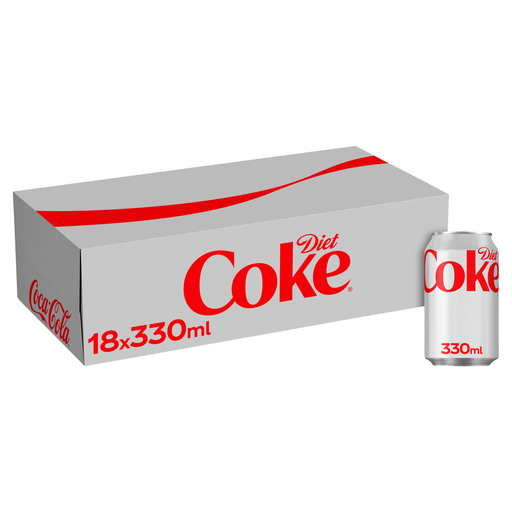
The 18 individual 330ml cans provide a different portion count from the 24-can packs here. The product information flags caffeine, aspartame and a phenylalanine statement; check the current pack for guests avoiding either ingredient.
 No image available
This Coca-Cola Zero Sugar pack contains 24 individual 330ml cans. Coca-Cola Great Britain publishes 0g sugars per 100ml for the standard variant and lists caffeine flavouring and aspartame; check the current pack before serving guests with ingredient restrictions.
Not necessarily. Check sugars per 100ml on the exact pack: Coca-Cola Great Britain and Pepsi UK publish 0g for standard Coca-Cola Zero Sugar and Pepsi MAX, while the reviewed Tesco Diet Cola variants state less than 0.1g per 100ml.
Choose an explicitly caffeine-free variant and confirm its label. Pepsi UK describes Pepsi MAX No Caffeine as caffeine-free, and Tesco does the same for Caffeine Free Diet Cola; their standard counterparts list caffeine.
No. The NHS says aspartame is unsuitable for people with PKU, and the published ingredients for Coca-Cola Zero Sugar, Pepsi MAX and Pepsi MAX No Caffeine include it. Check the current ingredients and follow the person’s existing dietary guidance rather than relying on a zero-sugar claim.
Follow the instructions on the exact bottle. Tesco says to keep its reviewed 2-litre Diet Cola bottles cool and out of sunlight and consume them within 3 days of opening, so plan both storage space and how quickly opened bottles will be used.
No. The NHS notes that carbonated drinks are associated with dental erosion because of their acid content. A zero-sugar label describes sugars; it does not mean the drink is tooth-neutral.