Festival organisers serving mixed groups
Keep each flavour’s pack information available so guests can check their own requirements. Offering a gluten-free or vegan option does not make it suitable for every allergy.


For festival food, choose the exact sealed pack whose gluten-free or vegan claim matches the guest’s need, then check its current ingredients and allergen wording. Those claims answer different questions: neither makes a crisp suitable for every allergy, and a plain or salted flavour is not enough to establish suitability.
Keep each flavour’s pack information available so guests can check their own requirements. Offering a gluten-free or vegan option does not make it suitable for every allergy.
Look for the claim that matches your requirement on the exact product. Check the current pack rather than assuming that another flavour from the same brand carries the same claim.
Read the ingredients and any precautionary wording for the flavour being served. Even salted crisps can have a relevant “may contain” or factory-handling statement.
Start with the guest’s actual requirement, then check the claim, ingredients and precautionary wording on the product that will be served.
| Priority | What to check | Your needs |
|---|---|---|
| Pack information | Keep the exact sealed pack available for its ingredients and allergen wording. For loose food, ask the seller for allergen information. | I want to check the food before choosing it, rather than rely on a flavour name or a sign beside the stall. |
| Gluten-free claim | Look for a gluten-free claim on the exact product; also read its flavour ingredients and allergy advice. The Food Standards Agency states that food labelled gluten-free must contain no more than 20 mg/kg gluten as sold to the final consumer. | When gluten-free food is required, I need more than the fact that potatoes are the main ingredient. |
| Vegan claim | Check whether the product, not merely the brand, is described as vegan. Read allergen and precautionary information separately. | I’m avoiding animal-derived ingredients, but a vegan label alone does not answer an allergy question. |
| Flavour and cross-contact | Compare each variant’s ingredients with its “may contain” or factory-handling wording. The Food Standards Agency describes precautionary labels as warnings about possible unintended allergen presence. | For an allergy-related choice, I need information for the flavour and pack I will actually eat. |
Flavourings and precautionary statements matter. Tyrrells lists barley malt vinegar in its Sea Salt & Cider Vinegar flavour, while McCoy’s Salted carries a “may contain gluten” statement.
For a gluten-free requirement, look for the claim on the exact product and read its current ingredients and allergy advice.
KETTLE Chips describes its Vegan Sheese & Red Onion product as vegan and gluten-free. REAL Hand Cooked Crisps describes its range as vegetarian and gluten-free, which is not a whole-range vegan claim.
Match each claim to the guest’s requirement, then check allergen information separately.
Tyrrells says its Lightly Sea Salted crisps may contain milk; its Sea Salt & Cider Vinegar flavour also lists barley malt vinegar. The information for one variant cannot stand in for the other.
Check the current label of every flavour and pack size being bought or served.
Without the pack or the seller’s allergen information, a guest cannot check the ingredients and warnings relevant to their choice.
Ask to see the original pack or the seller’s allergen information before serving loose crisps to someone with an allergy-related requirement.
These examples show why free-from claims need to be read at product level; a claim for one flavour does not establish the position for every flavour in a range.
KETTLE Chips describes its Vegan Sheese & Red Onion product as gluten-free and suitable for vegans and vegetarians.
Seabrook says its gluten-free crisp and snack range is Coeliac UK accredited; it describes its Sea Salt & Vinegar crisps as gluten-free and suitable for vegans and vegetarians.
REAL says its whole range is vegetarian and gluten-free and directs shoppers to individual packs for flavour-specific allergen information.
Walkers Ready Salted has a factory-handling statement covering milk, wheat, gluten, barley, soya, celery and mustard.
Tyrrells lists potatoes, sunflower oil and sea salt in Lightly Sea Salted, but says it may contain milk. Its Sea Salt & Cider Vinegar flavour lists barley malt vinegar and may contain milk.
McCoy’s describes its Salted flavour as suitable for vegetarians and says it may contain milk, soya, gluten and mustard.
These options include a potato crisp and cassava and plantain chips for festival snack planning. Check the current pack for any dietary claim, ingredients and allergen wording before choosing for a guest.
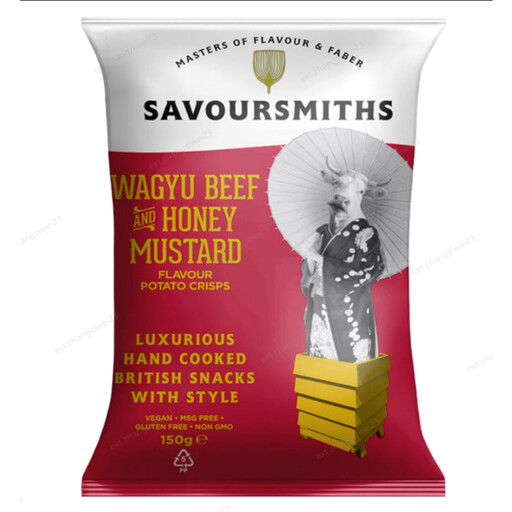 Image unavailable
This named vegan potato-crisp variant comes in a 150g size. If gluten-free food or an allergy-related check is needed, confirm the claims and full allergen wording on the current pack.
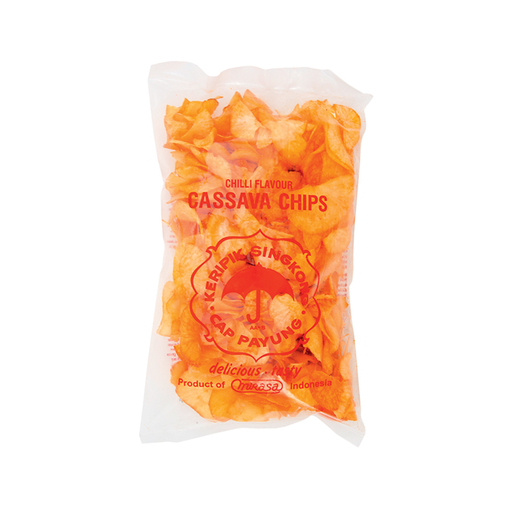 Image unavailable
These chilli-flavoured cassava chips are an alternative to potato crisps in a 250g size. Check the current pack for the gluten-free or vegan claim a guest needs, as well as its ingredients and allergen wording.
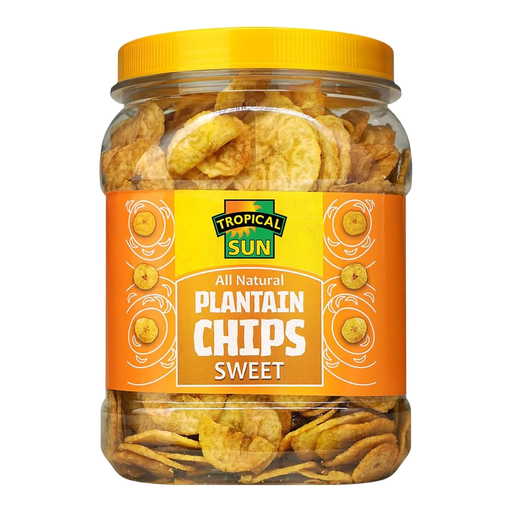 Image unavailable
This 450 g plantain-chip option has a sweet flavour rather than a savoury potato-crisp flavour. For a mixed group, make the current pack available so each guest can check dietary claims and allergen information.
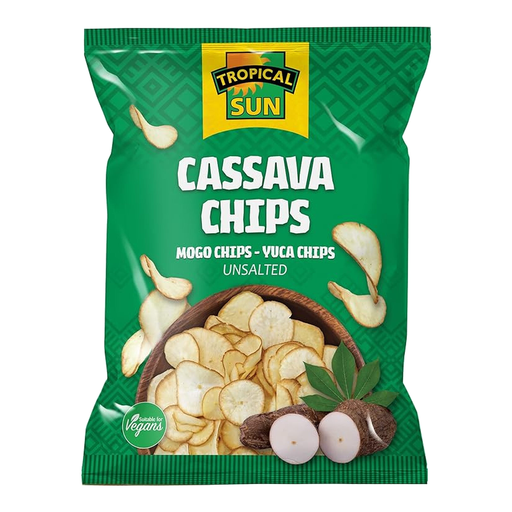 Image unavailable
These unsalted cassava chips come in an 80g size. If choosing them for a gluten-free or vegan requirement, check the relevant claim on the current pack rather than inferring it from the ingredient or “unsalted” description.
No. A potato or salted description is not a gluten-free claim: Walkers Ready Salted has a factory-handling statement covering wheat, gluten and barley, and McCoy’s Salted says it may contain gluten. Choose the exact product according to its current gluten-free claim and allergy wording.
No. A vegan claim addresses animal-derived ingredients; it does not resolve every allergen or cross-contact question. Read the exact pack’s ingredients and precautionary wording for the allergen that matters to the guest.
Ask for allergen information for the exact food before choosing it. The Food Standards Agency says retail and catering businesses must provide allergen information for prepacked and non-prepacked food and drink; the cited GOV.UK guidance applies to England, Northern Ireland and Wales.
Keep the original packs or current product information available and identify each flavour and pack size. Guests can then check the claims, ingredients and precautionary wording relevant to them rather than relying on a broad “free-from” sign.
The Food Standards Agency states that food labelled “gluten-free” must contain no more than 20 mg/kg gluten as sold to the final consumer. The claim concerns gluten; it does not establish vegan suitability or the absence of every other allergen.