What matters before you buy?
Decide whether the sugar-free criterion is essential or whether you would rather have fudge with some sugars. Then check whether the product can be stored and served as planned at the festival.
| Priority | What to check | Your needs |
|---|
| Sugar-free claim |
Read “of which sugars” per 100 g. The Annex to Regulation (EC) No 1924/2006 gives no more than 0.5 g per 100 g as the sugar-free criterion; “no added sugar” and “keto” are not substitutes for that figure. |
I need a sweet that meets the sugar-free criterion, even if that means choosing toffee or another format instead of fudge. |
| Fudge and nutrition |
No Guilt Bakes lists 1.9 g sugars per 100 g for Chocolate fudge and 2 g for Caramel. Compare the rest of the nutrition panel and the portion you intend to serve separately from the sugars figure. |
I would rather have fudge and am comfortable choosing a no-added-sugar product that still contains some sugars. |
| Sweeteners and polyols |
Check the sweetener ingredients, polyols and any pack warning. No Guilt Bakes lists 32 g polyols per 100 g for its Chocolate and Caramel fudge; ASDA’s Werther’s toffee listing warns that excessive consumption may produce laxative effects. |
Before taking a share bag, I want to know what sweeteners it contains and whether the pack carries a warning relevant to how it will be served. |
| Allergens and storage |
Check the current ingredients and allergen declaration, date marking and storage instructions. The listed No Guilt Bakes fudge contains milk and calls for cool, dark storage and refrigeration after opening; ASDA lists milk and soya for the Werther’s toffees. |
I need guests to be able to check the pack, and I need a way to store the sweet as its instructions require. |
A Joybuy dessert alternative
This strawberry jelly mix is a prepared dessert alternative, not fudge or a ready-to-eat festival sweet. Consider it only if boiling water and time for the jelly to set fit your plans.
 No image available
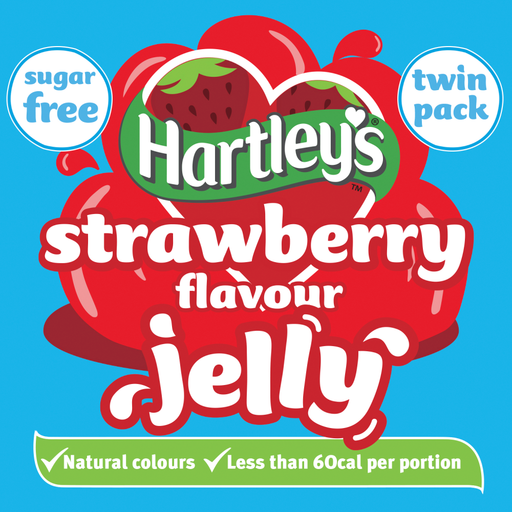
Hartley’s Strawberry Sugar Free Jelly 23g
For a dessert prepared ahead of a festival, this strawberry jelly offers a different format from fudge.
It needs boiling water and time to set. It contains pork gelatine and a source of phenylalanine; check the current pack’s full ingredients and allergen information for the people you are serving.
View on Joybuy
Festival sweets: common questions
Is no-added-sugar fudge the same as sugar-free fudge?
No. The sugar-free criterion in the Annex to Regulation (EC) No 1924/2006 is no more than 0.5 g sugars per 100 g, or per 100 ml for liquids. No Guilt Bakes lists 1.9 g per 100 g for its Chocolate fudge and 2 g for Caramel, so neither meets that criterion.
What if I need a strictly sugar-free festival sweet?
Check the current product’s sugars figure per 100 g against the 0.5 g sugar-free criterion. ASDA lists Werther’s Sugar Free Creamy Toffees at less than 0.5 g per 100 g, but they are toffee rather than fudge; also check their milk and soya declaration.
Does “sugar-free” mean carbohydrate-free?
No. Diabetes UK explains that polyols contain carbohydrate and calories. Read the full nutrition panel and sweetener ingredients rather than relying on the sugars line alone.
What should I check before taking fudge to a festival?
Check the current pack’s ingredients, allergens, date marking, nutrition and storage instructions. No Guilt Bakes advises keeping its listed fudge in a cool, dark place and refrigerating it after opening, so plan how you would follow those instructions.
Should I keep the packaging when serving sweets to guests?
Yes. Keep the original pack or a clear copy of its current label available so guests can check ingredients and allergens. The Department for Environment, Food & Rural Affairs and Food Standards Agency’s food-labelling guidance identifies these among the information required on pre-packed food.


