Salt-conscious festival cooks
If you are making a large batch, compare salt per 100g as well as the amount in the portion you intend to serve. A claim about another nutrient does not answer the salt question.


For a shared festival meal, choose pasta sauce by checking salt per 100g and the amount of sauce you plan to serve, rather than relying on claims about sugar or fat. Plain passata gives you control over seasoning but takes preparation; a finished sauce saves work, provided its ingredients, portion size and storage instructions fit the event.
If you are making a large batch, compare salt per 100g as well as the amount in the portion you intend to serve. A claim about another nutrient does not answer the salt question.
A finished sauce can reduce preparation work for a crowd. Check the pack's serving and storage instructions alongside the event's heating and refrigeration arrangements.
For guests with different dietary needs, check the ingredients and allergen declaration on each exact pack. A tomato-based appearance does not establish whether a sauce contains meat or meets a guest's requirements.
Start with the salt in the portion you will actually serve, then choose between making sauce from a tomato base and using a finished recipe. For a group meal, ingredient checks and the practicalities of preparation matter too.
| Concern | What to check | Who this matters to |
|---|---|---|
| Salt in the served portion | Compare salt per 100g on similar sauces, then calculate it for your planned portion. Check the salt line even if the front label mentions sugar or fat. | When I am serving a generous portion, I want to know how much salt the sauce adds to each plate. About 36% of consumers put portion-level salt control first. |
| Preparation and storage | Check whether the sauce is ambient or chilled, how it is prepared and what the pack says to do after opening. | If I have many plates to serve, I need a sauce I can prepare and store within the venue's facilities. For about 29% of consumers, manageable group service is the primary concern. |
| Ingredients and dietary fit | Read the current pack's ingredient list, allergen declaration and dietary statement; plan separate utensils where dishes must be kept apart. | With different guests at the same meal, I need to know which sauce each person can have before it reaches the serving area. Ingredient and dietary fit comes first for about 21% of consumers. |
| Flavour and menu fit | Decide whether you need a base to season yourself or a finished sauce, and check prominent ingredients against the planned dish. | I want the sauce to suit the pasta dish without committing the whole batch to the wrong flavour or a meat-based recipe. About 14% of consumers make menu fit their main concern. |
For salt comparisons, use the same measure across similar products: grams per 100g shows the concentration, while grams in your planned portion shows what the sauce contributes to a plate. GOV.UK notes that traffic-light labels can help compare salt at a glance where they appear; the nutrition panel gives the figures needed when portion sizes differ.
Napolina describes passata as usually just tomatoes without added herbs, oils or seasoning. That makes it a starting point for cooks who want to decide how to flavour a batch, not a promise about every passata pack. Ready-made sauces remove some of that work, but the exact recipe and serving quantity still determine the choice.
They describe different parts of the nutrition information. Tesco Groceries lists 0.64g salt per 100g for its No Added Sugar Bolognese, while Dolmio UK lists 0.67g per 100g for its Low Fat Bolognese; neither name tells you how it compares on salt.
Read the salt row on the exact pack before choosing a sauce for the batch.
The quantity of sauce changes its contribution to a meal. Tesco Groceries lists 0.80g salt for a stated 125g serving of its No Added Sugar Bolognese; Sainsbury's lists 1.40g for a stated half-pot serving of its chilled Taste the Difference Bolognese. Those are different products and serving sizes, not a like-for-like ranking.
Set a planned sauce quantity per plate and calculate from the relevant pack figure. Account for other ingredients added to the dish as well.
Recipes differ: Tesco Groceries labels its checked No Added Sugar Bolognese suitable for vegans, whereas the checked Sainsbury's Taste the Difference Bolognese contains beef, pork and bacon.
Check the current pack's ingredients and allergen information, and keep dishes and serving utensils separate where guests' requirements call for it.
Opening instructions vary by product. The checked M&S Daylesford tomato-and-basil sauce says to use it within five days of opening, while the checked chilled Sainsbury's bolognese says two days. The Food Standards Agency's MyHACCP guidance also identifies heating, cooling, refrigeration and temperature monitoring as considerations for food operations.
Match the exact pack's instructions to the venue's storage, heating and serving arrangements before buying for the event.
Ready-made pasta sauces offer a route when preparing the base from scratch is impractical.
Its passata offers a tomato base for cooks who want to build their own sauce.
An own-label finished sauce is one option for a planned pasta meal.
Its checked Tomato & Garlic Pasta Sauce is a finished tomato-sauce example.
The checked Daylesford tomato-and-basil sauce is an ambient tomato-sauce example.
The checked chilled Taste the Difference Bolognese is a finished meat-based option.
These options cover passata and tomato purée for building a sauce, alongside finished pasta sauces for a shorter preparation route. For a festival meal, compare the current packs against your planned portions and storage arrangements.
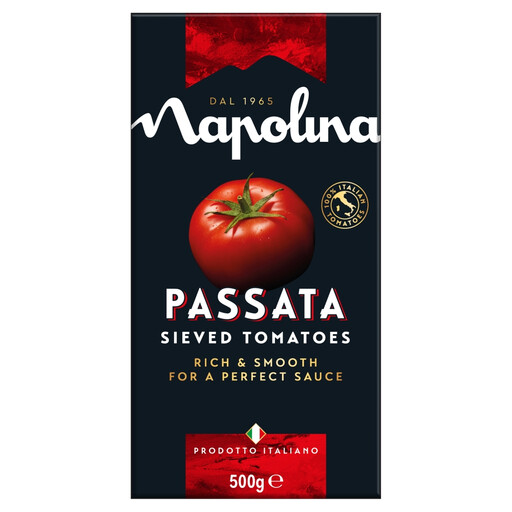 Image unavailable
Choose this as a tomato base when you have time to make and season the sauce yourself. Check the pack's salt and opening instructions against the recipe and service plan.
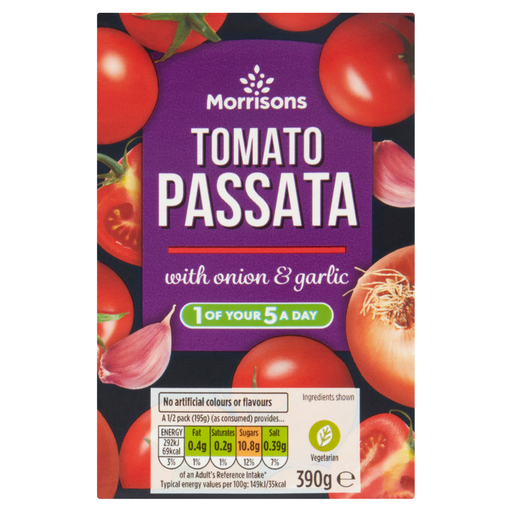 Image unavailable
The named onion-and-garlic ingredients may suit a sauce you plan to develop around those flavours. It is not a plain tomato-only base: check the current ingredients and salt figure before adjusting the rest of your recipe.
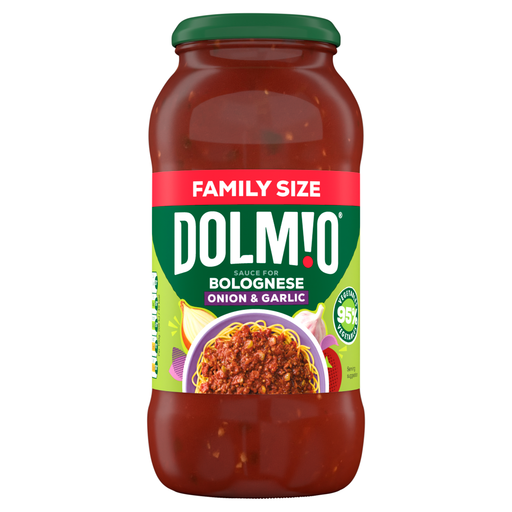 Image unavailable
This finished sauce is an option when you want to avoid making a tomato base. Use the current jar's salt and serving figures to plan portions; its name does not establish a reduced-salt claim.
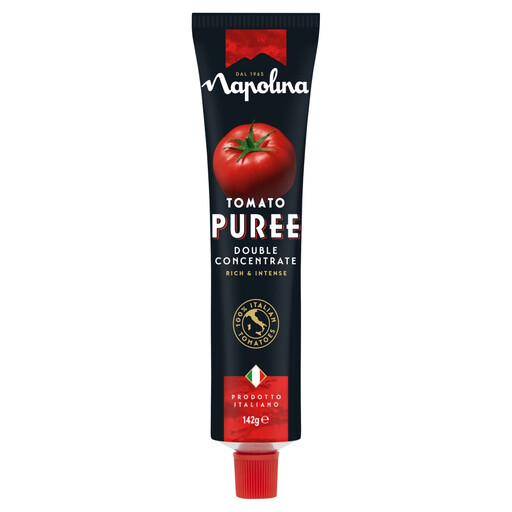 Image unavailable
Use this concentrate as an ingredient when making a sauce, not as a ready-to-serve substitute for passata. Judge its salt contribution by the quantity used in the complete recipe rather than comparing its per-100g figure directly with finished sauce.
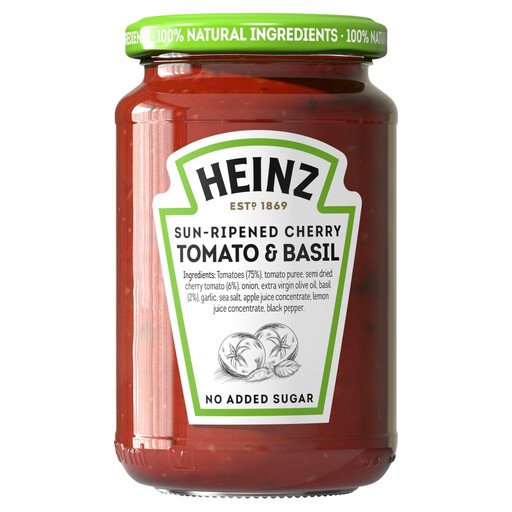 Image unavailable
This finished tomato-and-basil sauce is an option when the menu calls for that flavour without making a base. Check the current pack for the salt in your planned portion and precise instructions for keeping it after opening.
Compare grams of salt per 100g across similar sauces, then work out the amount in the portion you intend to serve. GOV.UK says adults should have no more than 6g of salt a day and notes that traffic-light labels can help compare products at a glance where they are present.
No: sugar and salt are separate entries on the nutrition panel. Tesco Groceries lists 0.64g salt per 100g and 0.80g per stated 125g serving for its No Added Sugar Bolognese, so check the salt figure rather than drawing a conclusion from the product name.
Passata is a tomato base that generally needs preparing and flavouring before it becomes your pasta sauce. Napolina describes it as usually just tomatoes without seasoning, which gives you control over what you add; check the exact pack's ingredients and nutrition rather than assuming every passata has the same salt content.
Check the exact sauce's ingredients and allergens, then make sure the service setup can meet its storage and preparation instructions. The Food Standards Agency's MyHACCP guidance identifies suitable heating, cooling, refrigeration and temperature-monitoring facilities as considerations according to the food operation; check the requirements relevant to your stall and service plan.
Follow the instruction on the exact pack, because the period varies by product. The checked Tesco jar says to consume it within 14 days of opening, the checked Asda sauce says it is best within seven days, the checked M&S Daylesford sauce says five days, and the checked chilled Sainsbury's bolognese says two days. These are product-specific instructions, not a rule for all pasta sauces.