
24/7 Customer Support

Free returns

Same-day & Next-day Delivery

Quality Guaranteed

Unlock Your Welcome Offers: FREE Delivery | Up to 80% OFF | Free 30-day JoyPlus trial
Download the APP
Buying fibre tip pens can seem straightforward until a promising set arrives with weak colour, unsuitable tips or ink that dries before the project is finished. Parents, students, journal users and illustrators all need slightly different features, so comparing only the number of pens in a pack can lead to unnecessary spending.
This guide explains the practical details worth checking before buying felt tip pens, fineliner pens or assorted colour pens, followed by recommendations matched to different types of users.
A large pack may contain several similar shades, while a smaller set can offer a more useful selection. Check whether the colours include essentials such as black, grey, skin tones, pastels or neon shades, depending on your project.
For children’s colouring, a broad range is useful. For lettering or school notes, a smaller set of carefully selected colours may be easier to organise and carry.
A fibre-tip pen designed for filling large areas will not provide the control needed for technical outlines. Likewise, a 0.4mm fineliner can be too narrow for colouring quickly.
Look for:
The stated line width is more useful than vague wording such as “precision tip”.
Water-based ink may be suitable for paper and can sometimes be used for watercolour-style effects, but it may react differently on thin notebook pages. Washable ink can help with children’s activities, although “washable” does not guarantee removal from every fabric or surface.
For artwork intended to last, check whether the product uses pigment ink, and whether it is described as water-resistant or fade-resistant. These features are especially relevant for Manga drawing pens, illustration and mixed-media work.
Metal-cased tips can offer additional support when using rulers and stencils. A robust fibre or felt tip is also less likely to lose its shape during repeated colouring. Ergonomic barrels, triangular grips and textured sections can make a noticeable difference during long writing or drawing sessions.
For younger users, consider easy-to-hold barrels and washable felt tip pens, while older students and artists may prefer a narrower barrel for controlled line work.
Water-based ink is common in colouring pens and journalling pens. It is generally easy to use on standard paper and may allow blending or watercolour effects, but always test it on the paper you plan to use.
For notebooks and planners, look for information about smudge resistance and bleed-through. Even when ink is marketed as suitable for paper, very thin pages may show colour on the reverse.
Caps should fit securely, and pens should be stored as directed by the manufacturer. Sets with tins, wallets, cases or linked caps are easier to keep organised. Compact packs suit school bags and travel, while larger sets are more practical for a home art station.
Some products specify protection against drying when left uncapped. This is useful during group activities, but replacing the cap after use remains the most reliable way to preserve the tip and ink.
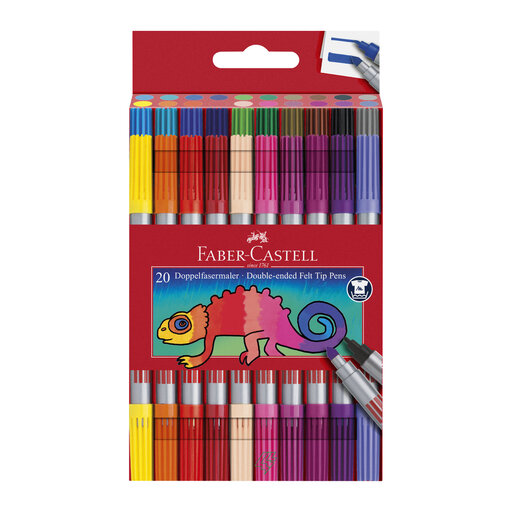
Why This Fits Their Persona: A practical starting point for children, families and casual crafters who want multiple line widths without buying separate fine and broad sets.
The double-ended format avoids relying on one tip for every task, while water-based ink is designed to wash from most fabrics.
20 pens provide 10 colours with fine and broad tips, suitable for illustration, colouring books and general art projects.
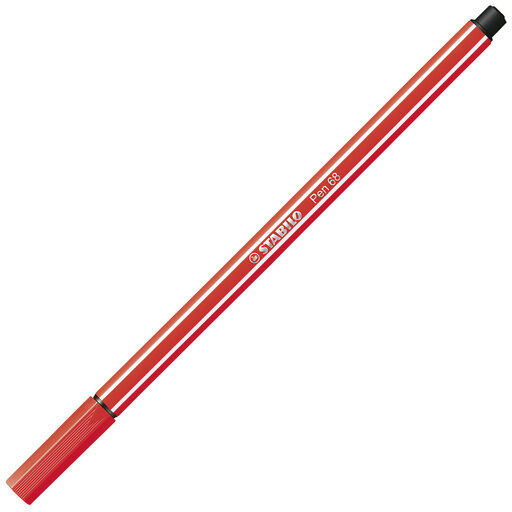
Why This Fits Their Persona: Suitable for adults, students and artists who want a broad colour palette for colouring, lettering, hatching and larger creative pieces.
The 65-colour selection includes neon and pastel shades, reducing the need to combine several smaller assortments for colour variety.
The approximately 1mm M-tip supports even colour application, and water-based ink can be used for watercolour-style effects with a brush and water.
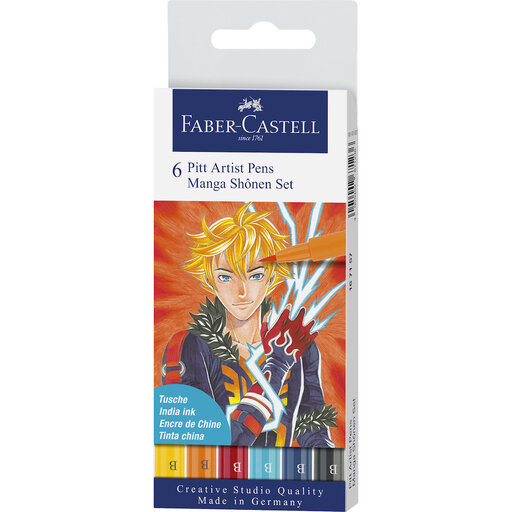
Why This Fits Their Persona: Designed for Manga enthusiasts and illustrators who need varied nibs for outlines, details and expressive strokes.
It is a specialist six-pen set rather than a large general assortment, with six nib varieties selected for Manga-style drawing.
The pigmented ink is described as waterproof, acid-free, pH neutral and fade-resistant, making it suitable for detailed illustration work.
We have compiled a complete, real-time list of products that fully satisfy these strict selection criteria and UK safety regulations.
Many are suitable for school-age children, but check the manufacturer’s age guidance and warnings. Sets containing small caps, clips or other parts may present a choking risk for children under three. Adult supervision is sensible during craft activities, particularly where ink can stain skin, clothing or furniture.
The terms can overlap, but fineliner pens generally have a narrower, more controlled tip for outlines, writing and detailed drawing. Fibre tip pens often cover a wider range of tip sizes, including medium and broad options for colouring. A 0.4mm fineliner is more suited to precise lines, while a 1mm colouring pen is more practical for filling shapes.
Replace each cap firmly after use and follow the storage guidance supplied with the set. Store pens horizontally when recommended, and avoid leaving them in direct heat or sunlight. Sets with cap-rings, tins or wallets can also make it easier to keep every pen covered and organised.