
24/7 全天候客户支持

免费退货

当日/次日达

品质保障

开启新人专享福利: 全场免邮 | 低至 2 折 | 免费试用 30 天 JoyPlus 会员
下载 Joybuy
From a child’s first scribbles to a student’s detailed project or a hobbyist’s colouring book, fibre-tip pens are a staple in almost every UK household. Yet, choosing the right set can feel like a gamble. We’ve all been there: you buy a pack of what you think are quality colouring pens for kids, only to find they stain clothes permanently, the tips fray after one enthusiastic colouring session or they dry out within a week.
As a Joybuy Product Recommendation Officer, my role is to help you navigate the market and avoid these common purchasing pitfalls. This guide focuses on the practical features that determine a pen's true value, helping you select a set that performs as you expect, without the marketing fluff.
Before looking at what makes a good pen, it’s crucial to recognise the common issues that lead to disappointment and wasted money.
To ensure you get a reliable and enjoyable set of fibre-tip pens, focus on these three core parameters.
The tip dictates what you can do with the pen. Look for clear descriptions of its properties:
The ink is the heart of the pen. Beyond just the colour, consider its base and features:
Finally, consider who will be using the pens and for what purpose.
Based on these practical criteria, here are a few options matched to different user needs.
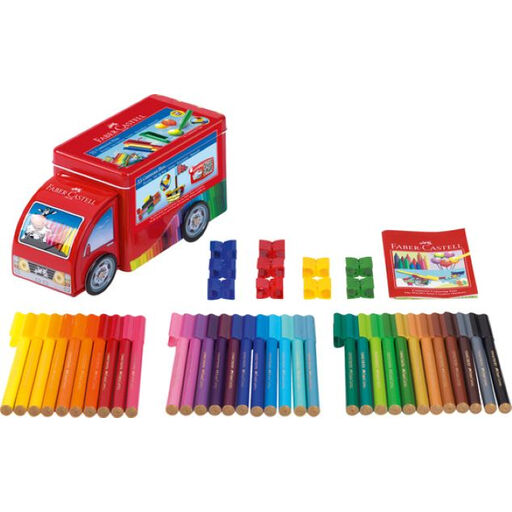
Why This Fits Their Persona: This set is designed for children's creative play. The pens come in a sturdy truck-shaped box for easy storage, and the unique connecting caps turn clean-up into part of the fun, encouraging kids to keep their pens organised.
The ink is specified as washable from most fabrics, addressing the staining issue. The robust tips are built for drawing and building, directly countering the fragile tip problem.
The special connecting caps and clips allow pens to be clipped together for imaginative building, combining colouring with construction play.
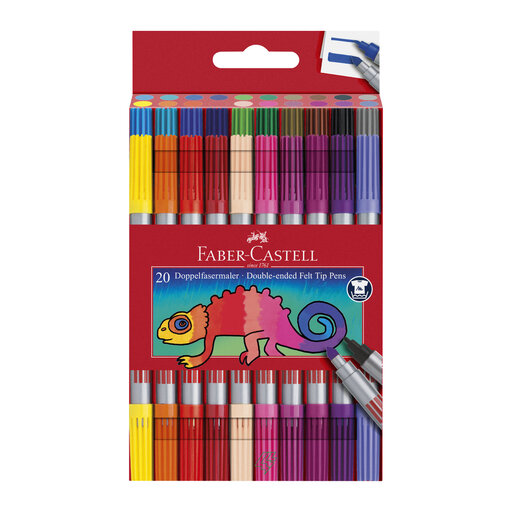
Why This Fits Their Persona: Ideal for students, journal keepers and adult colouring fans in the UK who need more than a basic pen. This set provides the flexibility to switch between detailed work and broad colouring without changing pens.
Instead of a single, fragile tip, this set offers two distinct and durable tips on each pen. The water-based ink is also washable from most fabrics, providing peace of mind during creative sessions.
The dual-tip design (one fine, one broad) offers exceptional versatility for illustration, lettering and colouring, all within a single, convenient set.
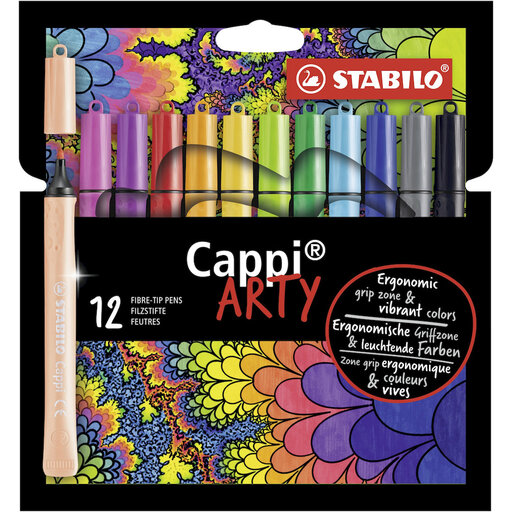
Why This Fits Their Persona: Perfect for those who like to draw or take notes on the go. The clever cap-ring allows the pens to be strung together, so they can be carried without a pencil case. The ergonomic grip makes them comfortable for quick sketches or long journalling sessions.
It directly solves the dry-out dilemma with its 24-hour cap-off time. The robust M-tip also holds up to vigorous use, avoiding the fragile tip trap.
The unique cap-ring for portability and the 24-hour anti-dry-out technology make this set exceptionally convenient and reliable for use anywhere, anytime.
We have compiled a complete, real-time list of products that fully satisfy these strict selection criteria and UK safety regulations.
The most effective method is to always replace the cap securely with an audible 'click' immediately after use. For long-term storage, it is advisable to store pens horizontally. This helps keep the ink evenly distributed across the fibre tip. Choosing pens with stated anti-dry-out technology also provides an excellent safeguard.
No, they are not. The effectiveness of washable ink can vary. Look for products that provide more detail, such as stating they wash out of "most textiles" or specifying a wash temperature (e.g., 30°C or 40°C). It's always a good idea to test on an inconspicuous area first if you are concerned about a particular fabric.
The main difference is the tip. Fibre-tip pens (or felt tips) have a softer, more porous tip made of pressed fibres, making them ideal for colouring and bold lines. Fineliners have a very fine, hard plastic or metal-encased tip, designed for precise writing, outlining and detailed technical drawing. While both are types of marker pens, they serve different primary purposes.