For regular pineapple juicing, consider a slow juicer if a measured, quieter routine matters more than speed; choose a centrifugal juicer if fast extraction matters more. With either type, pineapple’s long fibres make peeling, cutting into narrow pieces, gradual feeding and access to the filter important parts of the decision.
Who is this for?
Frequent pineapple juice makers
If pineapple is a regular ingredient, managing its long fibres and cleaning the filter may matter as much as the time spent extracting juice. Specialist juicer retailer EU Juicers notes that pineapple fibres can clog a juicer.
Low-fuss weekday juicers
If you want juice without a lengthy routine, consider how much cutting, pulp disposal and washing you are willing to do each time.
Consumers who prefer a lighter drink and quieter operation
If you prefer juice with less pulp and value a quieter, slower pressing process, a masticating juicer may suit you better than a speed-focused centrifugal model.
What matters when buying?
Choose the extraction type to fit your routine, then check how the machine handles prepared pineapple pieces and how easily you can reach its filter after use.
| Concern |
What to check |
Who this matters to |
| Pineapple fibres and jams |
Check that prepared pieces fit the chute and that the filter and pulp outlet are accessible. |
If I juice pineapple often, I need to feed its long fibres without repeatedly stopping to clear the machine. Around 42% of consumers put fibre management first. |
| Cleaning effort |
Check which parts detach and whether the instructions permit dishwasher cleaning for those specific parts. |
When clean-up determines whether I will use the juicer again tomorrow, I want to be able to reach and rinse the parts that collect pulp. Cleaning is the primary concern for around 33% of consumers. |
| Speed and preparation |
Compare centrifugal and slow extraction, then check the feed opening and any continuous-use limit. |
If I want pineapple juice quickly, I am willing to choose a faster extraction process while still cutting and feeding the fruit carefully. Around 25% of consumers prioritise that quicker routine. |
Pineapple juicing pitfalls
-
Assuming a wide chute takes a whole unpeeled pineapple
A wider opening can reduce cutting for suitable produce, but it does not remove the need to take off the pineapple’s crown and rind. Large pieces fed too quickly can still cause trouble with long fibres.
Peel the fruit, cut it into narrow vertical pieces and feed them gradually. Check how readily you can reach the filter if fibres collect.
-
Choosing by motor wattage alone
Motor power does not tell you how easily pineapple will feed or how much work it takes to clean pulp from the sieve.
Compare the extraction type, access to the filter, pulp collection and the exact model’s cleaning and continuous-use instructions.
-
Expecting both juicer types to suit the same routine
A slow juicer presses produce at a measured pace, while a centrifugal juicer uses a faster shredding and separation process. Neither format removes the need to prepare fibrous pineapple.
Decide whether slower pressing or rapid extraction better fits the way you will make juice before comparing features within that format.
Brands to consider for relevant juicer models
Philips
Relevant if you are comparing centrifugal and masticating formats and want to examine model-specific cleaning features.
- Philips claims its QuickClean feature allows cleaning within one minute on the centrifugal HR1855/70.
- That claim does not establish the cleaning time of other Philips models. Joybuy describes a 70 mm feed tube and removable parts for the masticating HR1889/71; check the cleaning instructions for that model.
Kuvings
Relevant if you are considering a whole slow juicer with a wide feed opening.
- Kuvings specifies an 82 mm chute for the EVO820S.
- Chute width does not establish how the EVO820S handles pineapple fibres or make unpeeled pineapple suitable for feeding.
Bosch
Relevant if you want to examine a centrifugal model with selectable speeds and detachable parts.
- Bosch specifies a 1000 W motor and two speed settings for the MES3500GB, and describes some parts as dishwasher-proof.
- Those features do not establish pineapple yield or resistance to fibre clogging; check the model’s instructions for preparation and cleaning.
Joybuy juicers for this choice
These models include slow and centrifugal juicers relevant to the pineapple-juicing decision. Compare their stated features with the preparation, cleaning and electrical requirements of your routine.
 No image available
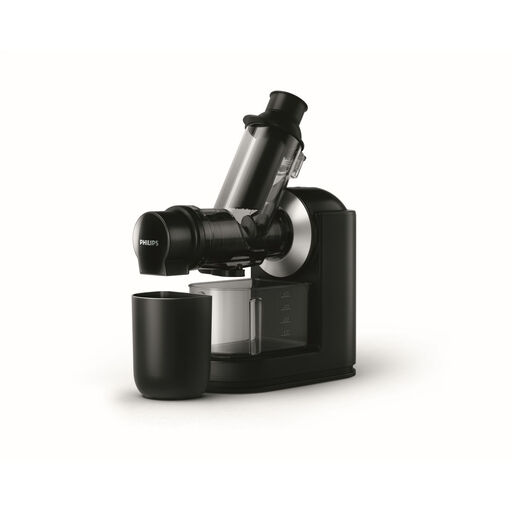
Philips Viva Collection Masticating Juicer HR1889/71
Consider this slow juicer if you prefer a measured pressing routine and want removable parts to clean after juicing pineapple.
Joybuy describes a 70 mm feed tube and a removable, rinsable micro-sieve for the HR1889/71. Peel and cut pineapple to fit, and feed it gradually rather than relying on chute width to prevent jams.
Check the plug and GB-market electrical information before buying; the stated 220–240 V, 50/60 Hz input alone does not confirm plug compatibility.
View on Joybuy
 No image available
Nutribullet Juicer 800 W, 1.5 L Pulp Basin, 3-inch Chute
Consider this centrifugal juicer if a quicker juice-making routine matters more to you than slow pressing.
The product name specifies an 800 W motor, a 1.5 L pulp basin, a 3-inch chute and dishwasher-safe parts. A wide chute does not replace peeling, cutting and gradual feeding when juicing pineapple.
Check the voltage of the exact variant and its UK plug before buying, as the listed voltage options differ.
View on Joybuy
 No image available
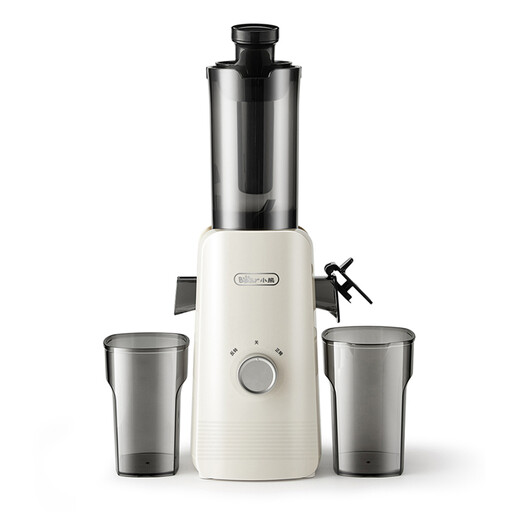
Bear YZJ-F01D6 Slow Juicer, 80 mm Chute, 1 L
Consider this slow juicer if you want a broad feed opening but are prepared to cut fibrous pineapple and feed it steadily.
The product name specifies an 80 mm chute and 1 L capacity. Observe the stated 20-minute maximum continuous-use period when planning longer batches.
Check the exact variant’s voltage, UK plug and GB-market electrical information before buying, as well as its instructions for clearing a jam.
View on Joybuy
Frequently asked questions
Should I buy a slow or centrifugal juicer for pineapple?
Choose a slow juicer if you value a measured, quieter pressing routine more than speed; choose a centrifugal juicer if rapid extraction is your priority. Specialist juicer retailer EU Juicers notes that pineapple’s long fibres can cause clogs, so cut and feed the fruit gradually with either type.
Do I need to remove pineapple skin and core before juicing?
Remove the crown and rind, but follow your juicer’s manual on whether and how to feed the core. EU Juicers suggests cutting the core into small cubes and alternating it with thin pieces of pineapple flesh; stop feeding if fruit begins to back up.
Can pineapple juice count towards 5 A Day?
Yes, within the NHS guidance for fruit juice and smoothies: a combined maximum of 150 ml a day counts as one 5 A Day portion. The NHS advises having juice with a meal.
What should I check before using a mains-powered juicer in the UK?
Check that the exact variant has a suitable voltage and plug for your intended use, and read its safety and cleaning instructions. Do not assume that a model name shared by variants with different electrical specifications confirms compatibility.


