Choose a desktop only after checking that your intended audio-editing software, plug-ins and interface support its operating system. A Mac is the route for Logic Pro, while a Windows desktop can suit a supported Pro Tools or REAPER setup. For restoration, multitrack work or media-heavy projects, check the requirements for memory and working-media drives rather than relying on processor branding or installation space alone.
Who needs which setup?
DAW- and interface-led editors
If you already use a digital audio workstation (DAW), plug-ins or an external audio interface, start with their supported operating systems, versions and drivers. Avid ties Pro Tools support to specific system requirements, and Apple lists Logic Pro as Mac-only.
Restoration and multitrack editors
If your field recordings need denoising, processing chains or work across multiple tracks, compare your project with your DAW’s memory and drive guidance. Adobe’s Audition requirements distinguish HD from 4K-and-higher media; Avid specifies memory and dedicated audio drives for Pro Tools.
Home-office archive builders
If you keep original recordings, active sessions and backups alongside an interface and displays, plan where each will connect and be stored. Check the exact desktop’s ports and storage configuration rather than assuming that every model in a range has the same connections.
What should you check before buying?
Settle the software platform first, then size the computer and storage for your projects. Only then compare how a desktop will connect to the equipment on your desk.
Mac desktop for Logic Pro
Choose when: Logic Pro is your intended DAW; Apple lists it as Mac-only.
Trade-off: This commits the workflow to macOS, and storage and connections must suit your particular Mac configuration and audio equipment.
Windows desktop for a supported DAW
Choose when: Your intended Pro Tools or REAPER release, plug-ins and interface are supported on the Windows version you plan to use.
Trade-off: Windows compatibility alone does not establish support for a particular Pro Tools release or interface driver; check the combination before ordering.
| Concern |
What to check |
Who this matters to |
| Software and interface compatibility |
Match the exact DAW release and operating-system version; check plug-in formats, interface drivers and required ports. |
If my existing editing software or interface dictates the platform, extra processing power will not resolve an unsupported combination. Around 42% of consumers put compatibility first. |
| Memory and working-media storage |
Use your DAW’s requirements for the intended project type, and distinguish application storage from any dedicated or high-speed media drive it calls for. |
With restoration or multitrack sessions, I need room for active media as well as the application. For around 33% of consumers, memory and working-media storage are the primary concern. |
| Desk connections and archives |
Count the connections needed for your interface, displays, headphones and external storage; plan locations for originals, active sessions and backups. |
My computer has to fit an established desk setup without leaving recordings difficult to organise. Connections and archive workflow come first for around 25% of consumers. |
Buying pitfalls
-
Choosing the computer before checking software versions
A desktop may have ample memory and storage yet still be unsuitable for the DAW, plug-ins or audio-interface driver you intend to use. Apple lists Logic Pro as Mac-only, while Avid specifies supported systems for Pro Tools.
Write down the exact software releases, operating system and interface model, then compare them with their manufacturers’ compatibility guidance.
Changing platform after purchase could also mean replacing incompatible software, plug-ins or interface hardware.
-
Confusing installation space with project storage
Space for an application does not address every active-media need. Adobe distinguishes installation and cache storage from additional high-speed media drives, while Avid specifies dedicated audio record-and-playback drives for Pro Tools.
Plan capacity for applications, active sessions, original recordings and backups. Check whether your DAW calls for a separate drive and how that drive will connect.
A suitable additional drive may be needed for the working-media arrangement you choose.
-
Assuming every configuration has the same connections
Ports and display support can depend on the exact model or configuration. Apple’s Mac Studio specifications, for example, distinguish display support by chip configuration.
Compare the specific configuration with a list of your interface, storage, display, headphone and network connections before ordering.
A mismatch may require adapters or a dock, or a different connection plan for equipment you already own.
Brands to consider
These desktop ranges offer different starting points for checking your software and equipment requirements; a brand name alone does not establish that a particular configuration suits audio editing.
Apple
Mac desktops, including Mac Studio, are relevant if Logic Pro or an existing macOS workflow determines your platform.
- Apple lists Logic Pro as Mac-only. Its Mac Studio specifications list Thunderbolt 5, USB-A, HDMI, Ethernet and headphone connections.
- Choose storage and memory for the configuration you intend to buy, and confirm that your interface driver and other equipment work with it.
Dell
Precision fixed workstations are a Windows desktop route for buyers configuring around confirmed DAW and interface requirements.
- Dell offers the Precision fixed-workstation range in tower, rack, compact and small-workstation formats.
- Check the precise model’s Windows version, memory, storage, ports and suitability for the sound levels you can accept in your office; the range name does not establish audio-editing performance.
Lenovo
ThinkStation is another desktop-workstation range to assess for a Windows-based editing setup.
- Lenovo positions ThinkStation as a range for complex workloads, with individual configurations to compare against your requirements.
- Confirm the exact model’s processor, memory, storage, ports, operating system and interface-driver support rather than treating that broad positioning as an audio-editing result.
Windows desktop options on Joybuy
These Stormforce desktops are options to examine for a Windows-based field-recording workflow. Before choosing one, confirm your DAW and interface support, your working-media drive plan and whether its physical size and operating noise suit your office.
 No image available
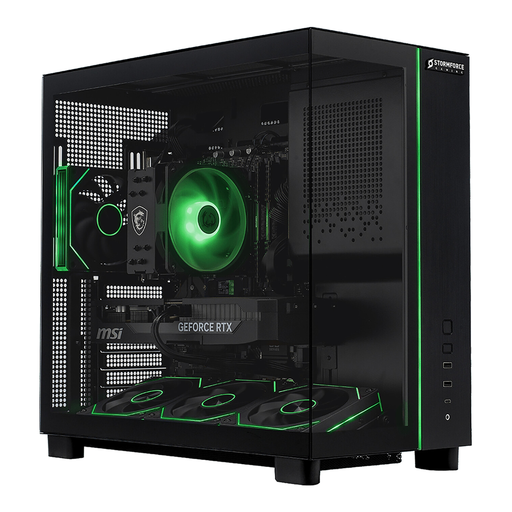
Stormforce Defiance AMD Ryzen 7, 32GB RAM, 2TB SSD
Consider this desktop if a Windows setup suits your DAW and you need the listed memory and SSD capacity for your project plan. Confirm your software and interface compatibility and whether you need a separate audio drive; the product information gives conflicting graphics-card versions, so check the exact configuration before ordering.
View on Joybuy
 No image available
Stormforce Cyclone Intel Core i7, 32GB RAM, 2TB SSD, RTX5080
This full-tower desktop is worth assessing if your intended audio software supports its Windows setup and you have space for a larger case. Check interface-driver support and any requirement for a dedicated audio drive; its stated 22kg weight also matters when planning where to place it.
View on Joybuy
 No image available
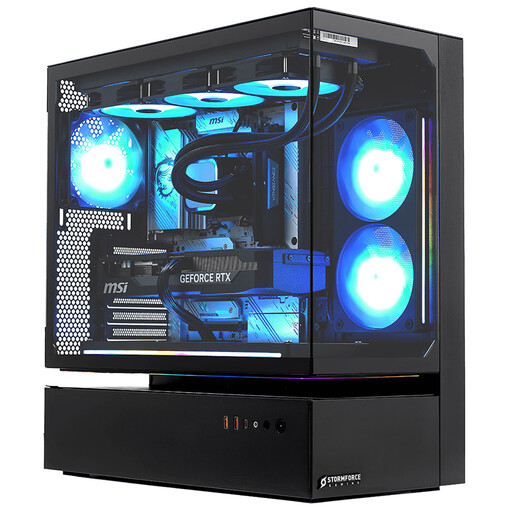
Stormforce Cyclone AMD Ryzen 7, 32GB RAM, 2TB SSD, RTX5080
Assess this tower for a Windows audio-editing setup only after checking the operating-system version and support for your DAW, plug-ins and interface. Its listed memory and SSD capacity do not by themselves establish a dedicated audio-drive arrangement; allow for its stated 22kg weight when choosing a position.
View on Joybuy
Common questions
Should I choose the desktop before the editing software?
Choose the software and check its requirements first. Avid specifies supported systems and dependencies for Pro Tools, while Apple lists Logic Pro as Mac-only; your plug-ins and audio-interface driver also need to work with the chosen setup.
How much memory and storage do I need?
Use the requirements for your particular DAW and project media rather than a single specification for all field recordings. Adobe lists 16GB RAM for HD media and 32GB or more for 4K-and-higher media in its Audition guidance; Avid specifies 16GB RAM and dedicated audio record-and-playback drives for Pro Tools. Plan separate space for originals and backups as well as active work.
Could a modest desktop handle simple edits?
It could, if it meets the requirements of the software, interface and files you will actually use. Check the exact DAW release and operating system: support for one application does not establish support for Pro Tools, Logic Pro or your particular hardware combination.
What if I change my mind after buying a desktop online in the UK?
For a qualifying online purchase, GOV.UK says customers generally have 14 days from receiving an item to tell the seller they want to cancel. Check the applicable cancellation process and terms promptly; a change-of-mind cancellation is distinct from remedies if a desktop is faulty or misdescribed.


