Choose the layout you can use consistently: a gamepad if you prefer familiar controls and compact packing, a lever stick if joystick motions suit your play, or a leverless controller if you want button-based directions. Before buying, check the intended tournament’s game, platform and current controller rules, including its connection, adapter and input-behaviour requirements; a controller’s platform support alone does not establish event acceptance.
Who is choosing a tournament controller?
Players changing controller layout
If your current controls make tournament inputs difficult to repeat, you may be weighing a gamepad against a lever stick or button-based directions. Leverless and lever controllers appear in tournament-rule material, but the organiser’s current rules still determine which configurations are permitted.
PS5 tournament regulars
If your events use PlayStation 5 stations, documented support for the exact controller model matters. A secure wired connection and controls that help prevent accidental system-button presses may also matter during a set; confirm the event’s connection rules separately.
Travelling bracket players
When you carry your own controller to offline events, packing, connecting and securing it become part of the choice. Evo describes its events as bring-your-own-controller, while manufacturers document features such as detachable cables and cable retention on particular models.
What matters when choosing?
Gamepad
Choose it when: Familiar pad inputs and a compact controller matter more to you than an arcade-style button layout.
Trade-off: Its directional pad, sticks and face buttons may not suit players who want separate directional and action buttons.
Lever arcade stick
Choose it when: Joystick motions are already part of how you play and you want arcade-style action buttons.
Trade-off: A full-size enclosure takes more room to transport than a gamepad or slim leverless controller.
Leverless controller
Choose it when: You want to make directional inputs with buttons instead of a joystick.
Trade-off: Changing from a pad or lever takes practice, and the active simultaneous-opposite-direction mode must meet the event’s current rules.
| Concern |
What to check |
Who this matters to |
| Event rules and platform |
Confirm the game and station platform, then check the organiser’s current rules for connections, adapters, hardware-assisted inputs and direction behaviour. |
If my controller works at home but not at the bracket station, I cannot rely on it for the event. Around 40% of consumers put event rules and platform compatibility first. |
| Input layout |
Try the directional and action-button arrangement with your main game where possible; check that it provides the inputs you use. |
I want motions and button presses I can repeat under match pressure, even if that means staying with a familiar layout rather than switching. For around 30% of consumers, input layout is the primary concern. |
| Travel and setup |
Check the controller’s carry size, cable arrangement and access to any platform controls needed at the station. |
When I bring a controller to an offline event, I need to pack it and connect it without avoidable interruptions. Travel and setup come first for around 30% of consumers. |
Mistakes to avoid
-
Assuming every leverless direction mode is permitted
Razer describes selectable simultaneous-opposite-direction modes on the Kitsune. Capcom Pro Tour’s published 2023 rules specified neutral results for simultaneous left/right and up/down inputs at its sponsored events; that historical requirement is not a rule for every tournament.
Read the current rules for your exact event and game, then set and test the controller’s active mode before travelling.
-
Buying on home-PC compatibility alone
A controller that connects to your PC may not support the station used at an offline event. Bandai Namco Entertainment’s EMEA Tekken Cup document names PlayStation 5, Xbox Series X|S and Steam as platforms, illustrating why the event setup matters.
Confirm the intended event’s platform and the exact controller model’s supported mode before purchase; do not infer PS5 support from PC or PS4 support.
-
Treating a tournament lock as proof of acceptance
A tournament lock can help prevent accidental presses of non-essential buttons, but it says nothing by itself about macros, adapters or direction-input behaviour under an organiser’s rules.
Check what the lock disables, and assess the controller’s configuration against the current event rules separately.
-
Switching layouts because one is marketed as faster
A claimed response or precision benefit does not show that pad, lever or leverless inputs will be more consistent for every player.
Practise with the layout you are considering, then weigh your repeatable inputs alongside event compatibility rather than relying on a general speed claim.
Relevant brands and controller ranges
Razer
Razer offers the Kitsune, a slim leverless controller that it documents for PS5 and PC.
- Razer describes four directional buttons, a detachable USB-C cable, a cable-security clasp and a tournament-lock switch.
- Its selectable simultaneous-opposite-direction modes still need to be checked against the intended event’s rules.
Victrix
The Pro FS lever stick and Pro FS-12 leverless controller are full-size options documented by Turtle Beach UK for PS5, PS4 and PC.
- Turtle Beach UK describes metal enclosures, Sanwa parts, access to internal components and tournament-mode controls on these ranges.
- Their full-size enclosures take more packing space than a gamepad or slim leverless controller.
Sony PlayStation
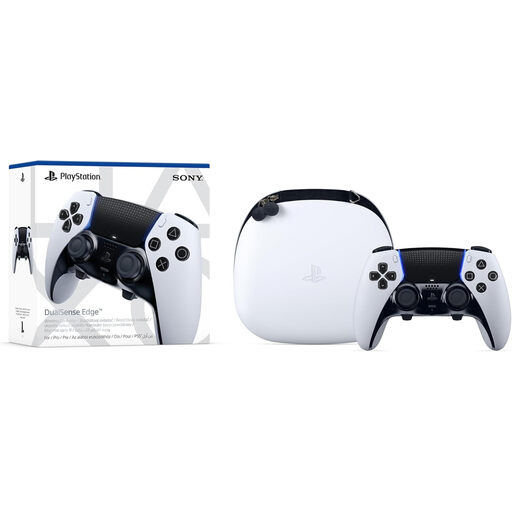
The DualSense Edge is a PS5 gamepad for players who want configurable controls without moving to an arcade layout.
- PlayStation documents remapping, saved profiles, back buttons, adjustable controls and a lockable 2.8 m USB cable.
- It remains a conventional gamepad, which may not suit players seeking lever or all-button directions.
Qanba
Qanba offers the Sapphire S1 leverless controller, which it documents for PS5, PS4 and PC.
- Qanba describes an all-button layout with 18 customisable buttons.
- Check the Sapphire S1’s configuration against your event’s rules before relying on it for tournament play.
Joybuy controller options
These options cover familiar PS5 gamepad controls and a lever-style fight stick. Choose the layout first, then check the exact event platform and controller policy before deciding which model to bring.
 No image available
Sony DualSense Edge PS5 Wireless Controller, White
Consider this if you want to keep a gamepad layout while adjusting your controls for play. PlayStation documents remapping, saved profiles and a lockable 2.8 m USB cable for the DualSense Edge; confirm that your chosen configuration and connection meet the event’s rules.
Joybuy
 No image available
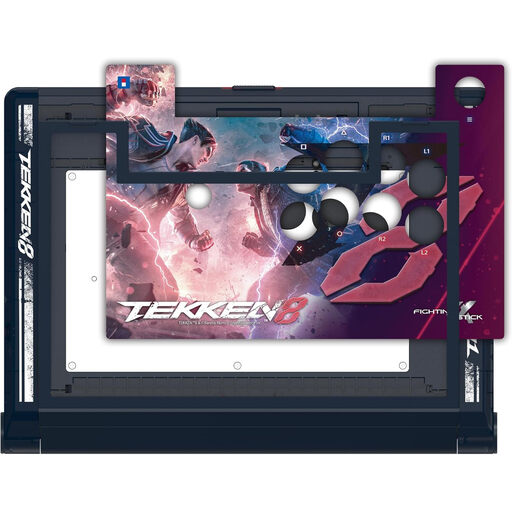
HORI Fighting Stick Alpha Tekken 8 Edition for PS5
This lever-style fight stick suits players who prefer joystick directions and arcade-style buttons. Check its carry size and the intended tournament’s platform, connection and adapter rules before taking it to an event.
Joybuy
 No image available
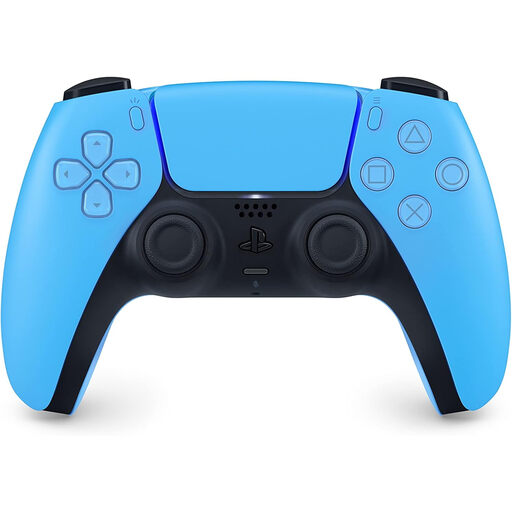
Sony DualSense Wireless Controller V3 for PS5, Starlight Blue
This is an option if you already prefer conventional gamepad controls. Before relying on it at a tournament, check the event’s connection policy and whether your planned cable and control setup meet its requirements.
Joybuy
Frequently asked questions
Are leverless controllers allowed at fighting-game tournaments?
Leverless controllers are not universally prohibited, but acceptance depends on the event and configuration. Capcom Pro Tour’s published 2023 rules said its rule change did not prohibit leverless controllers, while setting direction-input conditions for its sponsored events; check the current rulebook for the tournament you plan to enter.
Can I use macros or rapid-fire features?
Do not enable hardware macros or rapid-fire without checking the organiser’s rules. Evo prohibits hardware-programmable input entry, rapid-fire, modifiers, macros and other hardware-assisted mechanisms, while treating configuration through a game’s own controller menu differently; another event may set its own conditions.
What should I pack and test before an offline tournament?
Bring your controller and the cable required for your permitted setup, then test the connection on the event platform if possible. Check that you can access any required system or touchpad controls, and find out which buttons a tournament lock disables before your first match.


