Tournament players choosing an input format
Choose a directional layout you can use consistently, then check the exact event platform and controller rules. A popular format is not necessarily the right one for your established inputs.


Choose a controller that works with the tournament platform and uses a directional layout you can play consistently: a familiar gamepad, separate movement buttons on a leverless controller, or an arcade-stick lever. In a dark room, lighting may help you orient the controller, but a dependable connection, controls you recognise by feel and the organiser’s current rules matter more; players who need adaptable control placement should consider a setup that meets those needs.
Choose a directional layout you can use consistently, then check the exact event platform and controller rules. A popular format is not necessarily the right one for your established inputs.
Visible lighting can help with orientation, but a familiar layout, controls you can distinguish by feel and a secure cable are worth checking too. RGB alone does not establish that a controller will be easier to play.
If reach, button placement or accidental presses make a standard layout difficult to use, look at adjustable positioning, button mapping or external switches. Confirm that the finished setup provides every input your game requires.
For a fighting-game tournament in a dark room, establish the event platform and controller rules before settling on an input format. Treat lighting as a setup preference rather than a substitute for familiar controls and a reliable connection.
| Concern | What to check | Who this matters to |
|---|---|---|
| Platform and event rules | Check the exact console and game, then the organiser’s current rules for connection methods and controller settings. | If I am taking a controller to an event, I need to know it works on the match platform and is permitted there; around 36% of consumers put event compatibility first. |
| Directional-input format | Choose between a gamepad D-pad or stick, an arcade-stick lever and separate leverless movement buttons; check any required SOCD setting. | When my motions already rely on a particular layout, changing formats means relearning how I enter them. Around 29% of consumers prioritise their directional-input preference. |
| Low-light orientation | Check whether you can identify the controls by feel; consider lighting, cable retention or a control lock where useful. | In a dark room, I want to find the right controls without relying on decorative effects or disturbing the cable; roughly 21% of consumers put low-light orientation first. |
| Comfort and access | Look for suitable button placement, remapping or mounting, and confirm that the complete setup supplies all required game inputs. | If a fixed layout makes buttons hard to reach or easy to press accidentally, I need controls I can arrange around that barrier; about 14% of consumers prioritise adaptable placement. |
PS5, Xbox and PC compatibility differ between the controller models discussed here. Working with your own setup does not establish that a controller can be used at the tournament.
Ask the organiser for the game version, console, connection rules and converter policy, then check the exact controller model against them.
Lighting may help you see a controller during setup, but it does not establish that you can identify its buttons accurately while playing.
Prefer a layout you have practised and can recognise by feel; treat RGB as a secondary preference.
Evo prohibits hardware-assisted input mechanisms under its published rules, while Capcom’s archived Pro Tour rules set conditions for simultaneous opposite-direction inputs at its sponsored events. Neither policy determines another organiser’s current rules.
Check the event’s policy for your controller settings, including simultaneous opposite cardinal direction (SOCD) handling, macros and remapping, before settling on a configuration.
A loose connection or an unintended control press can interrupt play. Cable-security and control-lock features are worth assessing on the particular model you intend to use.
Bring the correct cable, check the connection on the event platform where possible and use a permitted lock feature if your controller has one.
Razer’s Kitsune is a PS5 and PC leverless option for players who deliberately want separate movement buttons and visible lighting.
PlayStation offers different PS5 control routes through the customisable DualSense Edge gamepad and the Access controller.
The Arcade Stick for Xbox is a lever-and-buttons option for events using Xbox Series X|S, Xbox One or Windows.
The Hit Box ULTRA is a low-profile leverless option specified by its maker for PS5, PS4, Switch 2 and PC.
Brook’s Wingman FGC is a converter route for someone who already has a wired fighting stick and needs to assess PS5 fighting-game use.
These options cover conventional gamepads and fighting sticks for the stated Xbox, PC or PS5 setups. Choose by your event platform and preferred controls, then confirm the organiser’s rules for the exact model and configuration.
 No image available
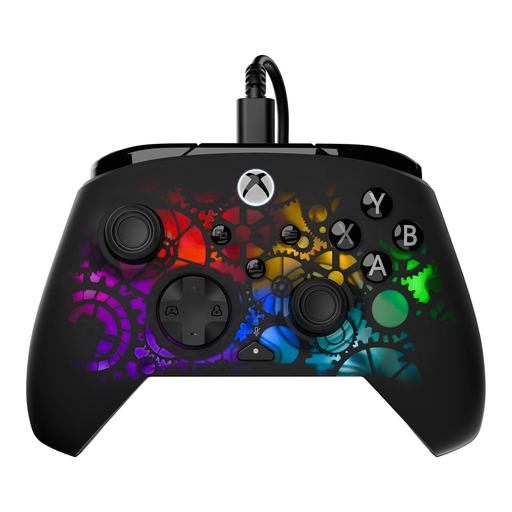
Consider this conventional gamepad if your event uses Xbox or PC and visible lighting would help you orient it during setup.
The named variant is wired and has RGB lighting; Turtle Beach describes seven lighting zones. Confirm that its controls meet your event’s rules.
 No image available
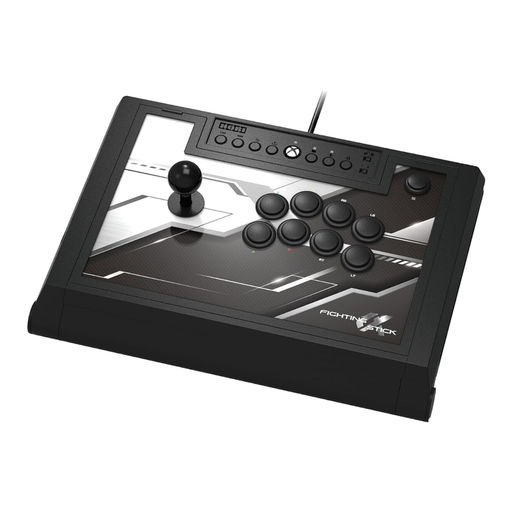
Choose a fighting stick only if a lever-and-buttons layout suits how you play and the event platform matches this Xbox Series X/S variant.
If visible controls are essential in your dark-room setup, check whether this exact variant meets that need before buying.
 No image available
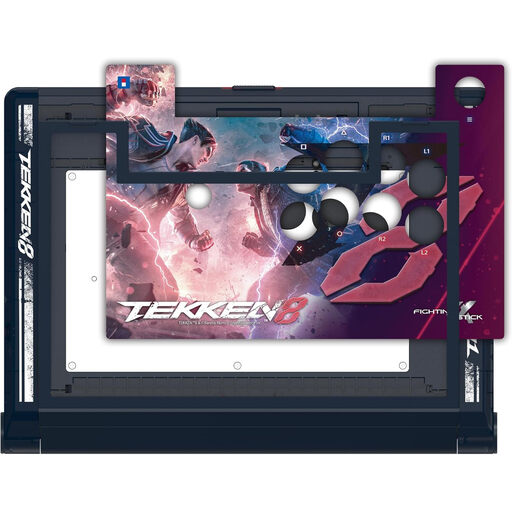
This PS5 fighting-stick variant is worth considering if you already prefer a lever to a gamepad or separate movement buttons.
Check the event’s controller rules and confirm that its size, connection and controls work for your playing and travel setup.
 No image available
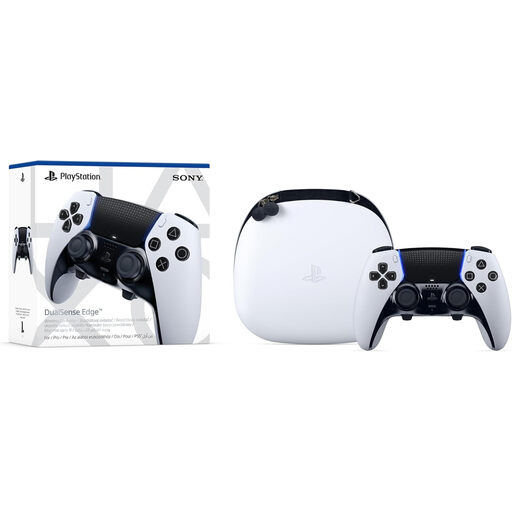
Consider this gamepad if your event uses PS5 and you want familiar directional controls with customisation options.
PlayStation specifies remapping, profiles and a lockable 2.8 m USB cable for DualSense Edge. Check the event’s rules on wireless use and mappings rather than assuming its wireless capability is permitted.
 No image available
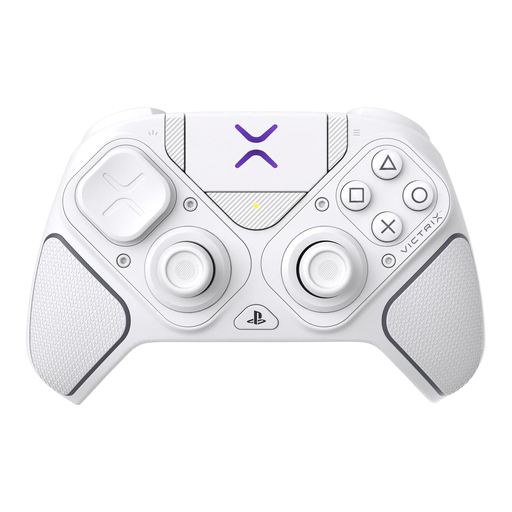
Consider this modular gamepad if you want to assess an alternative button arrangement for PlayStation fighting games.
Before committing to it for a tournament, confirm the exact variant’s connection options, your intended control configuration and the organiser’s policy.
Only if that event’s rules permit the way you intend to connect it. Evo’s published rules generally exclude wireless controllers unless an individual game’s rules allow them; under Evo’s rules, a controller with its batteries removed and powered exclusively by USB is considered legal. Check your organiser’s current policy before travelling.
No: permission depends on the event and the controller’s configuration. Evo prohibits hardware-assisted input mechanisms, while Capcom’s archived Pro Tour rules imposed conditions on simultaneous opposite-direction inputs at its sponsored events. Check the current rules for your game, controller and SOCD mode.
Lighting may help you locate a controller during setup, but it does not establish that you can identify buttons reliably during a match. Choose controls you recognise by feel and check cable security and accidental-press protection where those matter to you.
Do not assume an Xbox stick will work on PS5. For example, 8BitDo specifies its Arcade Stick for Xbox for Xbox Series X|S, Xbox One and Windows. Brook describes a converter route for supported wired sticks, but you would still need to check the exact stick and converter, the game and the organiser’s converter policy.