
24/7 Customer Support

Free returns

Same-day & Next-day Delivery

Quality Guaranteed

Unlock Your Welcome Offers: FREE Delivery | Up to 80% OFF | Free 30-day JoyPlus trial
Download the APP
Piles of paper, unsorted mail and scattered documents can quickly turn a productive workspace into a source of stress. Whether you are managing a home office, studying for exams or working in a busy corporate environment, an effective system for managing paperwork is essential for maintaining focus and efficiency. The right file organiser can transform your desk from cluttered to clear, making it easier to find what you need when you need it.
As a Joybuy Product Recommendation Officer, my role is to help you find practical solutions for everyday challenges. This guide will walk you through the key considerations for selecting a file organiser and present a few recommended options to help you create a more orderly and productive space.
Finding the ideal solution for your paper problem involves more than just picking a container. Consider these factors to ensure your choice aligns with your needs and workflow.
First, consider where your paper problem is and how much of it you have. If your desk is the primary clutter zone, a desktop file organiser provides immediate access to active documents. For those with limited surface area, a wall file holder is an excellent way to use vertical space, keeping your desk clear for tasks. Think about whether you need a system for daily incoming items, like a mail sorter, or a more robust solution for long-term document storage.
How you interact with your documents should dictate the type of organiser you choose. If you frequently transport papers between home, the office or meetings, a portable expanding file is a practical choice. These are often called accordion file organisers and are designed for on-the-go categorisation. For those who manage multiple projects simultaneously from one location, a multi-tiered paper sorter or a desk paper tray system allows for clear separation and quick access.
The material of your organiser affects both its appearance and longevity. A metal mesh organiser offers a modern look, good ventilation for papers and a sturdy structure suitable for a busy office. Plastic options are often lightweight, available in various colours for coding systems and can be very durable. The right material will complement your workspace and withstand your daily usage patterns.
Based on common organisational needs, here are a few distinct types of file organisers that cater to different spaces and workflows.
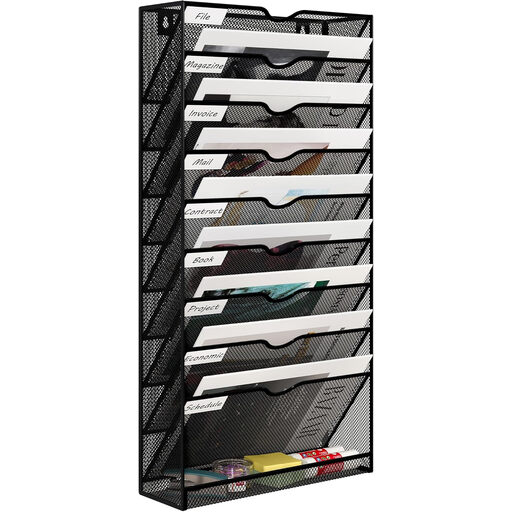
Why It Stands Out This wall-mounted unit is a powerful tool for office organisation, especially where desk space is at a premium. Its 10-tier design provides substantial capacity for sorting files, mail and magazines. Constructed from powder-coated metal, it is built for durability and resists rust and oxidation. Each tier includes a small label plate for clear categorisation, and a flat tray at the bottom offers a convenient spot for small items like pens, keys or rulers.
Pros
Who is it for? This is ideal for individuals in busy home or corporate offices who need to manage a high flow of incoming documents, mail or project files but have limited surface space to work with.
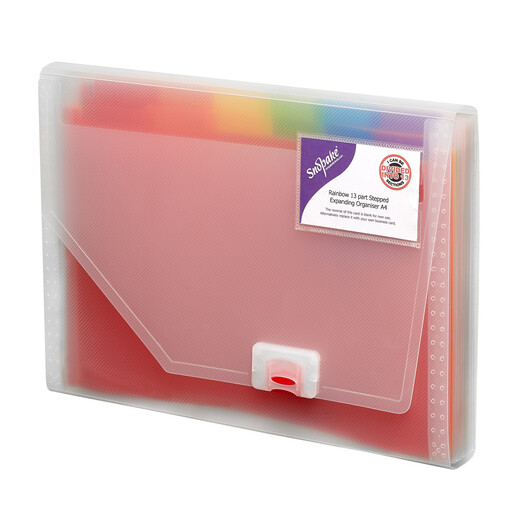
Why It Stands Out For those who need their files to be as mobile as they are, the Snopake expanding file offers a lightweight and practical solution. This organiser features 13 separate sections, allowing for detailed categorisation of subjects, projects or clients. Its durable and flexible design makes it suitable for carrying in a bag or by hand. The product is also backed by a 5-year guarantee, which speaks to its intended durability.
Pros
Who is it for? This is a great fit for students, field sales professionals, remote workers and anyone who needs to keep organised documents with them while on the move.
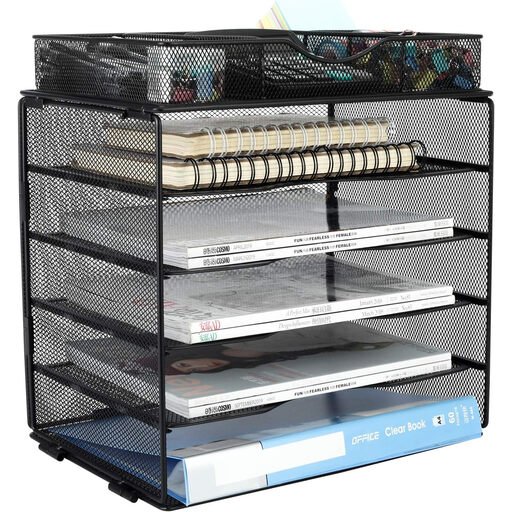
Why It Stands Out This desktop file organiser is a complete workstation hub. It combines five pull-out trays for active documents with an integrated drawer for stashing stationery and small accessories. The structure is made from sturdy, powder-coated metal mesh and is reinforced with L-shaped supports on each tier to handle a reasonable load without bending. Assembly is straightforward and requires no screws, so you can set it up in minutes.
Pros
Who is it for? This is perfect for anyone who wants a comprehensive organisational system directly on their desk. It suits home office workers, students and administrative professionals who need to keep both papers and tools within arm's reach.
Everyone's organisational style is unique, and the right tool can make all the difference. If these specific models aren't quite what you're looking for, browse our full collection of paper organiser solutions to find the perfect fit for your space and needs.
What is the most efficient way to organise paperwork? An efficient system typically involves three steps: sorting, categorising and storing. First, go through your papers and decide what to keep, what to action and what to discard. Next, group the 'keep' pile into logical categories (e.g., by project, date or subject). Finally, use a tool like a wall holder for incoming items, an expanding file for active projects and archive boxes for long-term storage.
How can I organise A4 documents on my desk without taking up too much space? To maximise desk space, think vertically. A multi-tiered desk paper tray stacks documents upwards, keeping your work surface clear. Alternatively, a wall file holder moves your paper storage off the desk entirely, which is one of the most effective ways to reclaim your workspace.
What is the difference between an expanding file and a document box? An expanding file, or accordion file organiser, is designed for active use and portability. It has built-in dividers for categorising documents that you need to access or transport regularly. A document storage box is typically a simple container used for long-term archiving of papers that are important but not needed frequently.