What matters when choosing
Choose the layout you can actually place around your main seat before comparing channel counts. Dolby's setup guidance treats that seat and the speaker positions as central to planning a surround system.
Wired speakers and AV receiver
Choose when: You can position a centre speaker, surrounds and a subwoofer around the main seat and want a layout you can expand.
Allow for: Speaker cables, space for separate components and the work of matching speakers to the receiver.
Wireless multi-speaker surround
Choose when: You want separately positioned speakers but cannot reasonably route conventional speaker cables.
Allow for: Mains sockets at the speaker positions and a separate subwoofer if the chosen system does not include one.
Soundbar or soundbar package
Choose when: A compact front-of-room installation and straightforward TV connection matter more than flexible speaker placement.
Allow for: Less freedom to position channels individually; check the actual package if you want a subwoofer or separate rear speakers.
| Concern |
What to check |
Who this matters to |
| Bass and scale |
Check whether a subwoofer is included and where it can sit. Do not judge room suitability from a wattage figure alone. |
I want low-frequency film effects at my main seat, but need room for the subwoofer and control over its level. Around 36% of consumers put bass and scale first. |
| Surround placement |
Map the main seat and feasible centre, surround and optional height-speaker positions. |
If effects need to come from around my seat, I would accept more setup work for physically separated speakers. For around 29% of consumers, surround placement is the primary need. |
| Installation |
Plan speaker positions, cable paths or mains sockets, and any stands or mounting permissions. |
I share the living room and cannot leave cables across it, so a layout I can install matters most. Installation is the first concern for around 21% of consumers. |
| TV connection and dialogue |
Confirm eARC support on both connected devices if you need it, and check the system's centre-speaker or dialogue options. |
I need film speech to be easy to follow and the TV connection to suit my sources. Around 14% of consumers prioritise connection and dialogue needs. |
Brands to consider
These brands illustrate different component and layout routes; a brand's inclusion does not establish that every product in its range suits a large living room.
Denon
AV receivers for a system built from separately chosen speakers.
- Denon specifies the AVC-X3800H at 9.4 channels and 105W per channel, with Dolby Atmos and DTS:X support. Its channel options are relevant if you have space for a layout beyond basic 5.1.
- The receiver is not a complete speaker system: speakers, a subwoofer, cables and their placement remain separate decisions.
Q Acoustics
Passive speaker packages for a conventional 5.1 arrangement.
- The 3050i 5.1 package includes floorstanding front speakers, a centre speaker, surrounds and a 3060S subwoofer.
- It needs suitable external amplification, speaker-cable routes and space for the separate speakers.
Sony
Wireless multi-speaker surround for rooms where conventional speaker-cable routing is difficult.
- Sony specifies BRAVIA Theatre Quad with four wireless speakers, a 4.0.4-channel configuration and Dolby Atmos and DTS:X support.
- The compatible BRAVIA Theatre Sub 8 is listed separately. Each speaker still needs a workable position and power supply.
REL Acoustics
Powered subwoofers for buyers assembling a separate-component system.
- REL specifies a 15-inch driver and 1,000W Class D amplifier for its HT/1510 Predator subwoofer.
- It is a subwoofer, not a complete film-soundtrack system; its suitability also depends on placement and the rest of the setup.
Soundbar choices on Joybuy
These products represent the soundbar route: a front-of-room option for film soundtracks when a simpler installation is the priority. Check the components included with each model if you need dedicated bass hardware or speakers behind the main seat.
 No image available
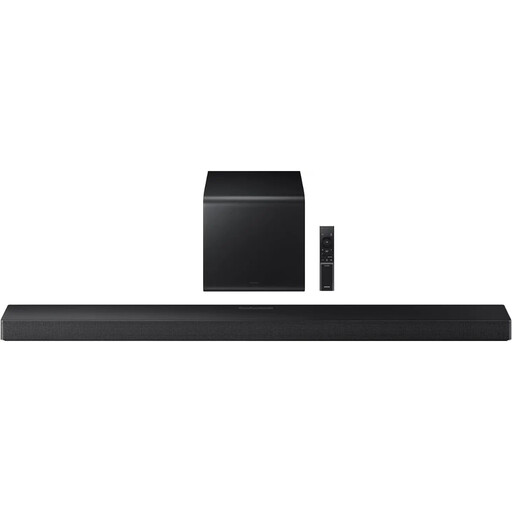
Samsung HW-QS700F 3.1.2 soundbar with subwoofer, Titan Black
Consider this front-of-room option if you want a soundbar with a subwoofer. The stated configuration is 3.1.2; check the included components if separately positioned rear speakers matter to you.
Joybuy
 No image available
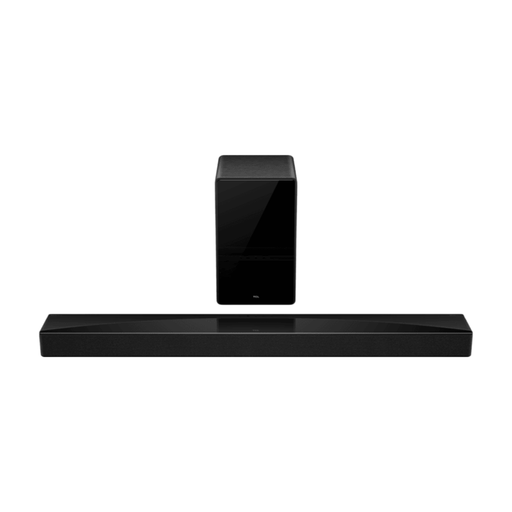
TCL Q75 Series 5.1.2 soundbar
Consider this if a soundbar with a stated 5.1.2 configuration interests you. Confirm which speakers and subwoofer come with the package, and where each component needs to sit, before planning the room layout.
Joybuy
 No image available
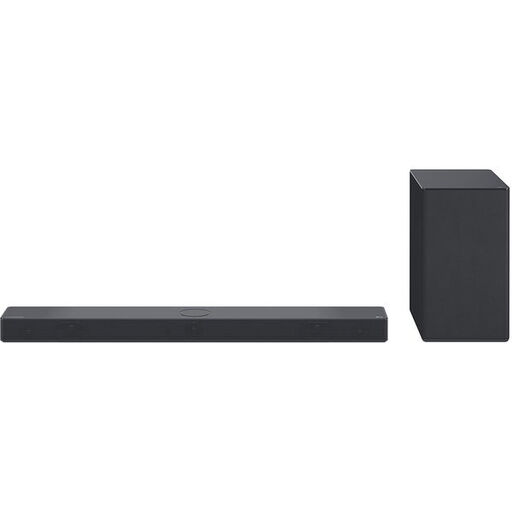
LG USC9S 3.1.3 soundbar and wireless subwoofer, black
This is a soundbar-and-subwoofer option for a front-of-room setup, with a stated 3.1.3 configuration. If you intend to use the described LG OLED C Series TV bracket, confirm that it fits your particular TV and installation.
Joybuy
 No image available
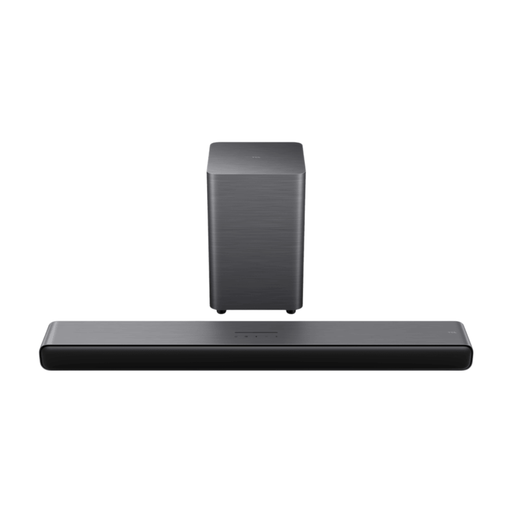
TCL S55H S Class 2.1 soundbar
Consider this for a 2.1 front-of-room soundbar arrangement rather than a separately positioned surround layout. Confirm the exact S55H model and its included components before ordering.
Joybuy
 No image available
Bose Smart Ultra Soundbar, Arctic White
This is a front-of-room soundbar choice where a single main unit suits the space. If dedicated bass or separate rear speakers are important, confirm which components are included or compatible before deciding.
Joybuy
Common questions
Is a 5.1 system enough for a large living room?
A 5.1 system can be a starting point if the speakers and subwoofer can be positioned around the main seat and the amplifier suits the speakers. Dolby's setup guidance makes the listening position central to placement; add more channels only if you have practical locations for them.
Do I need eARC for Dolby Atmos film soundtracks?
Not every Atmos setup has the same connection requirements, but eARC is the TV-return connection to check for compatible higher-bandwidth formats. HDMI Licensing Administrator lists Dolby TrueHD, Dolby Atmos and DTS:X among formats eARC supports; confirm support on both connected devices and check the source settings.
Can wireless surround speakers work in a large living room?
Yes, if you can position the separate speakers around the listening area and provide their required power and TV connection. Sony's BRAVIA Theatre Quad illustrates the layout choice with four wireless speakers, while its compatible subwoofer is listed separately.
Should I install ceiling speakers for Dolby Atmos?
Ceiling speakers are not mandatory for every Atmos system. Dolby's overhead-speaker guidance recommends an installer experienced with that work; if ceiling alterations are unsuitable or not permitted, plan a supported layout that fits the room instead.
What should I consider about volume near neighbours?
Set bass and overall level with neighbouring homes in mind, particularly for late-night listening. In England, GOV.UK says councils must investigate complaints about noise that could be a statutory nuisance; placement and calibration are worth addressing before turning the system up.


