What matters when choosing near-wall film speakers?
Start with how permanently each speaker must occupy its position. A movable cabinet, an on-wall speaker and an in-wall installation impose different placement commitments, while dialogue, surround layout and bass still need separate attention.
Conventional cabinet speakers
Choose when: Stands or furniture leave room to adjust the speakers and aim them towards the main seat.
Trade-off: KEF says rear-ported designs are more sensitive to wall placement than front-ported designs, so the exact model’s guidance and the available adjustment space matter.
Purpose-designed on-wall speakers
Choose when: The speakers need a fixed position around the TV without cutting into the wall; Focal positions its On Wall 300 range for this kind of stereo or home-cinema arrangement.
Trade-off: You still need suitable mounting surfaces and cable routes, and the fixed positions must work with the listening seat.
In-wall speakers
Choose when: A flush finish matters enough to justify planning the wall openings and wiring; Monitor Audio’s Creator Series includes in-wall models.
Trade-off: Installation is less flexible once the cut-outs are made, so wall construction and speaker positions need deciding before work begins.
| Concern |
What to check |
Who this matters to |
| Speaker bass near the wall |
Check the exact model’s placement instructions and whether its position can be adjusted after setup. |
If the front speakers have only one practical wall-side position, I need their bass to remain controlled there. Around 36% of consumers put that near-wall balance first. |
| Dialogue and front-stage layout |
Check the intended left, centre and right positions and whether the speakers can be aimed at the main seat. |
When dialogue matters more to me than adding extra effects, I need a workable screen-focused layout. Roughly 29% of consumers prioritise front-stage clarity. |
| Surround without stands |
Check the AV receiver’s supported layout and the proposed wall positions and mounting arrangements. |
I want surround or height channels but cannot give each one floor space; about 21% of consumers make that placement need their priority. |
| Subwoofer bass and neighbours |
Check the available subwoofer positions and whether you can adjust the setup at the main seat. |
In a compact or shared home, I need soundtrack bass that works at my seat without relying on excessive volume. For around 14% of consumers, that is the primary concern. |
Wall mounting need not dictate every channel. If the front speakers fit on furniture but surround stands do not, a mixed layout can be practical: KEF describes its Q8 Meta as a wall-mountable surround or rear speaker, not as an automatic substitute for the entire front stage. Where a separate subwoofer is planned, SVS advises testing its position rather than assuming the nearest corner will give balanced bass.
Joybuy soundbars for TV-area setups
These soundbars are options to consider when film sound needs to fit around a TV. Compare their stated channel layouts with the space available, and check mounting and subwoofer placement where those affect your room. A soundbar arrangement is a different route from the separate cabinet, on-wall and in-wall speaker systems discussed above.
 No image available
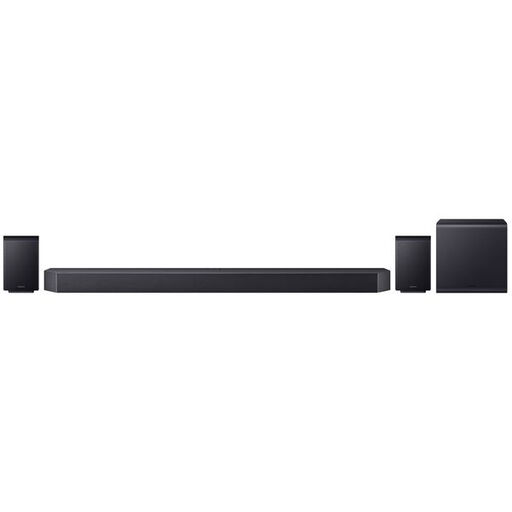
Samsung HW-Q990H/XC 11.1.4-channel soundbar, black, 756 W
Consider this system if you want to plan a multichannel film setup around the TV rather than select individual front speakers. Its listed configuration is 11.1.4 channels; check where every component would go and whether the mounting arrangement fits your wall.
View on Joybuy
 No image available
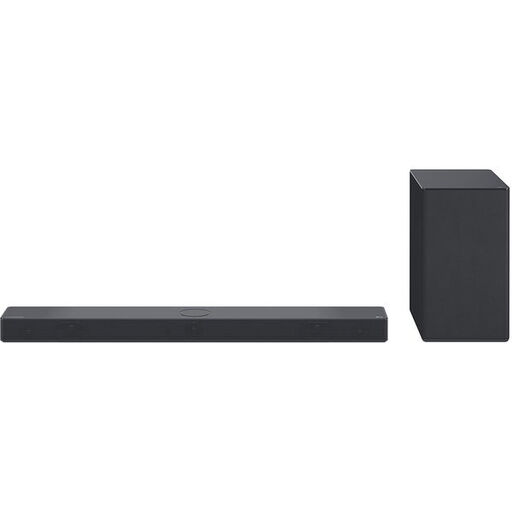
LG USC9S 3.1.3-channel soundbar with wireless subwoofer, black
Consider this soundbar if the front system must fit around a TV and you have a workable place for a subwoofer. The stated layout is 3.1.3 channels; if you intend to use a TV bracket, confirm that it fits your specific TV and mounting arrangement.
View on Joybuy
 No image available
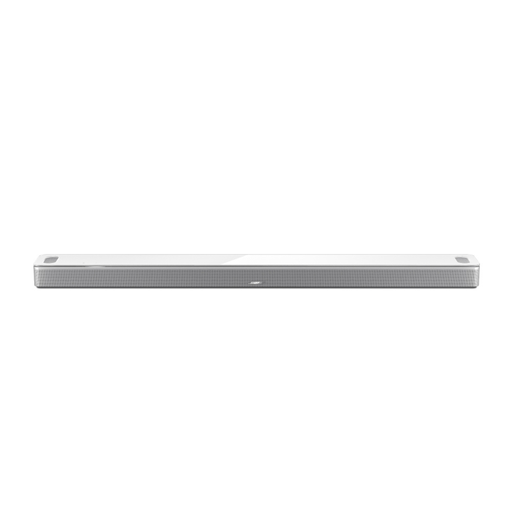
Bose Smart Ultra Soundbar, Arctic White
Consider this model if dialogue settings are part of your TV-area decision. If it must occupy a fixed near-wall position, check the manufacturer’s placement instructions and compatible mounting hardware before choosing that location.
View on Joybuy
 No image available
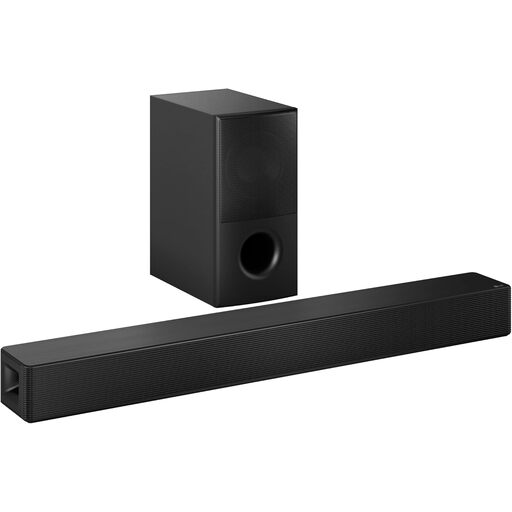
LG SH5A 2.1-channel soundbar with wireless subwoofer, 320 W
Consider this soundbar if a TV-area setup with a separate subwoofer suits the space. Its listed configuration is 2.1 channels; check the required wall fittings for the bar and test the practical subwoofer positions for bass balance.
View on Joybuy
 No image available
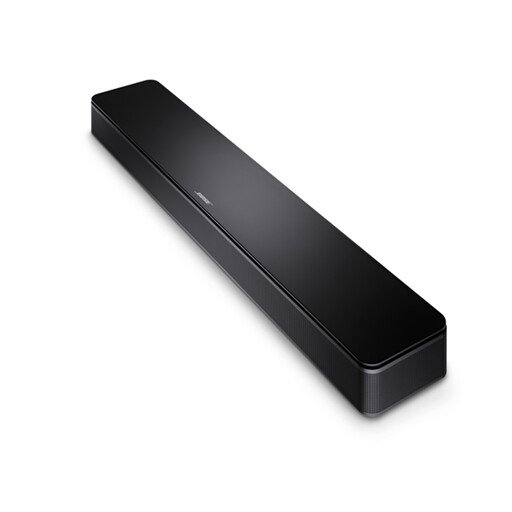
Bose TV Speaker
Consider this TV speaker if speech-focused listening and a compact front arrangement matter more to you than planning separate surround channels. Check its mounting method and what hardware the intended installation requires.
View on Joybuy
Questions about near-wall film speakers
Can rear-ported speakers sit close to a wall?
They can be considered, but placement needs particular care. KEF says rear-ported speakers are more sensitive to their position relative to walls than front-ported designs; follow the exact model’s instructions and compare the positions your room permits.
Are on-wall speakers preferable when there is no space behind the TV area?
Purpose-designed on-wall speakers are a practical format when their position must stay against the wall, but the format alone does not settle system suitability. Focal positions its On Wall 300 range for use around a TV; check the chosen model’s mounting surface, amplifier pairing and intended channels.
Should I plan surround channels before choosing the front speakers?
Plan the whole layout, but make sure the front positions work for the screen and main seat before committing to additional channels. Dolby describes 5.1 as a full surround setup; the room and AV receiver still need to accommodate the speakers in the positions you intend to use.
Where should a subwoofer go if only two spots are available?
Test both practical spots at the main listening seat rather than choosing one by a fixed placement rule. SVS explains that bass changes with subwoofer position, so use familiar soundtrack material to compare the result and adjust the system where possible.
Can loud film playback cause a noise issue at home?
Yes, depending on its effect beyond your room. GOV.UK guidance for England says councils must investigate complaints about noise that could be a statutory nuisance; use considerate listening levels and check local guidance for your area, particularly outside England.


