For a premium shop, choose coffee bags or one-cup filters for individual cups, ground coffee for customers with suitable brewing equipment, or pre-portioned sachets for compatible batch-brew machines. Before ordering against a requirement of 240, establish whether it means individual portions, prepared cups or retail packs: the pack count and stated yield are different measures, and none of the formats described here establishes a 240-bag carton.
Who is buying the coffee?
Shops stocking single-cup coffee
Coffee bags and one-cup filters give customers a portioned format without a commercial batch-brew machine. Tesco lists Taylors Flying Start as a 10-bag product, while Sainsbury’s lists Rombouts Original as a 10-filter pack. Check the count on the product being ordered rather than treating cups and filters as interchangeable units.
Retailers serving coffee in store
For staff preparing repeated batches, the machine and its required dose matter more than an individual retail-bag count. JDE Professional specifies one 60 g Kenco Westminster sachet per 1.8–2.0 L of water, yielding approximately 10–12 cups; confirm that the preparation method fits the shop’s equipment.
Shoppers brewing ground coffee at home
Ground coffee suits customers prepared to measure a dose and use appropriate equipment. Lavazza identifies filter, French press and moka as preparation contexts for Qualità Rossa ground coffee; those formats are distinct from ready-portioned coffee bags.
What should you check before ordering?
Define the unit behind “240” first, then match the coffee format to its intended preparation and rate of use.
| Priority | What to check | Your needs |
|---|
| Pack count |
Check whether the label counts bags, filters, sachets or retail packs. Read the net weight separately from the unit count. |
I need to order a defined number of portions, not mistake a projected number of brewed cups for the number of items in a carton. |
| Brewing format |
Check whether each portion brews in a cup or requires a batch-brew machine. For Kenco Westminster, JDE Professional specifies one 60 g sachet per 1.8–2.0 L of water. |
For in-store service, I need a format that works with our machine; for retail shelves, customers may need a cup-at-a-time option. |
| Product description |
Check the named product’s stated blend, roast and preparation methods rather than applying one product’s attributes to a whole brand. |
I want customers to understand what they are buying and whether they need equipment to prepare it. |
| Storage |
Check the pack’s unopened and post-opening instructions, and whether likely sales or service volume suits the quantity ordered. |
If a large order will move slowly, I need a practical plan for storing unopened portions and using opened ground coffee. |
Ordering mistakes to avoid
-
Ordering “240” without naming the unit
A count of individual coffee bags is not the same as a count of prepared cups or retail packs. JDE Professional states an approximate cup yield per Kenco Westminster sachet, whereas Tesco’s Taylors listing counts individual bags.
Write the requirement as individual portions, prepared cups or retail packs, then confirm the carton contents and any stated yield on the exact product.
-
Using single-cup bags for a batch-brew machine
A cup-at-a-time retail format does not follow the stated dosing method for a commercial batch. The Kenco Westminster example uses a 60 g sachet for 1.8–2.0 L of water, according to JDE Professional.
Check the machine’s brewing method, batch capacity and filter-paper requirements before selecting a pre-portioned commercial sachet.
-
Buying bulk ground coffee without a storage plan
Opening a ground-coffee pack changes how its storage instructions apply. Marks & Spencer instructs buyers of its Italian-Style Ground Coffee to keep it in an airtight container once opened.
Match the pack quantity to likely use and follow the instructions on the exact coffee purchased.
Relevant brand and product references
Douwe Egberts / JDE Professional
Its Kenco Westminster line provides an example of pre-portioned coffee for batch brewing.
- Vending Superstore describes a case of 50 × 60 g sachets with filter papers included; JDE Professional states an approximate 10–12-cup yield per sachet using 1.8–2.0 L of water.
- These are batch portions, not individual retail coffee bags. Check machine compatibility before ordering.
Lavazza
Qualità Rossa ground coffee is a retail option for customers preparing their own coffee.
- Lavazza identifies filter, French press and moka as preparation contexts for Qualità Rossa ground coffee.
- Ground coffee needs appropriate brewing equipment and is not individually portioned into coffee bags.
Taylors of Harrogate
Flying Start coffee bags illustrate a small-pack, single-cup retail format.
- Tesco lists Taylors Flying Start Coffee Bags as a 10-bag, 75 g product.
- A 10-bag retail pack should not be mistaken for a 240-bag carton.
M&S
Its Italian-style range includes ground coffee and cup filters for different retail preparation needs.
- Marks & Spencer describes its Italian-Style Ground Coffee Cup Filters as Fairtrade-certified and made with 100% Arabica coffee.
- Check the particular pack’s preparation and storage instructions rather than assuming the ground coffee and cup filters are interchangeable.
Rombouts
Original One Cup Filters offer another individually portioned retail format.
- Sainsbury’s describes the Original product as ground coffee in a pack of 10 one-cup filters.
- Its pack count does not meet a literal requirement for 240 individual filters.
Joybuy options for retail coffee
These options cover cup-at-a-time filters and bags, plus ground coffee for customers with brewing equipment. Check each pack’s count against the shop’s intended meaning of 240.
 No image available
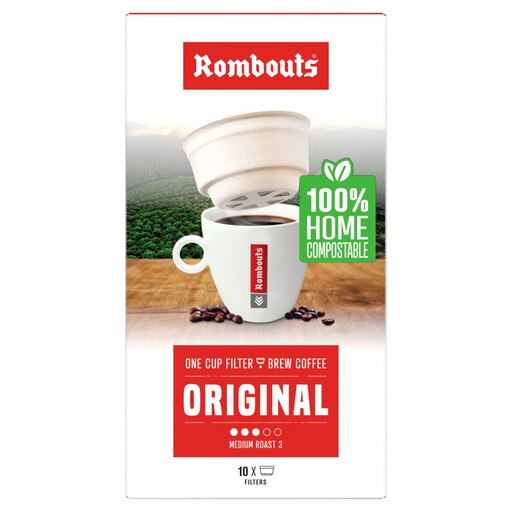
Rombouts Original One Cup Filter Coffee 70 g
For individual cups rather than a batch-brew machine. Sainsbury’s describes the corresponding Original product as a 10-filter pack; check the count on the pack ordered. Its compostability description is product-specific, so follow the pack’s disposal instructions.
 No image available
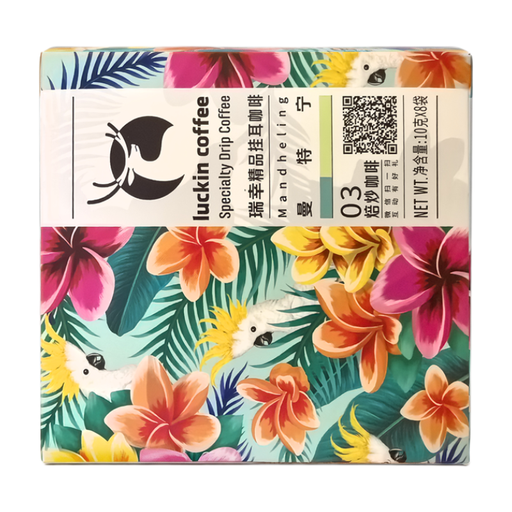
Luckin Mandheling 2.0 Series Drip Bag Coffee, 10 g × 8
Eight individually portioned drip bags for brewing over a cup with hot water. The pack contains eight bags, so it is not a 240-bag carton.
 No image available
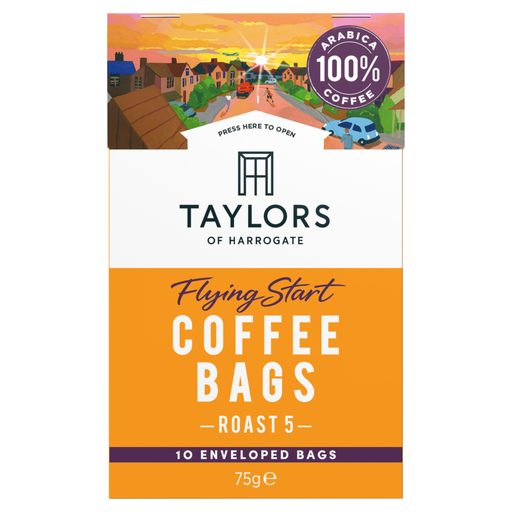
Taylors of Harrogate Flying Start Coffee Bags 75 g
Coffee bags offer a cup-at-a-time retail format. Tesco identifies Flying Start as a 10-bag, 75 g product; confirm the count on the pack being ordered if the number of individual bags matters.
 No image available
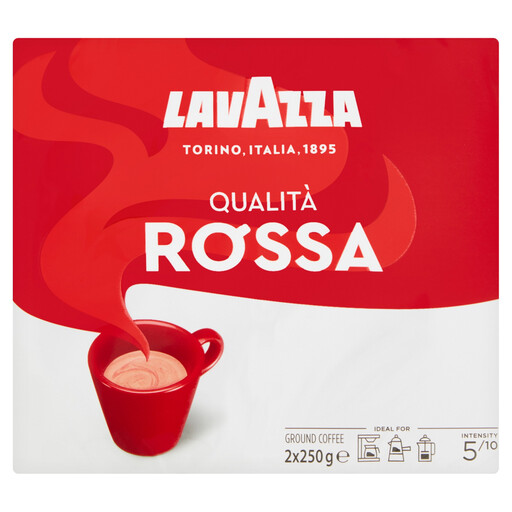
Lavazza Qualità Rossa Ground Coffee 500 g
Ground coffee for customers who measure their own dose and have suitable brewing equipment. Lavazza identifies filter, French press and moka preparation contexts for Qualità Rossa. The 500 g pack is not a count of individual coffee bags or prepared cups.
 No image available
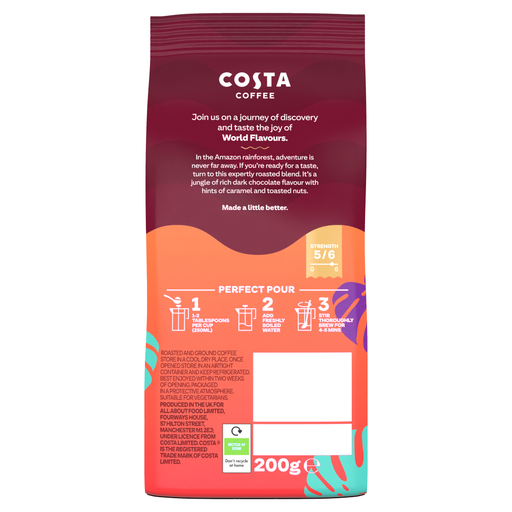
Costa Coffee Intensely Dark Amazonian Blend No. 5, 200 g
Ground coffee identified for cafetière and filter preparation. Customers need compatible equipment and must measure the coffee themselves; the 200 g pack does not specify a number of individual portions.
Questions about packs and preparation
Does “240” mean 240 coffee bags?
Not necessarily: it could refer to individual portions, prepared cups or retail units. Tesco lists Taylors Flying Start as 10 bags, while Vending Superstore describes a Kenco Westminster case as 50 × 60 g batch-brew sachets. Specify the unit and confirm the exact carton contents before ordering.
How many cups does a Kenco Westminster sachet make?
JDE Professional states approximately 10–12 cups from one 60 g Kenco Westminster sachet using 1.8–2.0 L of water. That stated yield applies to its preparation method; check the machine and serving size before planning a service quantity.
Can a one-cup filter replace a batch-brew sachet?
Choose a one-cup filter for individual-cup preparation, not as a direct substitute for a commercial batch dose. For batch service, check the machine’s method and capacity against the sachet’s stated dose.
How should opened ground coffee be stored?
Follow the instructions for the specific pack. Marks & Spencer tells buyers of its Italian-Style Ground Coffee to keep it in an airtight container once opened and states a two-week refrigerated storage period for that product.


