Regular filter-coffee brewers
If you mainly make pour-over, drip or batch coffee and have a permanent counter spot, a grinder designed around brewed coffee may suit your routine. Check its stated brew-method range if you might later make espresso.


Choose a dedicated electric grinder if filter coffee is your settled routine and you do not need espresso; check the exact electrical version before buying. A multi-method electric grinder leaves room to change brewing methods, while a manual grinder can be stored away but requires hand effort for every dose. In a small kitchen, measure the full footprint and access space, not just the grinder’s width.
If you mainly make pour-over, drip or batch coffee and have a permanent counter spot, a grinder designed around brewed coffee may suit your routine. Check its stated brew-method range if you might later make espresso.
If filter coffee is your main use but you also make cafetière or other brews, look for an electric grinder with documented settings for those methods. Measure where you will fill it, remove the grounds and clean it.
If you would rather store the grinder in a cupboard than give it a counter spot, a manual model avoids another mains-powered appliance. It also makes grinding each dose a hands-on task.
For filter coffee in a small kitchen, decide whether you want a permanent electric appliance or a grinder you can put away; then check brew-method fit and the space needed to use it.
Choose it when: Filter or other brewed coffee is your settled routine and you have room for an electric grinder.
Trade-off: Fellow says its Ode Brew Grinder Gen 2 is not intended for espresso; its electrical rating also varies between the official 120V specification and a UK retailer’s 220V listing, so check the exact version.
Choose it when: Filter coffee is your priority, but you want stated support for other brewing methods too.
Trade-off: A wider stated range does not, by itself, establish how well a grinder performs for each method; check the exact model’s guidance and counter fit.
Choose it when: Cupboard storage matters more than push-button grinding.
Trade-off: You must grind each dose by hand and check the model’s cleaning instructions.
| Concern | What to check | Who this matters to |
|---|---|---|
| Filter adjustment | Look for stated support for your filter brewer and adjustment guidance; do not judge the range by setting count alone. | If filter coffee is my daily brew, I want to find and repeat a suitable grind without guessing whether the model covers it. Around 42% of consumers would put filter-range fit first. |
| Space and grounds handling | Measure width, depth and clearance for filling and cleaning; check how the grounds container comes out. | With little worktop space, I need to know whether the grinder is practical to use where it stands or easy to store away. For around 33% of consumers, space and handling would be the primary concern. |
| Daily effort and flexibility | Decide whether hand grinding suits your routine and whether espresso is a realistic future use; check the rating of any mains-powered model. | If I make several doses or plan to change brewing methods, I need a format I will still want to use each day. Roughly 25% of consumers would make convenience and future flexibility their first priority. |
Fellow specifies 120V for its Ode Brew Grinder Gen 2 product page, while UK retailer Coffee Beautiful lists a 220V UK-plug version. The model name alone does not establish which version is offered.
Check the exact grinder’s voltage, frequency and plug before buying. Electrical Safety First states that the UK’s nominal supply is 230V 50Hz; do not connect a 120V-only grinder directly to it.
Fellow describes the Ode Brew Grinder Gen 2 as intended for brewed coffee, not espresso. Adding espresso later would therefore call for a different grinder.
If espresso is a realistic requirement, check that the exact model is explicitly intended for both espresso and your filter method.
A setting count describes adjustment points, not grind quality across brewing methods. Which? assesses grind quality, ease of use, cleaning, versatility and noise separately in its grinder testing.
Check stated brew-method support and cleaning access alongside settings; use relevant independent test results where available.
Wilfa UK announced in July 2026 that its Svart grinders and original Uniform grinder were being discontinued in favour of newer lines.
For remaining stock, check the specific model’s warranty and spare-parts arrangements, and compare its features with the current alternative.
The Ode Brew Grinder Gen 2 is an electric option focused on brewed coffee. Fellow specifies 64 mm flat burrs and 31 adjustment steps; a UK retailer lists a version with a 105 mm width.
Wilfa UK lists its Zense grinder with 30 settings and 40 mm steel burrs, and names pour-over, filter coffee and French press among its uses.
The C40 MK4 is a manual alternative that can be put away between brews. Comandante suggests 18–35 clicks as a starting range for pour-over filter coffee.
These burr grinders offer portable electric and manual options for a small kitchen, plus a counter-top electric model. Check each model’s stated filter-brewing suitability and how it fits your space before choosing.
 No image available
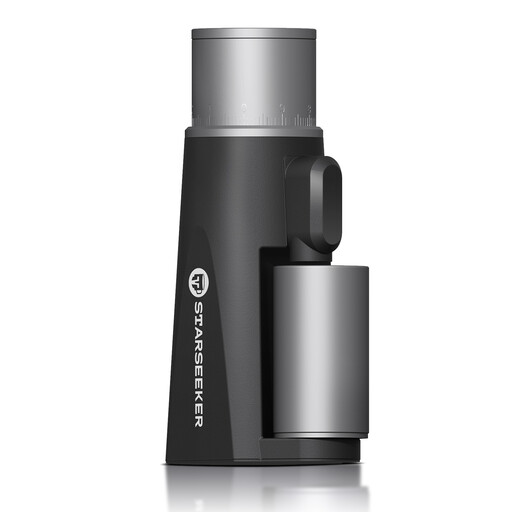
Consider this rechargeable model if you want electric grinding for pour-over without keeping a mains-powered grinder on the counter.
Its stated features include adjustable grinding, one-touch operation, a Type-C rechargeable 1000mAh battery and an all-metal body. Check whether its adjustment suits your particular filter brewer.
 No image available
This cordless conical-burr model names pour-over among its uses and may suit a kitchen where the grinder is stored between brews.
The product name also specifies espresso use. If grounds scattering or clumping would be troublesome in your workspace, check the listing’s handling advice before choosing it.
 No image available
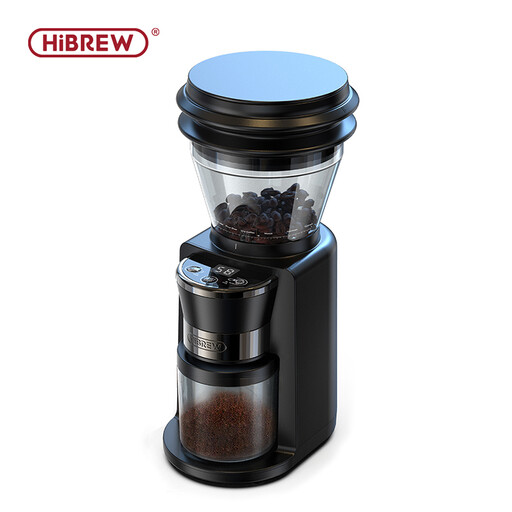
Consider this counter-top electric model if you want adjustable grinding, but confirm that its range suits your filter brewer.
Its product name specifies 34 grind settings, a 48 mm conical burr, a 210 g bean container and a 100 g grounds container. Measure the available counter and access space before buying.
 No image available
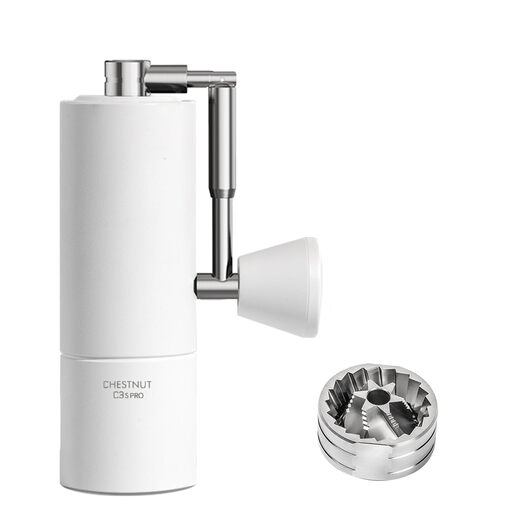
A manual option for consumers who would rather put the grinder away than give it a powered counter spot; allow for hand grinding with every dose.
The product name specifies an S2C stainless-steel conical burr, adjustable grinding and a foldable handle. Check its filter-setting guidance and folded size against your brewer and storage space.
Not unless the exact grinder is also intended for espresso. Fellow says its Ode Brew Grinder Gen 2 is designed for brewed coffee and not espresso; if one grinder must serve both, check that the manufacturer explicitly supports both methods.
Check that the exact offered version is suitable for the UK supply, including its voltage, frequency and plug. Electrical Safety First gives the UK nominal supply as 230V 50Hz; a 120V-only grinder must not be plugged directly into it.
Brush coffee dust from the burr and interior, following Comandante’s care guidance. Comandante says not to soak the grinder or wash it in a dishwasher because this can damage its wood veneer and ball-bearing cartridges over time.
Use an appropriate electrical-recycling or take-back route rather than treating it as ordinary household rubbish. Recycle Your Electricals advises that items with a plug, battery or cable can be recycled; check your local collection and retailer take-back options.