
24/7 Customer Support

Free returns

Same-day & Next-day Delivery

Quality Guaranteed

Unlock Your Welcome Offers: FREE Delivery | Up to 80% OFF | Free 30-day JoyPlus trial
Download the APP
A great cup of filter coffee is one of life’s simple, consistent pleasures. Yet, finding a machine that delivers that perfect brew can be surprisingly difficult. The market is filled with models that promise café-quality results but often fall short, leaving you with a bitter taste—both literally and figuratively.
As a Joybuy Product Recommendation Officer, my role is to help you navigate the marketing clutter. Many UK households end up with a machine that seems fine at first, only to discover its hidden flaws. Before you invest, let’s look at the common pitfalls that lead to disappointment.
To avoid these issues, you don't need to become a coffee brewing scientist. You just need to focus on a few core parameters that separate a reliable machine from a countertop ornament.
The single most important factor for flavour extraction is water temperature. The European Coffee Brewing Centre (ECBC) provides an independent certification for machines that meet their strict standards. An ECBC certified coffee maker is verified to maintain a water temperature between 92°C and 96°C for the entire brew cycle and to complete the brew within a specific time frame (usually 4 to 6 minutes). This precision prevents both sourness and bitterness, ensuring a balanced cup every time. When you see this certification, you can be confident the machine's core function is sound.
The carafe is more than just a pot; it's key to preserving your coffee's flavour.
The UK is known for its hard water, which can introduce mineral tastes and cause limescale to build up inside your machine, eventually leading to blockages and failure. Using a coffee machine water filter is a simple but effective solution. Some machines have integrated filter holders, while for others, using filtered water from a separate jug will significantly improve the taste of your coffee and extend the life of your appliance.
Based on these practical criteria, we've matched a few standout models to different user needs. Instead of just listing features, we're focusing on how each one solves the common problems faced by UK coffee drinkers.
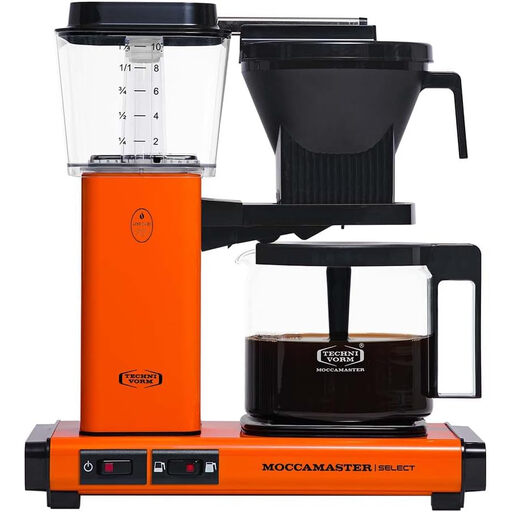
Why This Fits Their Persona: For those who see their kitchen appliances as part of their home's decor. This user appreciates the iconic retro coffee machine aesthetic but refuses to compromise on the quality of their brew. The vibrant colour options make it a statement piece.
It is ECBC certified, guaranteeing precise temperature control. The intelligent hot plate keeps coffee at 80-85°C, warm enough to enjoy but not hot enough to burn, solving the stewed coffee problem.
Handmade in the Netherlands with a durable, repairable design and a 5-year warranty. Brews a full 10 cup coffee maker pot in 6 minutes.
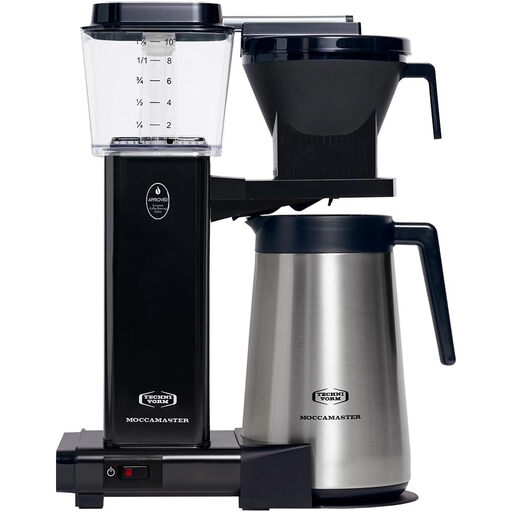
Why This Fits Their Persona: Ideal for families, flat-shares or home offices where a large pot is brewed in the morning and consumed over several hours. They prioritise function and flavour preservation over everything else.
The stainless steel coffee machine with thermal carafe completely eliminates the hot plate trap. It keeps coffee hot through insulation, not continuous heating, ensuring the last cup tastes as fresh as the first.
Maintains coffee temperature and flavour for hours. It shares the same ECBC-certified brewing technology and durable build quality as other Moccamaster coffee machine models.

Why This Fits Their Persona: This user wants to upgrade from instant coffee to a proper drip coffee machine without a significant financial outlay. They are looking for reliable performance and thoughtful features at an accessible price.
It uses a 'pour over' shower head to distribute water more evenly over the coffee grounds. This helps avoid the under-extraction common in basic machines, leading to a more balanced flavour profile.
Features a reusable permanent filter, saving money and reducing waste. The 1.2L capacity is generous for the price point, and the keep-warm function is suitable for immediate consumption.
We have compiled a complete, real-time list of products that fully satisfy these strict selection criteria and UK safety regulations.
For most areas in the UK, descaling every 2-3 months is a good rule of thumb. However, if you live in a particularly hard water region like London or the South East, you may need to do it monthly. The best indicator is the machine itself—if you notice brewing is slower or the coffee isn't as hot, it's likely time to descale. Using a coffee machine water filter can significantly extend the time between descaling.
Yes, but performance can vary. Many larger, 10 cup coffee maker models are optimised for brewing a full pot. Brewing a small amount can sometimes lead to a weaker result. If you frequently brew smaller quantities, look for a machine with a specific feature for this, such as the 'Select' switch on the Moccamaster KBG Select, which adjusts the brewing process for a half carafe to maintain optimal flavour.
A drip coffee machine is an automated appliance that heats water and drips it over a basket of coffee grounds. A manual pour over coffee machine (like a V60 or Chemex) requires you to heat the water separately and pour it over the grounds by hand, giving you complete control. Some electric models, like the Morphy Richards Equip, incorporate a pour over style shower head to mimic this manual process for a more even extraction.