What matters when choosing?
Work out the first round of servings, then compare how each machine fits the meeting length, start time and smaller sessions.
| Concern |
What to check |
Who this matters to |
| Enough coffee for the group |
Compare tank volume and stated cup count with the first round in your usual mug size. |
If several attendees want coffee together, I need the first round ready without brewing another pot; around 36% of consumers put capacity first. |
| Coffee for later pours |
Check the carafe type and the model's stated heat-retention or warming period against the meeting length. |
When people take breaks at different times, I want coffee available beyond the first pour. Roughly 29% of consumers prioritise that longer serving window. |
| A planned start |
Check whether a timer is provided and whether its scheduling range fits your start time. |
If room setup and arrivals occupy me just before the meeting, I would rather schedule the brew in advance; around 21% of consumers make timed preparation their main concern. |
| Smaller or adjustable brews |
Look for a stated reduced-batch setting or brewing range; check separately which recipe controls you would use. |
When attendance varies, I do not want to make a full pot for a small catch-up. Approximately 14% of consumers put batch flexibility or brew control first. |
Joybuy filter coffee makers
These Moccamaster models offer two ways to serve a planning group: the KBGT has a thermal jug, while the KBG Select is a carafe model to consider when coffee will be served sooner. Compare each model's stated capacity and serving arrangement with your meeting schedule.
 No image available
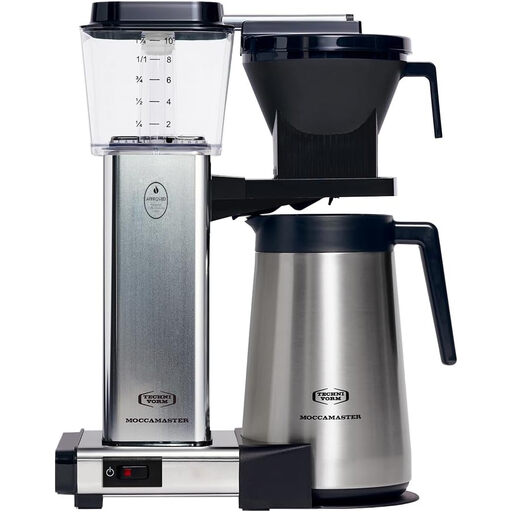
Moccamaster KBGT 79411 with Thermal Jug, 1.25 Litres, Polished Silver
Consider this thermal-jug model when people may pour coffee at different points in the session. Its stated capacity is 1.25 litres; check whether the jug's holding period covers your meeting and whether you need a scheduled-start function.
View on Joybuy
 No image available
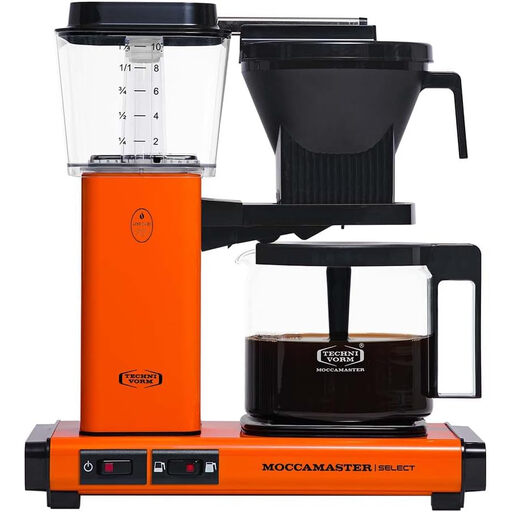
Moccamaster KBG Select 53817, 1.25 Litres, Orange
Consider this model for a group whose usual batch fits the KBG Select's stated 4-to-10-cup brewing range. This variant is listed at 1.25 litres; check how long its warming arrangement fits your serving schedule and whether you need a scheduled start.
View on Joybuy
Questions about planning-session coffee
How much capacity do I need for a planning session?
Start with the number and size of servings needed for the first round, then compare that total with the machine's tank and carafe volumes. Smeg states a 1.4-litre, up-to-10-cup carafe for the DCF02; Sage states a 60 fl oz, 12-cup tank for the Luxe Brewer Thermal. Neither manufacturer's cup count should automatically be read as a full mug.
Should I choose a thermal carafe or a warming plate?
Choose according to when people will pour, not just the carafe material. For its Luxe Brewer Thermal, Sage states that the thermal carafe keeps coffee above 65°C for up to four hours; Smeg states a 40-minute stay-warm feature for its glass-carafe DCF02. Compare the relevant model's stated window with your meeting length.
Will a timer make coffee ready for every meeting?
A timer can start a brew at a planned time, but the batch still needs to cover the group and remain suitable for the intended serving window. Sage states delayed start of up to 24 hours for the Luxe Brewer Thermal; Smeg and Melitta also describe timer functions on the DCF02 and Look V Therm Timer respectively.
What should I check before using the machine in a meeting room?
Check that its electrical connection is suitable for where you plan to set it up. Electrical Safety First warns against overloading sockets and advises checking an extension lead's current rating; if an extension lead is needed, use an appropriate UK three-pin fused lead.


