For an older adult who wants to reduce caffeine, a decaf ground blend that suits their brewing equipment is a practical choice; regular ground coffee remains an option when caffeine fits their preferences and individual advice. Choose the roast and format for taste and ease of preparation, rather than treating coffee as nutritional support for poor appetite or weight loss.
Who is this choice for?
Older adults reducing caffeine
If caffeine seems to aggravate urinary symptoms, the NHS advises that it can worsen incontinence. A decaf ground blend or coffee bag lets someone keep a familiar coffee routine while choosing a decaffeinated product; roast intensity alone does not indicate caffeine content.
People concerned about poor appetite
Coffee can be chosen for enjoyment, but the blend itself is not a response to low intake or unintentional weight loss. West Suffolk NHS Foundation Trust’s dietetic guidance describes fortified milk as one way to add energy and protein to hot drinks when appropriate.
Carers arranging a simpler single cup
A ground-coffee bag may be easier to manage when measuring loose coffee or clearing away grounds is inconvenient. It brews in a mug, so check the format before buying for someone who uses a filter machine.
What should you check?
Start with caffeine preferences and any individual restrictions, then choose a format the person can prepare and a flavour they enjoy. Keep nutrition needs separate from the choice of coffee blend.
| Priority |
What to check |
Your needs |
| Caffeine |
Check whether the pack says decaffeinated. If a specific limit matters, look for a product-specific residual-caffeine statement; Sainsbury’s lists its Fairtrade Decaff House Blend at less than 0.1% caffeine by weight. |
I want to reduce caffeine without giving up ground coffee. If caffeine worsens urinary symptoms, I would choose a decaf product rather than judging caffeine by roast intensity; the NHS notes that caffeine can worsen incontinence. |
| Brewing format |
Check the directions for your filter machine or cafetiere. For a single mug, distinguish ground-coffee bags from loose ground coffee; Sainsbury’s describes Taylors of Harrogate Decaffé bags as brewing like tea bags. |
Measuring coffee and clearing away grounds is awkward for me, so a mug-based format may suit my routine better than loose grounds. |
| Flavour |
Use roast, body and flavour descriptions to compare taste, not caffeine content. Sainsbury’s lists Lavazza Decaf Classico as a medium roast with full body and an intensity of 3/10. |
I would like a decaf coffee I enjoy drinking, but a flavour or intensity label cannot tell me its residual caffeine level. |
| Nutrition |
Check the coffee and any additions separately. If low appetite or weight loss is a concern, discuss suitable food and drink choices with a clinician or dietitian; West Suffolk NHS Foundation Trust describes fortified milk as one option for adding energy and protein to hot drinks. |
When nutrition is the concern, I need a plan for food and drinks rather than expecting a different coffee blend to address it. |
Common buying mistakes
-
Expecting a coffee blend to address poor nutrition
Changing from regular to decaf coffee does not address low appetite or unintentional weight loss.
Choose coffee for taste and caffeine preferences. Raise concerns about food intake or weight loss with an appropriate clinician or dietitian rather than relying on the drink alone.
-
Reading roast intensity as caffeine strength
Roast and intensity describe the coffee’s character, not a measured residual-caffeine amount. Lavazza Decaf Classico, for example, is labelled decaffeinated as well as having an intensity rating.
Check the decaf statement and, if a precise limit matters, the current pack’s caffeine information. Use roast descriptions to choose flavour.
-
Choosing loose grounds without considering preparation
Measuring coffee and clearing grounds may make a filter machine or cafetiere inconvenient for someone who wants a simple single cup.
Compare the person’s usual equipment with a ground-coffee bag that brews in a mug before choosing a format.
Brand and retailer references
These examples illustrate differences in decaf labelling, flavour descriptions and preparation formats; they do not indicate which brands are available in the product selection below.
Lavazza
Sainsbury’s lists Lavazza Decaf Classico as decaffeinated roasted ground coffee with a medium roast, full body and intensity of 3/10.
- The stated roast and body help someone choose a flavour profile.
- Check the current pack if a numerical residual-caffeine figure is needed.
Taylors of Harrogate
UK listings include Taylors of Harrogate decaf ground coffee and Decaffé ground-coffee bags.
- The bag format offers a mug-based alternative to measuring loose grounds.
- Coffee bags are a different format from ground coffee prepared in a filter machine.
Sainsbury’s
Its Fairtrade Decaff House Blend listing states less than 0.1% caffeine by weight and gives filter-machine and cafetiere preparation directions.
- The product-specific caffeine statement and brewing directions help with those two checks.
- Read the current pack when a particular caffeine limit or brewing method matters.
Tesco
Tesco lists a roast-and-ground coffee range, offering a place to compare ground-coffee pack formats.
- Individual product labels can be checked for decaf status and preparation directions.
- Do not assume that every ground coffee in the range is decaffeinated or suited to a particular brewer.
M&S
M&S describes its Decaf Ground Coffee as made with 100% Arabica beans.
- It provides a stated bean type for shoppers comparing decaf ground coffees.
- Check the current pack for residual-caffeine information and directions for your brewing equipment.
Douwe Egberts
Sainsbury’s decaffeinated-coffee listing includes Douwe Egberts Pure Decaf Instant Coffee.
- The listing identifies an instant decaf format for someone considering alternatives to ground coffee.
- Instant coffee is not ground coffee for a filter machine; check the exact product format before buying.
A Joybuy ground-coffee option
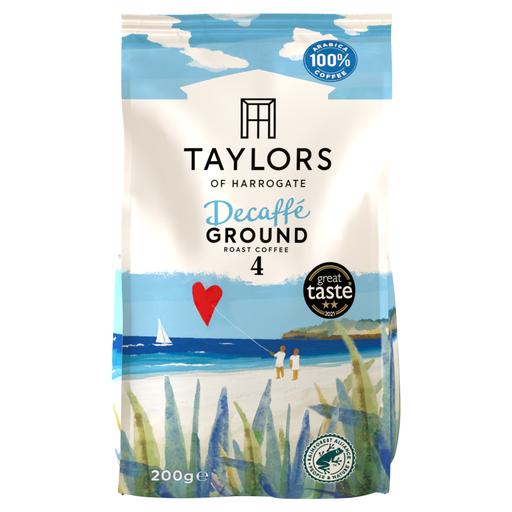
This decaf ground coffee may suit someone who wants to reduce caffeine while keeping a loose-ground coffee routine. Check its preparation directions against the brewer you use.
 No image available
Taylors of Harrogate Decaf Ground Coffee 200g
A decaf ground-coffee option for someone who prefers loose grounds while reducing caffeine.
The pack is 200g. If a specific caffeine limit matters, check the current label; also confirm the brewing directions before using it in a filter machine or cafetiere.
View on Joybuy
Questions about coffee for older adults
Can filter coffee provide nutritional support when appetite is low?
Do not rely on a coffee blend to address poor appetite or weight loss. West Suffolk NHS Foundation Trust’s dietetic guidance describes fortified milk as a way to add energy and protein to hot drinks when appropriate; discuss individual nutrition concerns with a clinician or dietitian.
When might an older adult prefer decaf?
Decaf is an option when someone wants to reduce caffeine or finds that it aggravates urinary symptoms. The NHS notes that caffeine can worsen incontinence; follow individual clinical advice where symptoms, medicines or other restrictions affect the choice.
Does decaf mean there is no caffeine?
Do not assume decaf products have identical residual-caffeine levels. Sainsbury’s states that its Fairtrade Decaff House Blend contains less than 0.1% caffeine by weight; check the current label of the particular coffee if a precise limit matters.
Can general caffeine guidance settle whether regular coffee is suitable?
Not for everyone. The European Food Safety Authority says its general caffeine assessment does not address people affected by a disease or medical condition. Consider caffeine from other drinks and seek individual advice where a condition or medicine affects intake.


