What should you check before buying?
Decide how the coffee will be prepared before comparing product claims or packaging. An instant jar and a filter-suitable ground coffee answer different serving needs.
Jarred instant coffee
Choose it when: staff need coffee made by adding hot water, without filter-brewing equipment.
Keep in mind: dissolvable granules do not make a filter-brewed drink; a premium label alone does not establish which flavour customers will prefer.
Roast-and-ground filter coffee
Choose it when: the intended drink is brewed through a filter and the coffee is stated to suit that method.
Keep in mind: this choice needs compatible brewing equipment and preparation, rather than just a jar and hot water.
| Priority |
What to check |
Your needs |
| Serving method |
Read whether the product is dissolvable instant coffee or roast-and-ground coffee. For ground coffee, confirm that the stated brewing method matches the shop’s equipment. |
Our menu calls for filter-brewed coffee, so I need grounds labelled for that method—not an instant jar. |
| Product attributes |
Check origin, Arabica content, processing, decaf or sourcing claims on the exact product. Marks & Spencer states that its Single Origin Brazilian Instant Coffee is 100% Arabica, freeze-dried and Fairtrade; these are attributes of that product. |
If an origin or sourcing statement matters to our offer, I want it stated on the coffee we actually buy. |
| Storage |
Read the pack’s storage and best-before directions, including any instructions for after opening. A container type alone does not establish how its contents should be kept. |
We may open coffee before using the whole pack, so I need storage directions that work for our stock handling. |
| Packaging |
Check the label for each component and the local collection rules. Recycle Now advises emptying and quickly rinsing glass jars, then replacing their lids. |
If we reuse a jar or buy refills, I want to know how to handle the empty jar, lid and refill packaging separately. |
Which brands offer relevant formats?
These brand examples help distinguish product formats; they do not imply that every item in a brand’s range suits the same brewing method.
Lavazza
A reference for shoppers who need roast-and-ground coffee suited to a stated brewing method.
- Lavazza identifies Il Filtro Classico as roast-and-ground coffee for filter preparation.
- Check the method on the exact pack: Lavazza says its ground coffees are calibrated for different uses, including moka, espresso and filter.
Taylors of Harrogate
A ground-coffee-bag format to distinguish from an instant jar.
- Sainsbury’s lists Taylors of Harrogate Rich Italian Ground Coffee Bags x10.
- Check the preparation instructions on the chosen bags rather than treating the format as an instant jar or assuming suitability for every brewer.
Douwe Egberts
A jarred instant-coffee option when filter brewing is not required.
- Joybuy describes Pure Indulgence Coffee 190 g as 100% freeze-dried instant coffee and directs cool, dry storage.
- Check the exact variant for decaf status and other required attributes; Pure Indulgence’s description does not describe every Douwe Egberts product.
Tesco
An own-label range in which instant and roast-and-ground formats need to be distinguished.
- Tesco Groceries lists Finest Americano and Intenso barista-style instant coffees alongside Finest roast-and-ground coffees.
- The Finest name does not identify the brewing format by itself; read the individual listing or pack.
Sainsbury’s
An own-label instant-coffee reference for comparing stated format, decaf and origin wording.
- Sainsbury’s lists Gold Roast, Gold Roast Decaffeinated and Colombian Origin Instant Coffee, Taste the Difference.
- Those are distinct products; check the current label for the attributes needed for the shop’s offer.
M&S
An instant-coffee reference when the shop wants product-specific origin and sourcing statements.
- Marks & Spencer describes its Single Origin Brazilian Instant Coffee as 100% Arabica, freeze-dried and Fairtrade.
- Those statements apply to that Brazilian product; check the current pack before using them to describe a different M&S coffee.
Joybuy options for instant and filter coffee
These options include instant coffees for preparation with hot water and one ground coffee labelled for filter or cafetière use. Choose between those formats according to the drink the shop intends to serve.
 No image available
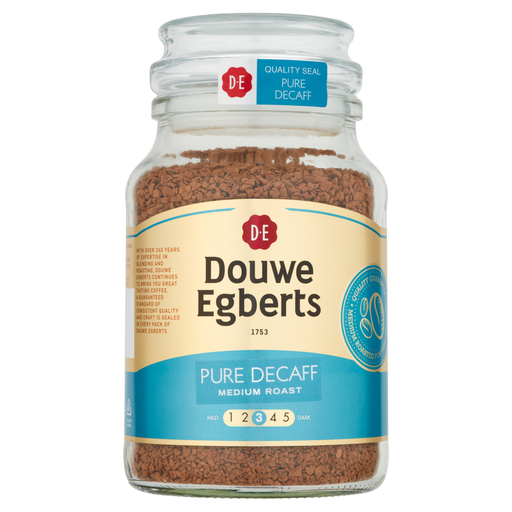
Douwe Egberts Pure Decaffeinated Instant Coffee 190 g
A 190 g decaffeinated instant-coffee option for a service that does not use a filter brewer. Check the current label if the precise caffeine statement matters to your selection.
View on Joybuy
 No image available
NESCAFÉ Gold Cap Colombia 95 g
If this 95 g option interests you for an instant-coffee service, check its current format and pack details. The word “Colombia” in the name alone does not establish where its beans were grown.
View on Joybuy
 No image available
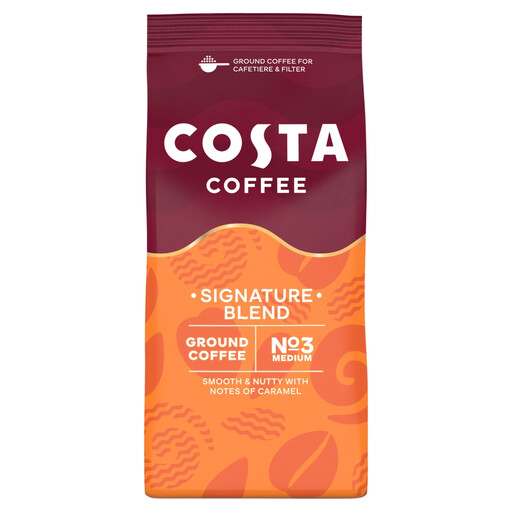
Costa Coffee Mocha Italia Signature Blend Ground, No. 3 Medium, 200 g
The stated cafetière and filter uses make this 200 g ground coffee relevant to a shop preparing coffee with compatible equipment. It is not an instant-coffee jar; follow the pack’s directions after opening.
View on Joybuy
 No image available
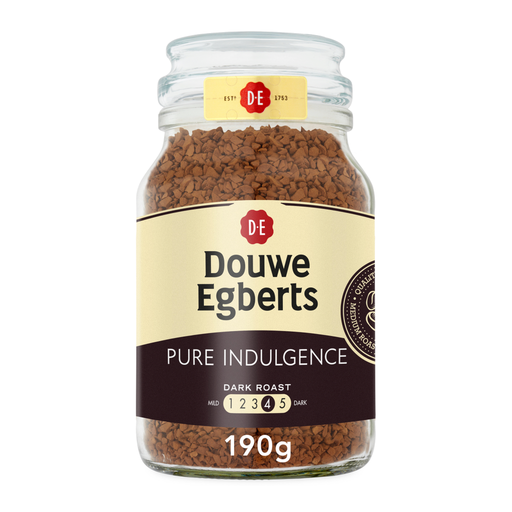
Douwe Egberts Pure Indulgence Coffee 190 g
Joybuy describes this 190 g product as 100% freeze-dried instant coffee for storage in a cool, dry place, not as grounds for filter brewing. Its listing carries a high-caffeine warning concerning children and people who are pregnant or breastfeeding; read the current label.
View on Joybuy
 No image available
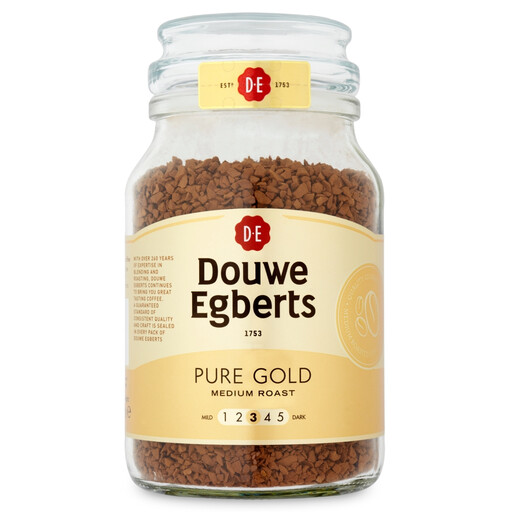
Douwe Egberts Pure Gold Medium Roast 190 g
For a shop considering a medium-roast option for instant-coffee service, this product is labelled 190 g. Check the current pack for its preparation and storage directions rather than treating the roast description as a flavour guarantee.
View on Joybuy
Common questions
Can an instant-coffee jar be used as filter coffee?
No. Instant granules are made to dissolve in hot water, while filter preparation calls for roast-and-ground coffee suited to the brewer. For a filter-coffee menu, check that the chosen ground coffee explicitly states filter suitability.
What should a shop check on an instant-coffee jar?
Confirm that it is instant coffee, then read the exact product’s statements on attributes that matter to your offer, such as origin, Arabica content, processing, decaf or Fairtrade status. Check the current pack rather than applying one product’s claims to a whole range.
How should an empty coffee jar be prepared for recycling?
Recycle Now advises emptying and quickly rinsing glass jars, then putting their lids back on. Read the packaging label and check local collection guidance for the jar and any refill packaging.
How should coffee be stored after opening?
Follow the directions on the particular pack, including any after-opening instructions. The container alone does not tell you whether coffee needs resealing or how long an opened pack should be used.


