What should you check first?
Decide whether the purchase is for drinking or cooking, then compare the relevant packs for ingredients, nutrition and storage.
Filtered dairy milk
Choose when: You specifically want filtered milk and the child can have dairy.
Bear in mind: Tesco’s filtered-milk listing contains dairy milk, so it does not meet a dairy-free coconut-drink requirement.
Long-life coconut drink
Choose when: You want a coconut drink that the pack says can be stored unopened in the cupboard.
Bear in mind: Long-life describes storage, not nutritional equivalence to dairy milk; formulations and allergens vary.
Cooking coconut milk
Choose when: The coconut milk is for a recipe rather than a drink alongside the snack.
Bear in mind: Marks & Spencer describes its coconut milk for curries, soups and sundaes, not as a ready-to-drink alternative.
| Priority |
What to check |
Your needs |
| Product type and storage |
Read the product description: filtered dairy milk, long-life coconut drink or cooking coconut milk. For cupboard storage, check the unopened-pack instructions; long-life does not mean filtered. |
I need a drink I can keep unopened in the cupboard, not a cooking ingredient—or I specifically want filtered dairy milk. |
| Nutrition and fortification |
Compare calcium, iodine, protein and energy per 100 ml on drink labels, as well as sugars. Kingston and Richmond NHS Foundation Trust’s parent guide advises checking calcium fortification and identifies 120 mg calcium per 100 ml as an ideal level for a dairy substitute. |
If a coconut drink will regularly replace dairy for a child, I want to know what its label provides rather than treating all plant-based drinks alike. |
| The rest of the snack |
Check whether the product is intended to drink. Consider suitable food alongside it; NHS after-school snack ideas include fruit, chopped vegetables, plain rice cakes and toast. |
A drink is only one part of the snack I am putting together. |
| Ingredients and allergens |
Read the current ingredient list, declared allergens and any precautionary statement. GOV.UK’s UK allergen guidance lists milk and soya among the 14 allergens that must be declared when used as ingredients; coconut is not on that list. |
Where an allergy matters, I need to check this particular recipe, not assume that every coconut product is dairy-free or free from other relevant ingredients. |
Relevant brand and retailer references
These product lines illustrate different types of coconut product; the brand name alone does not establish the ingredients or nutrition of a particular pack.
Alpro
Tesco lists Alpro long-life coconut drinks, including a no-sugar drink and a barista version.
- Waitrose identifies Alpro Coconut Barista With Soya as a UHT coconut-and-soya drink with added calcium.
- That Waitrose product contains soya and carries a may-contain-nuts statement; check the label of the exact variant you buy.
Koko
Koko Dairy Free lists coconut-based drinks, including Original Like Milk and a separate Kids Milk product.
- Koko Dairy Free gives 120 mg calcium and 1.2 g protein per 100 ml for Original Like Milk.
- Koko describes Kids Milk as a different recipe for children aged 1 and over. Do not carry one product’s nutrition values over to another.
Tesco
Tesco’s listings separate filtered dairy milk from coconut drinks.
- Its coconut-drinks listing includes Tesco Long Life Coconut Original alongside branded options.
- The filtered-milk category shown by Tesco contains dairy products; check the individual listing if dairy must be avoided.
M&S
Marks & Spencer’s Coconut Milk is a cooking-product example rather than a ready-to-drink coconut alternative.
- Its description suggests uses in curries, soups and sundaes.
- The product lists 17.3 g fat and 15.1 g saturates per 100 g; do not use its nutrition panel as a stand-in for a coconut drink’s.
Waitrose
Waitrose provides a product reference for Alpro Coconut Barista With Soya.
- Its listing identifies the drink as UHT and describes its coconut-and-soya formulation.
- The listing declares soya and notes that the product may contain nuts; use the current pack for an allergy check.
Joybuy coconut drink options
These barista-style coconut drinks are options to consider alongside an after-school snack. Neither should be mistaken for filtered dairy milk or cooking coconut milk; check the individual pack if dairy avoidance, unopened cupboard storage or fortification is essential.
 Image unavailable
Alpro Barista Coconut Long Life Drink, 8 × 1L
A long-life coconut drink to consider serving alongside a snack. This is an eight-carton pack of 1L barista drinks; check the current label for soya, any precautionary allergen statement, and calcium and iodine information if those details matter to your choice.
View on Joybuy
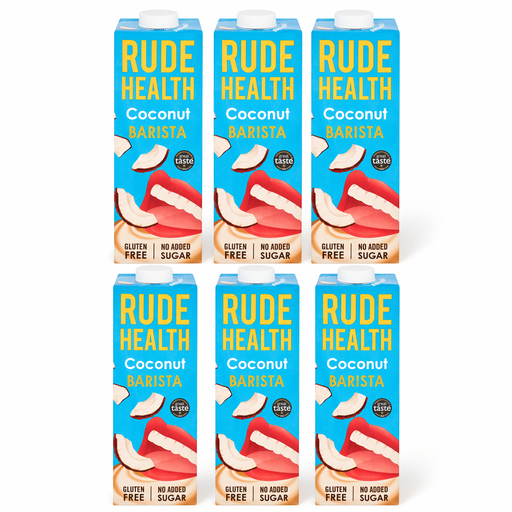 Image unavailable
Rude Health Barista Coconut, 6 × 1L
A six-carton pack of 1L barista coconut drinks to consider for serving with a snack. Check the ingredient and allergen label if oats or dairy avoidance matters, and confirm unopened storage instructions and calcium and iodine information before choosing it for those requirements.
View on Joybuy
Questions about coconut drinks and filtered milk
Is filtered milk the same thing as a long-life coconut drink?
No. Tesco lists filtered dairy milk separately from dairy-free coconut drinks, including long-life options. If you require both a particular ingredient profile and a particular storage format, check the exact product label rather than relying on either term alone.
Does a coconut drink necessarily contain dairy?
No. Coconut does not mean milk is present, but it does not establish that every coconut product is suitable for a particular allergy. GOV.UK’s UK allergen guidance lists milk and soya among the 14 allergens that must be declared when used as ingredients, while coconut is not on that list. Check the current ingredients and precautionary statements.
What should I compare if a child regularly drinks a dairy alternative?
Compare calcium, iodine, protein and energy on the current nutrition labels, using the same per-100 ml basis where available. Kingston and Richmond NHS Foundation Trust’s guide for parents advises choosing calcium-fortified dairy substitutes and describes 120 mg calcium per 100 ml as an ideal level to look for.
Is canned coconut milk intended as an after-school drink?
Check the intended use of the particular product rather than treating a cooking tin as a ready-to-drink carton. Marks & Spencer describes its Coconut Milk for recipes such as curries, soups and sundaes; a coconut drink is the more relevant product type when you want something to serve in a glass.
Can a long-life coconut drink stay in the cupboard after opening?
Follow the instructions on the individual pack. Long-life or UHT wording concerns the unopened product; check its label for refrigeration and use-after-opening directions rather than applying another brand’s instructions.


