Financial-document custodians
If you retain statements, invoices or tax-supporting documents, the important test is whether you can find and restore a usable copy when the original computer or file is unavailable.


For a small collection of financial documents that changes regularly, automatic backup of selected cloud folders can make it easier to keep copies current, provided you check account recovery and file-restoration limits. For a large archive or a whole-computer recovery copy, an external drive offers local storage but needs a routine for updating and disconnecting it. Keeping both a separate local copy and an off-site copy reduces reliance on one device, location or account; neither route is fail-safe.
If you retain statements, invoices or tax-supporting documents, the important test is whether you can find and restore a usable copy when the original computer or file is unavailable.
If you carry a copy or store it away from your main computer, consider how the records are protected if the drive is lost and how you would unlock it on a replacement computer.
If documents change often, automatic backup of selected folders can reduce manual copying. Account access and the service’s version and deletion limits still affect what you can recover.
For financial records, choose the recovery goal before the storage device: restoring named documents calls for a different scope from restoring a whole computer. The National Cyber Security Centre advises keeping important backup data in a separate safe location; a copy that remains connected to the original computer may be exposed to the same incident.
Consider it when: You want a physical copy of a substantial archive or need storage for a broader computer backup.
Trade-off: You must update and test the copy, then store it separately; a connected drive is not protected from every incident affecting the computer.
Consider it when: Current document folders need frequent copying without a manual drive routine.
Trade-off: Recovery depends on account access, selected-folder coverage and the service’s version and deletion rules; synchronisation is not necessarily a complete device backup.
Consider it when: Tax-supporting or other financial records would be difficult to recreate after losing one device or location.
Trade-off: Two recovery routes take more organisation, and each copy still needs appropriate access protection and occasional restore checks.
| Concern | What to check | Who this matters to |
|---|---|---|
| Recovery after loss | Keep a copy off-site or disconnected when not in use, and try restoring a document from it. | If my computer fails or its files are damaged, I need a copy I can still open. Around 33% of consumers put recovery after a single loss event first. |
| Privacy and access | Check what is encrypted and how you would regain access without keeping recovery information beside the drive. | When I carry records containing personal financial details, I need protection against unwanted access without locking myself out. Roughly 27% of consumers prioritise privacy and recoverable access. |
| Current documents | Confirm which folders are copied automatically and how earlier or deleted files can be restored. | My statements and scans change regularly, so I want current copies without remembering each manual transfer. About 27% of consumers place automatic document capture first. |
| Archive and device scope | Decide whether you need named folders or whole-computer recovery, then check capacity and the restore process. | If I need more than a few document folders, I must account for the wider archive or computer contents. Around 13% of consumers put broad backup coverage and capacity first. |
A deletion or unwanted change can affect synchronised copies. Cloud recovery features have service-specific limits, so an older version may not remain available indefinitely.
Check the service’s version and deletion controls, and retain another separate copy of records that would be difficult to recreate.
Encryption can protect records on a lost drive, but Crucial warns that a forgotten password for drives locked with its Portable SSD Utility cannot be used to recover the data.
Before relying on a drive lock, establish a recovery method kept separately from the drive and test access on the computer you would use to restore files.
The National Cyber Security Centre has described ransomware affecting connected USB and network storage as well as files on the original computer.
Disconnect a completed local backup when practical, or maintain another protected copy elsewhere. Check that you can read the stored files.
Capacity does not put a local drive in a different physical location from the computer it backs up.
For important records, keep an additional off-site or separately stored copy and periodically check that both contain the documents you expect.
A reference point for portable SSDs with drive-locking controls on supported models.
A reference point for local external-drive storage, including the One Touch line.
A cloud-folder option for people whose current documents are kept in supported Windows folders.
An iCloud Drive route for people managing documents across Apple devices.
A cloud-document route for people using Google Drive file versions.
These external hard drives and portable SSDs offer local storage routes for financial-record copies or a wider archive. Choose the backup scope first, then check the exact model’s protection, computer compatibility and restore process; a drive alone does not create an off-site copy.
 No image available
Consider this local drive if you want a portable copy of document folders or an archive.
Before storing sensitive records, check how the exact model’s password protection works and whether you can unlock it on your recovery computer. Store another copy separately.
 No image available
This local-drive option is relevant if your archive needs more capacity or you plan a broader computer backup.
Its name identifies the Mac variant; confirm compatibility with the computer you would use for recovery, along with the exact model’s unlocking process. Keep a separate copy of important records.
 No image available
A portable SSD is a local-copy option if you need to move stored records between compatible devices.
Check whether this model provides the encryption and credential recovery you require, and how you will keep document-folder copies current. Retain another copy away from the drive.
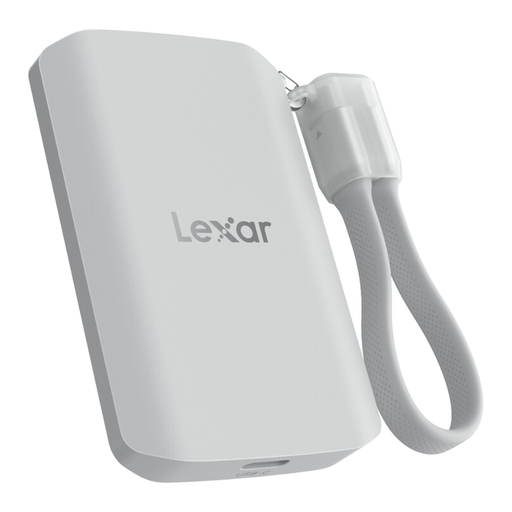 No image available
Consider this portable local-storage option if its device connections suit where you keep your records.
The product name states IP65 resistance and transfer speeds of up to 2000MB/s; neither establishes document-backup coverage. Check the app’s folder support, encryption and compatible devices before relying on it for financial files.
Back up selected folders if your goal is to recover named records such as statements, invoices and scans; choose a whole-computer backup method if you also need broader files, applications or settings. Check what the chosen method includes by restoring a sample file.
No. Encryption addresses unauthorised access, not the loss of the only recoverable copy. The Information Commissioner’s Office describes encryption as protection for stored personal information, while the National Cyber Security Centre advises keeping important backup data separately; retain access credentials safely and keep another copy.
Check account recovery, strong account protection, which folders are covered, and how long earlier or deleted files remain restorable. A synchronised folder can carry an unwanted change to other devices, so keep a separate copy of records you could not readily replace.
The retention period depends on the records and the return. GOV.UK says applicable pay and tax records should be kept for at least 22 months after the end of the tax year the return covers; check the guidance for your circumstances rather than treating one backup device as the retention plan.
No: holding backup copies is not, by itself, a way to establish that the required digital records are being created and stored correctly. HM Revenue & Customs says people to whom Making Tax Digital for Income Tax applies must still retain the original supporting records, or copies, used to prepare their return; check the applicable record-keeping requirements separately from your backup choice.