
24/7 Customer Support

Free returns

Same-day & Next-day Delivery

Quality Guaranteed

Unlock Your Welcome Offers: FREE Delivery | Up to 80% OFF | Free 30-day JoyPlus trial
Download the APP
Fine tip markers can look similar on a product page, yet behave very differently on paper, card, plastic, glass or metal. A pen bought for neat notes may bleed through thin paper, while a marker intended for labelling may be unsuitable for sketching or children’s craft projects.
The main buying traps are easy to overlook:
For controlled writing, diagrams and detailed colouring, look for a fine bullet tip or a stated line width. A 0.4 mm fineliner is suited to small lettering, rulers, stencils, hatching and precise outlines. Fibre-tip pens with a fine point can be more forgiving for everyday writing and colouring.
A chisel tip is a different choice: it can produce both narrow and broad marks, but requires more control. Paint markers may also be described as fine tip markers even when their bullet point is 2.9 mm, so always check the measurement rather than relying on the product title alone.
Choose the ink around the job:
For office or classroom use, quick-drying ink can reduce smudging. Left-handed users may particularly appreciate this feature, although writing pressure and paper absorbency still affect the result.
A small two-pack is practical for occasional marking, while four-colour packs cover common organising tasks. Assorted colour markers or a marker pen set make more sense for illustration, mind maps and craft projects.
For schools, shared workspaces and frequent labelling, bulk marker packs can reduce interruptions when individual pens run dry. However, larger packs need sensible storage. Replace caps immediately and follow the manufacturer’s storage instructions; some markers are best stored horizontally, while others simply need a cool, dry place.
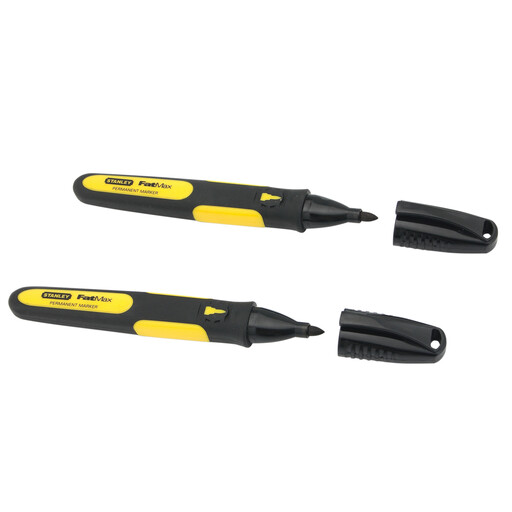
Why This Fits Their Persona: A compact option for occasional notes, basic labelling and small home projects where two colours are sufficient.
The two-pack avoids paying for unused colours, while the fine tip is intended for accurate writing and drawing.
Two assorted colours, smooth ink delivery and a lightweight barrel.
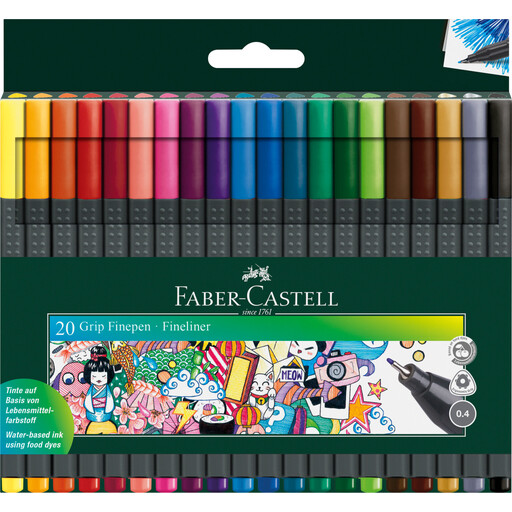
Why This Fits Their Persona: Suitable for students, designers and artists who want a broad colour selection with a consistent 0.4 mm line for notes, templates and illustrations.
The stated 0.4 mm line width removes guesswork, while the metal-framed tip is designed for use with rulers and templates.
20 assorted colours, triangular grip zone and plastic parts containing at least 56% recycled plastic according to the listing.
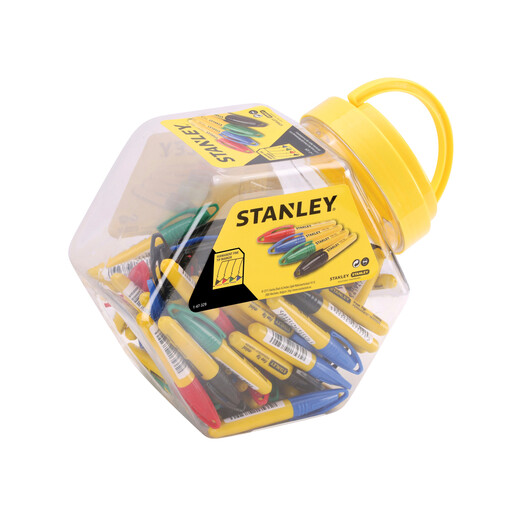
Why This Fits Their Persona: A practical choice for classrooms, offices, stockrooms and large projects requiring frequent colour-coded marking.
The 72-pack is designed for high-volume use, reducing the need to repeatedly replace individual fine point markers.
Black, red, green and blue assortment, quick-drying ink according to the listing and mini fine tips for small spaces.
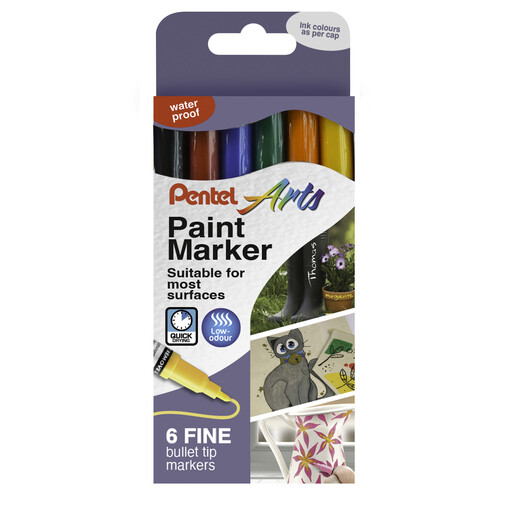
Why This Fits Their Persona: A focused option for crafters, hobbyists and users marking thick card, metal, glass, plastic or rubber.
Its product description clearly identifies pigment-based, opaque paint ink and named compatible surfaces, rather than implying universal use.
Fine 2.9 mm bullet tip, low-odour formulation and aluminium barrel. Shake and prime on scrap material before use.
We have compiled a complete, real-time list of products that fully satisfy these strict selection criteria and UK safety regulations.
Many quick-drying formulas can help reduce smearing, but no pen is completely smudge-proof on every paper. Try the marker on the intended notebook or worksheet first, and allow the ink to dry before closing pages.
Lifespan depends on usage, pressure, paper texture and whether the cap is replaced promptly. Metal-encased tips can help retain shape, while correct storage reduces drying. If a pen skips, do not press harder immediately; check the cap, tip and ink flow first.
Follow the product warning and ventilation instructions. Permanent markers and paint markers may produce stronger odours than water-based art pens, and their ink can stain skin, clothing and furniture. Keep all markers away from young children and avoid contact with eyes.